Operations with Air Transat are returning to normal after a tentative deal was reached with the union representing its pilots.
The airline says the agreement marks an important milestone in the process, and it lifts the risk of a strike.
It is expected to be submitted for ratification by union members in the coming days.
“We are pleased to have finally reached a tentative agreement with the union representing our pilots, marking a complete overhaul of their collective agreement,” said Annick Guérard, President and Chief Executive Officer of Transat, in a news release. “Our priority now is to quickly restore our operations.”
The Air Line Pilots Association, Int’l (ALPA), the union representing the pilots, says this comes following more than 11 months of intensive negotiations.
“Our pilots have been frustrated flying under a decade-old, outdated collective agreement,” said Captain Bradley Small, chair of the Air Transat ALPA Master Executive Council (MEC).
Some flights were cancelled today in anticipation of a potential walkout on Wednesday, which is when the union had threatened strike action if a deal wasn’t reached.
Dilico Anishinabek Family Care’s Christmas Wish campaign has collected 1,200 wish bags this holiday season.
The new record comes in large part thanks to this year’s partnership with the Children’s Aid Society, allowing for hundreds more wish bags to be collected than in previous years.
For two decades, the charitable campaign has distributed personalized wish bags to Thunder Bay residents.
Each bag contains the personal information of a child in need, including their name, age, and Christmas wishes.
Participating residents are instructed to fill up their wish bag according to the personalized wishes of the respective child.
Those participating can also add additional items, such as clothes.
Now that the wish bags have all been collected, the charity will distribute them to enrolled children across the district before Christmas.
More officers for the Kenora Detachment of the OPP.
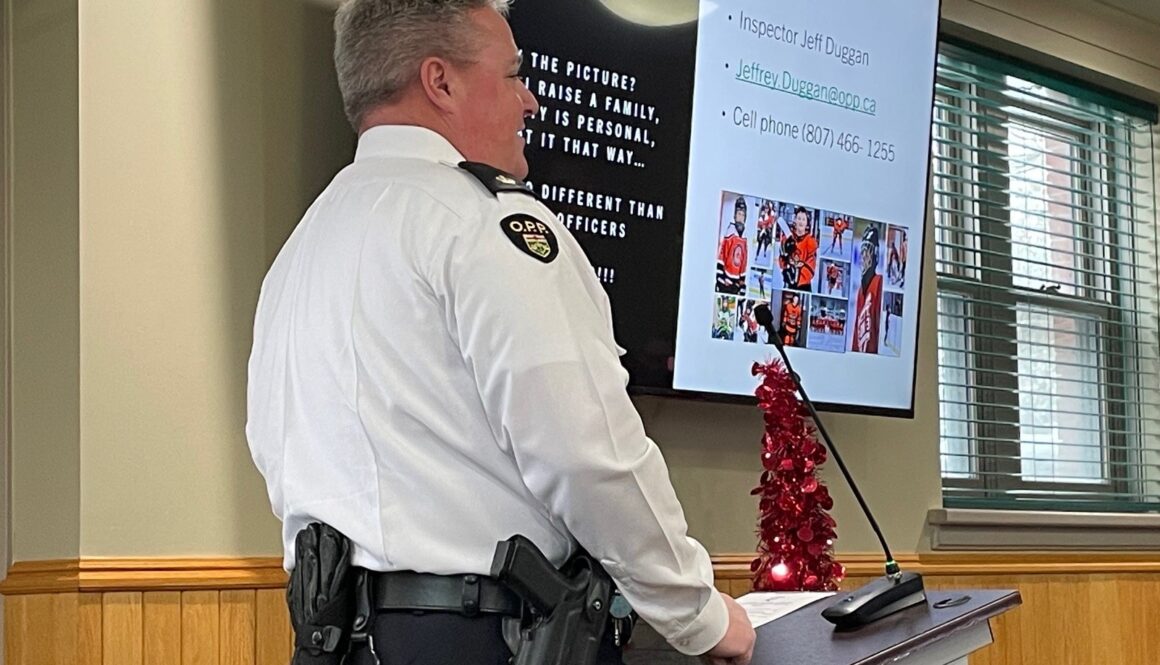
Inspector Jeff Duggan says according to provincial guidelines, Kenora needs 24 more officers to meet local demands.
The provincial standard includes the number of Calls for Service, Community Engagement, Proactive Patrol, and Administrative Requirements.
Right now, frontline Kenora OPP officers spend 52 percent of their time on Calls for Service, while the provincial standard is just 40 percent.
The other area where Kenora does not meet the provincial standard is Proactive Patrol. Local officers spend just 8.59 percent of their time on patrol, with the provincial standard at 21 percent.
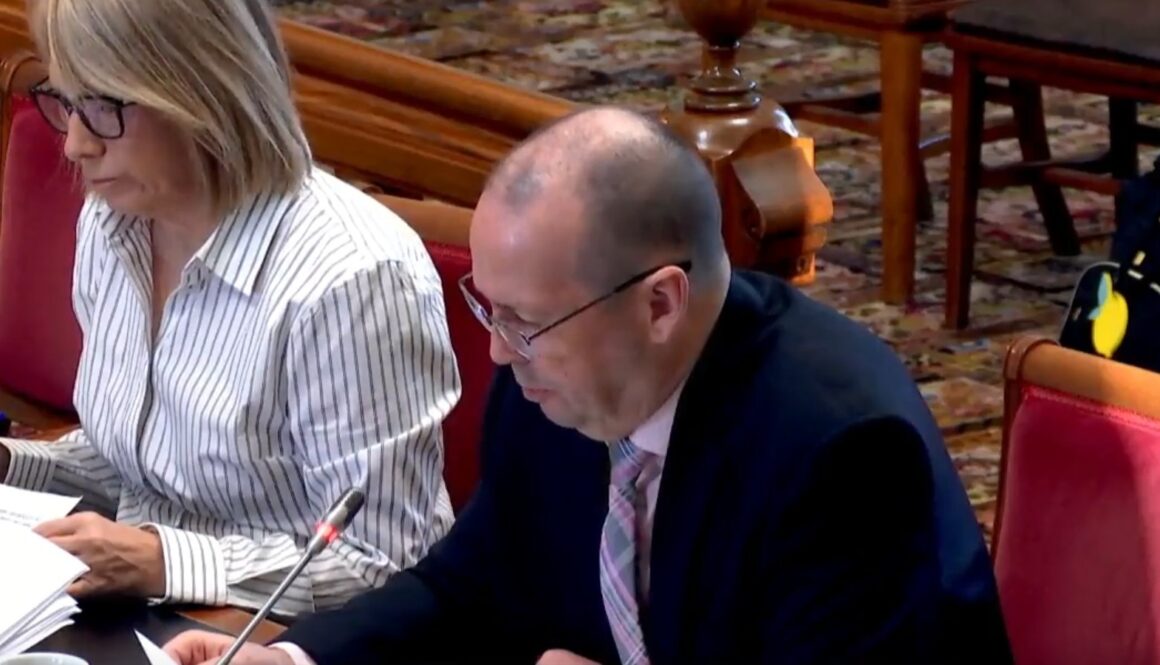
“This model tells us that Kenora needs an additional 24 officers. So, this is something that we’ve been approved to move on and hire the extra 24 officers for the Kenora Detachment,” Duggan told Kenora City Council at its Committee of the Whole meeting Tuesday morning.
Duggan adds the OPP have hired recruitment experts to help out.
“The northwest region has hired or is the process of hiring two full-time recruiters just for Kenora. So, there will be four in total…two in Thunder Bay, and there will be two in Kenora. They will be responsible for hiring in the northwest, but they will be in Kenora, so we’ll have a lot of influence on where they’ll go.”
Duggan adds that they are no vacancies at the Kenora Detachment right now, so the extra officers are in addition to the ones they already have on staff.
The for-sale sign will be going up at Sunny Cove Camp.
In a 4-3 decision, Fort Frances council has opted to sell the camp, instead of spending money to fix up the almost 70-year-old camp.
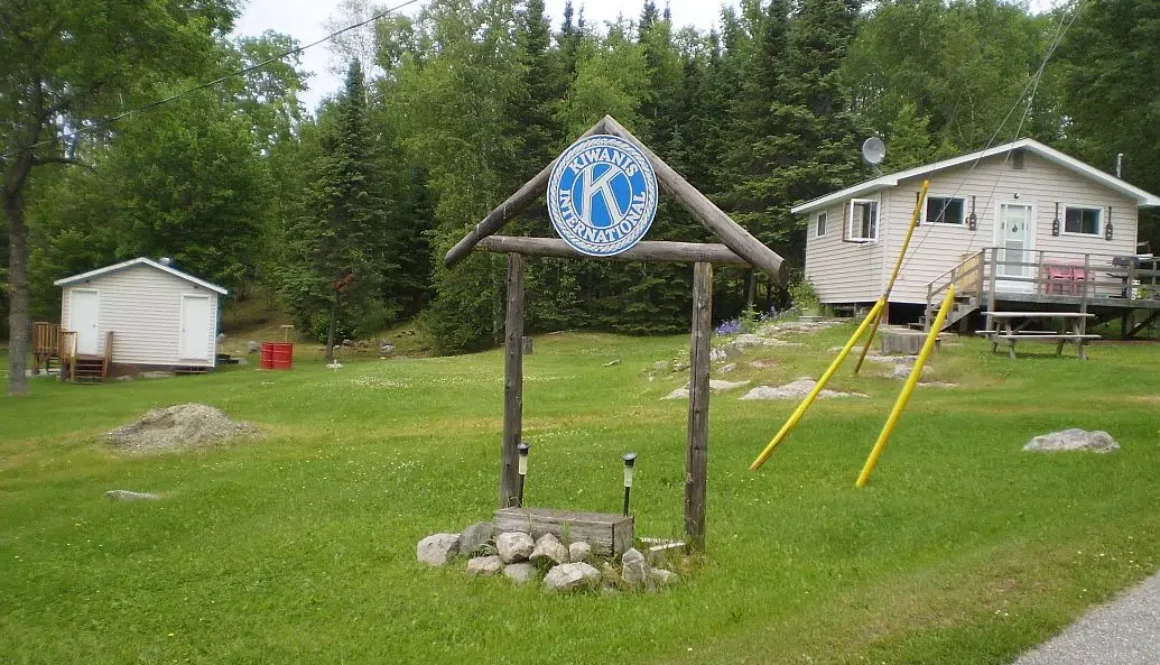
The decision backs a recent recommendation from the Kiwanis Club, which turned over the youth camp to the town in 2009.
The camp has not operated since 2019.
Councillors on both sides admit that it was a difficult decision, given the camp’s history in the region.
Councillor Steve Maki says his concern is spending money on a facility that the town may not be able to keep going in the future.
“Youth camps are becoming a thing of the past. The kids have a whole different look on life as a general rule,” says Maki.
“I don’t believe that status quo operation is going to be even close to break even. It would cost the town substantial money on a yearly basis to a point where we’re not going to continue with it.”
The future of Sunny Cove arose three years ago with the discussion over the condition of Russell Hall, the camp’s main building.
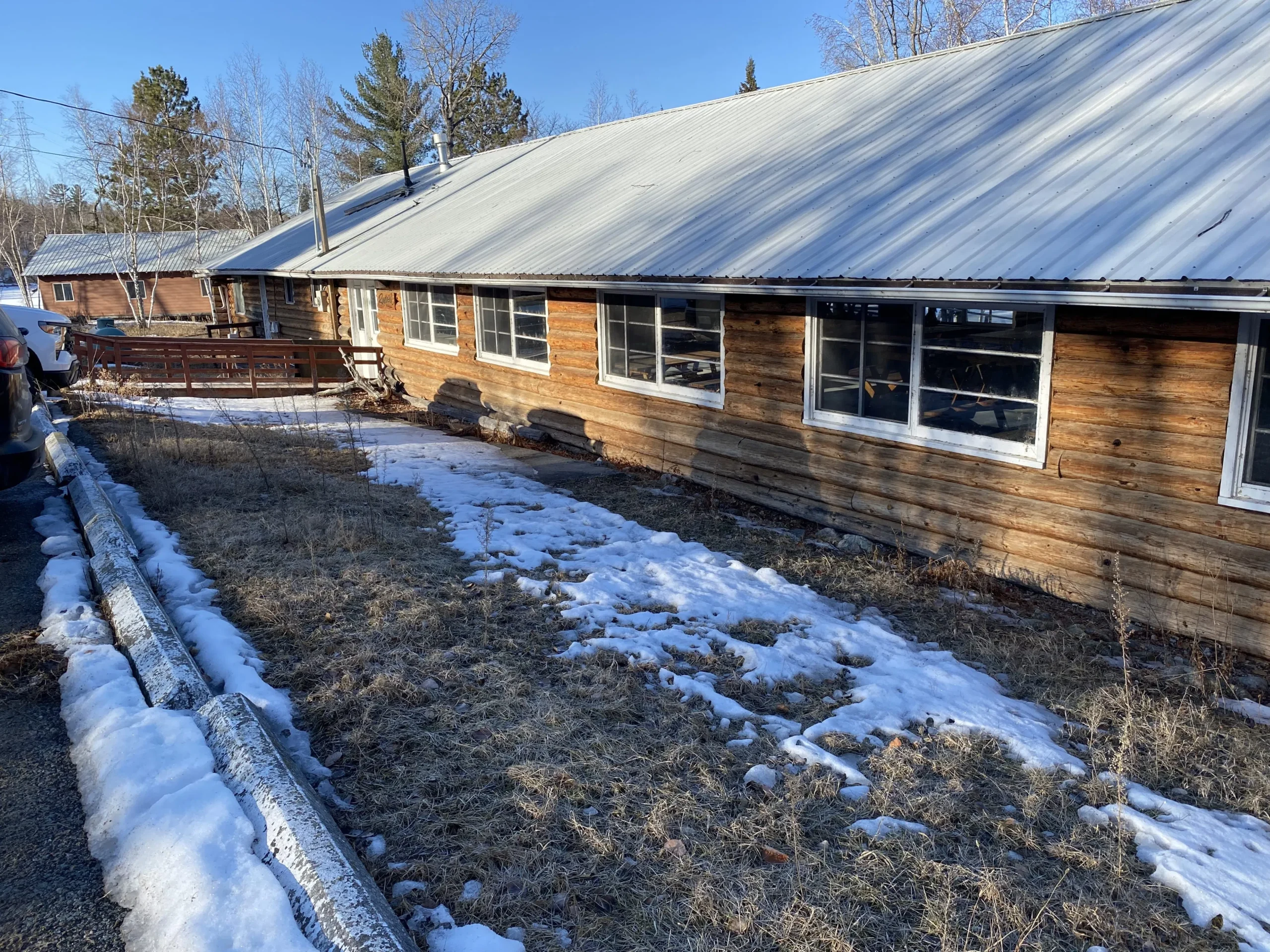
Russell Hall at Sunny Cove Camp, March 12, 2024. Image: Randy Thoms/Acadia Broadcasting
The building was identified as having extensive wood rot and an infestation of carpenter ants.
Administration recommended in 2023 that the property be put up for sale, but town council decided instead for an engineering study and to seek out funding to fix up the building.
A grant of almost $500,000 was received from the Northern Ontario Heritage Fund, while the town kicked in $210,000.
However, only one bid for the work was received, which was well over the expected budget.
Councillor Mike Behan says the town’s cost of keeping the camp has always been worrisome.
“I was always very concerned about the money we’re spending on a camp that’s 10 miles outside of town that maybe not everybody in town can access and utilize,” says Behan.
“With all the capital expenses we’re facing going forward, I am in favour of option two (selling the camp). I know it’s going to disappoint people, but I think it’s best.”
In its report, Administration offered council the option of moving ahead with the planned improvements.
It did note that the camp would likely continue to have an operating deficit of close to $14,000 a year.
Mayor Andrew Hallikas felt it was worth at least to give it a try.
“We should try to rehabilitate it,” says Hallikas.
“There’s no guarantee that we can. Notice we’re looking to proceed with a contract for remediation. We’ve looked at this in the past and haven’t had a lot of success.”
“There’s no guarantee that we’ll get that. But my personal preference is that we should try rehabilitating it, and if in the off chance that we don’t rehabilitate it, then I feel that (the Kiwanis Club) owns it and they should be able to sell it if they wish,” says Hallikas.
Administration’s report also suggested the potential of adding new programming, such as an inflatable waterbark, disc golf, and watercraft rentals, but provided no further analysis on potential revenue.
“The reason why we didn’t include business plans for each of these additional options is that we really don’t know what the frequency of user rates would look like for each of these options,” says John Burrows, Chief Building Official.
Councillor Wendy Brunetta still see the potential.
“I’m very excited to see the things in option one (rehabilitating the camp). I think there’s a lot of possibility,” says Brunetta.
“We have operated, meagerly, I believe, over the last number of years, and I’m really glad to see that some thoughts have been put into how we can expand the services that we can provide at Sunny Cove.”
Administration notes that between 2017 and 2019, Sunny Cove hosted 25 private bookings, including 16 weddings, and 23 organizations that offered kids’ summer camps.
A Canadian added her personal touch as the production designer on the Frankenstein movie.
Tamara Deverell worked alongside director Guillermo del Toro to creatively architect scenes such as the lab, the wooden boat, and an apartment in Scotland.
“It’s funny how connected you feel to Cape Breton in Scotland because there’s so many similar landscapes and, and just the feel of the wind and the sea,” explains Deverell.
As the supervising art director, she designs all the sets with a team of people by making architectural and construction drawings, picking the colours for the colour palette, and deciding how to light the sets.
She says Nova Scotia has a background setting ready for films.
“I’m hoping that in Cape Breton, there’s more films coming here and more film action because it is a fantastic place visually and I wouldn’t be surprised if more filmmakers find out about it,” expressed Deverell.
She recommends you check out Frankenstein that’s currently streaming on Netflix.
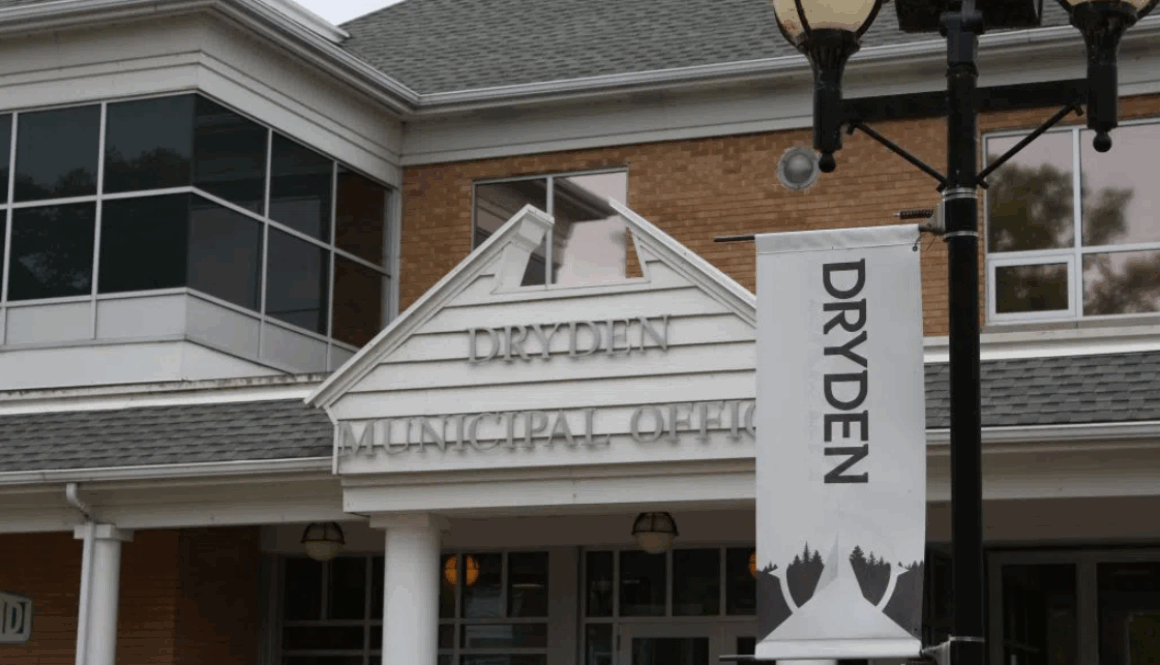
Dryden’s Public Works office will be making emergency repairs to the water distribution system under Kennedy Road on Wednesday, December 10, from 7 a.m. to 5 p.m.
Kennedy Road will be closed from Anton Road to the highway for the duration of the process.
While the repairs take place, residents on Kennedy Road and Anton Road will not have access to drinking water.
The city recommends that residents set aside a short-term supply of water for the day.
Residents with questions can contact the Public Works office at 223-2367.
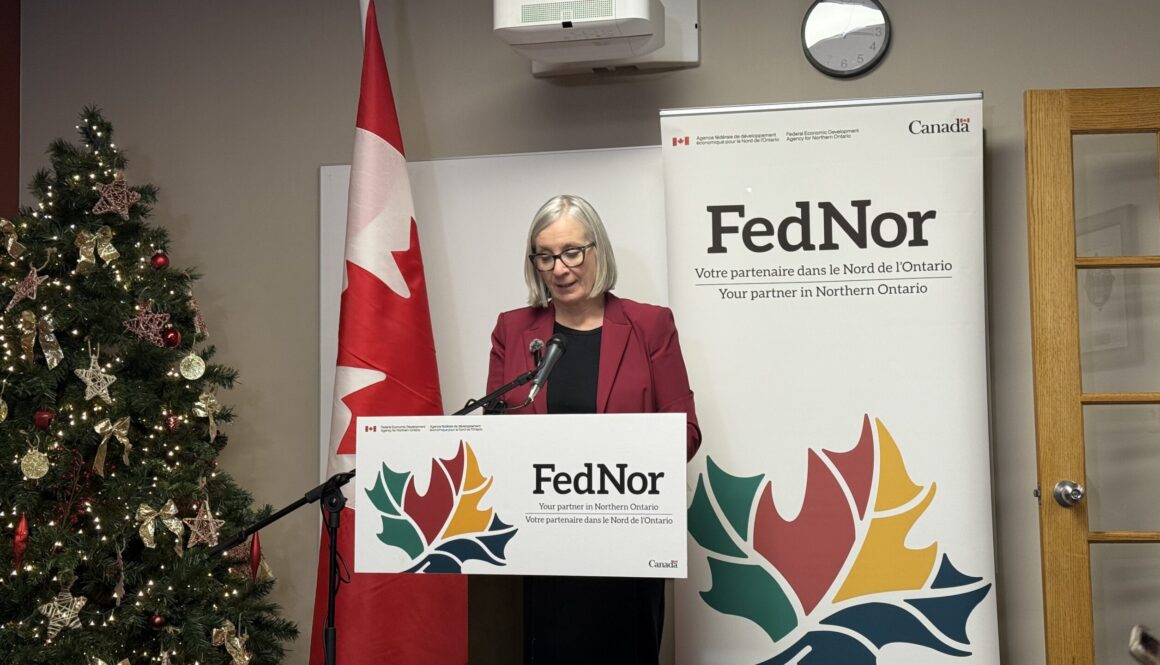
The Federal Economic Development Agency for Northern Ontario (FedNor) is delivering a new green initiative to northern Ontario’s Indigenous communities.
Funded by the Strategic Partnerships Initiative, the Northern Ontario Indigenous Clean Energy Initiative (NOICE) will help Indigenous-led clean energy developments come to fruition.
The program will assist communities with planning, skill development, and assistance in securing investments for green energy projects.
NOICE is framed as a reconciliation effort that will help Indigenous communities in the north determine their own pathways towards greater economic resilience and self-sufficiency.
The new program was announced by Minister for FedNor Patty Hajdu, who described its purpose as a way to “empower increased capacity for Indigenous communities to pursue economic and business opportunities in clean energy development.”
The minister says clean energy is one of Canada’s strongest selling points in international markets.
First Nations and Metis communities, Indigenous-owned businesses and organizations can apply to the program.
The clean energy announcement comes two weeks after the former Environment and Climate Change minister Steven Guilbeault resigned from Prime Minister Mark Carney’s cabinet in response to the federal government’s memorandum of understanding (MOU) agreement with the province of Alberta, which opens up the possibility of a new pipeline.
In an interview last week, Guilbeault expressed skepticism that Canada could still reach its 2030 emissions targets.
When asked about former minister Guilbeault’s resignation, Minister Hajdu argued that Canada needed to be pragmatic in its approach to climate change.
“It’s important to have targets that we can reach, rather than targets where we have provinces, in some cases, not agreeing at all to do that work,” she said.
Hajdu pointed out that the MOU includes commitments from Alberta to reduce emissions and comply with a higher industrial carbon tax.
“Although I appreciate that there may not be unanimity of opinion in this space, I do feel that it is important to work in the art of the possible,” she continued.
The Canadian Food Inspection Agency (CFIA) has issued a national recall of McCain Tasti Taters brand Crispy Potato Bites after pieces of plastic were discovered in the product.
The agency said the recall is classified as Class Two, which signals a moderate risk that eating the food could cause short-term or non-life-threatening health problems.
The potato bites were distributed across Canada in retail outlets, according to the CFIA.
Consumers are being advised not to use, sell, serve, or distribute the affected product. McCain Foods Ltd. is listed as the recalling firm.
New Brunswick’s health care system and its plan to protect Indigenous women and girls are both falling short, according to the latest Auditor General report.
Emergency Room Wait Times
Auditor General Paul Martin said two‑thirds of ER visits during the audit period did not meet provincial targets for timely care.
“People are not being seen within the expected wait times. We have overcrowding, people in hallways, offices, waiting rooms,” Martin said.
“We expect a strategy from the department that they then push down with directives and expectations … so they know what to action on and correct these poor performance numbers.”
His office reported more than 249,000 patients left ERs without being seen, based on data from the regional health authorities.
Martin noted the Department of Health informed his office that the current base budget was set before 2008 and had no documentation supporting its assumptions.
He said the department announced in April that it would formally review the base budget for New Brunswick’s health care system.
“We recommend the department finalize that review and ensure sufficient resources are provided to the RHAs for service delivery,” Martin said.
Martin made 11 recommendations in total. Among those he highlighted were:
A clear provincial strategy to reduce wait times.
Better monitoring of ER performance against national benchmarks.
Improved reporting by regional health authorities to ensure accountability.
Finalizing the base budget review and aligning resources with service needs.
He said the Department of Health accepted the recommendations, but his office will follow up to ensure they are implemented.
Indigenous Women’s Safety Plan
The report also found New Brunswick has made little progress on its plan to address violence against Indigenous women and girls.
Paul Martin said fewer than 10 per cent of the plan’s 39 promised actions were completed at the time of his audit.
“There has been a lack of accountability and urgency resulting in very few of the 39 actions being reported as completed within the two‑year time frame set by the plan,” he said.
“The commitments made at the plan’s release deserve renewed focus.”
Martin’s office also found that oversight committees have not met since the plan was launched in 2023. He said the absence of regular meetings has weakened accountability and slowed progress.
The plan was introduced in response to the National Inquiry into Missing and Murdered Indigenous Women and Girls, which urged provinces to take action.
Martin noted that the inquiry’s calls for justice were meant to be urgent, but New Brunswick’s response has lacked momentum.
Among the recommendations highlighted in the report were:
The Department of Women’s Equality should track progress with clear performance indicators.
Oversight committees should meet regularly to monitor implementation.
Public reporting should be improved to show completed and outstanding actions.
Departments should ensure accountability structures are in place to prevent delays.
Martin said all 11 recommendations were accepted by the Department of Women’s Equality, but his office will follow up to ensure they are acted on.