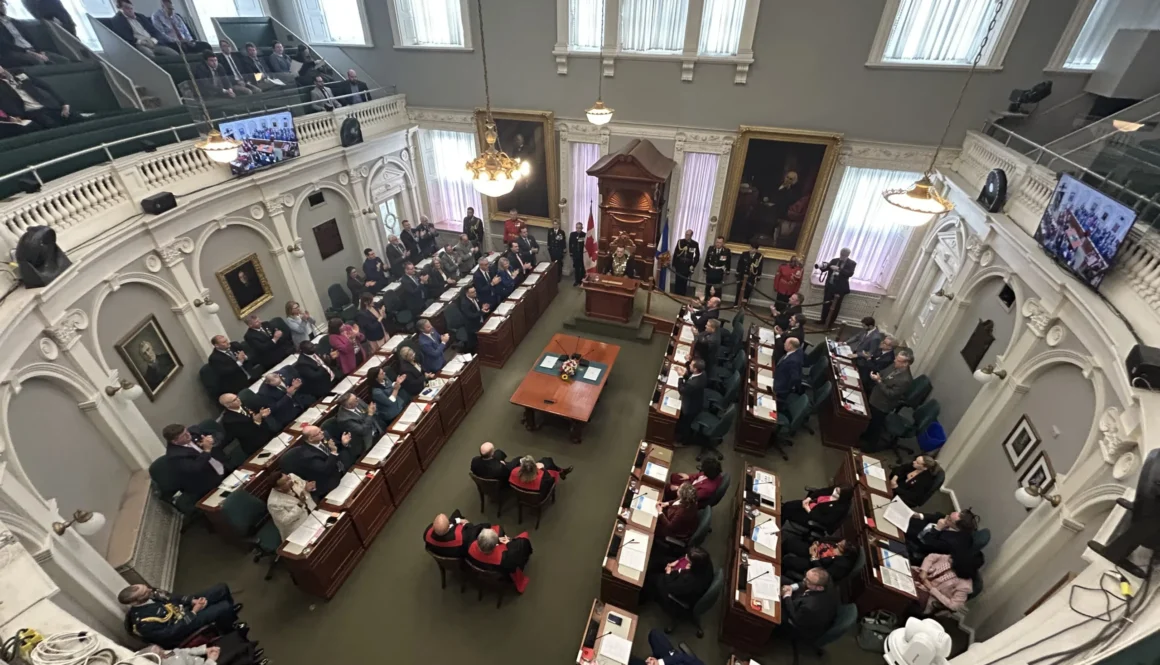
The possibility of a strike by long-term care workers in Nova Scotia was front and centre during question period yesterday.
Halifax Armdale MLA Rod Wilson said workers are nearing a breaking point, with some earning only slightly above minimum wage even after years on the job.
“Long-term care workers have been telling me they don’t want a strike but they can no longer afford to pay their bills,” Wilson said.
He urged the province to act quickly, adding, “The minister could prevent a strike today by presenting a fair raise to long-term care workers.”
Wilson also raised concerns about how a strike could impact care inside nursing homes.
“We know a strike will mean reduced staff… there will be no kitchen staff, no housekeeping staff, no laundry staff,” he said. “Without them the risk of infection will go up.”
Seniors Minister Barb Adams defended the province’s position, saying a comparable deal has already been accepted elsewhere in the system.
“The offer that was made is the exact same offer that was made to acute care workers… and home care workers… and over 23 other long-term care facilities have already accepted the deal,” Adams said.
She also pushed back on concerns about safety during a potential strike.
“What the member just suggested… is just factually incorrect,” Adams said. “There is a legal requirement called an essential service contract.”
Adams added long-term care workers will continue to provide care if job action occurs.
“Our long-term care staff care so much about their clients, they are going to make sure that that care is provided.”
Wilson, however, said the current offer is not enough to prevent a strike, warning job action could begin as early as next week.
Yarmouth Recreation wants to hear about volunteerism.
Nominations are open for their 52nd annual Volunteer Awards.
Community Engagement Officer Jillian Comeau says they’re looking to recognize people who make the community better.
“There are so many groups and individuals in the area that really work hard at getting jobs done and volunteering in the community, so we want to hear about them,” said Comeau.
One volunteer from the town and one from the municipality will be chosen as provincial volunteer award recipients.
The rest will be honoured at a ceremony in the fall.
“There are a lot of things that can’t happen without volunteers, so getting together on one night a year is a small way to celebrate all of their accomplishments.”
Nominations close April 26, at the end of Volunteer Week.
The chief of the Saint John Police Force issued a statement Wednesday regarding allegations made against him by members of the force.
Robert Bruce said after becoming aware of complaints made by officers in July 2025, he fully co-operated with the Saint John Board of Police Commissioners, the New Brunswick Police Commission and the independent third-party investigator.
“The majority of the allegations were found to be vexatious, frivolous and not made in good faith and were dismissed,” Bruce said.
“For the few remaining allegations, I took full responsibility for any action the Saint John Board of Police Commissioners or the New Brunswick Police Commission deemed below the standard expected of the Saint John Police Chief through the informal resolution process under the Police Act.”
Bruce said he’s worked since becoming chief in 2021 to improve trust and confidence in the force.
“The workplace culture I inherited was not one that embraced change or innovation,” he said. “There has been much resistance, specifically from the Saint John Police Association executive, which seeks to maintain the status quo because it benefits them.”
Bruce said the association’s actions were disappointing and predictable, accusing them of using similar tactics and attempts to discredit previous chiefs, city employees and councillors.
“These attacks move us farther from the modern, responsive police force the residents of Saint John expect and deserve,” he said.
He also suggested the timing of the accusations was not a coincidence, as the police union and the City were in the middle of labour negotiations at the time.
Bruce said he would not make any other statements on the matter.
If you are thinking of running in the upcoming municipal election in New Brunswick, time is running out.
“You need to get a nomination paper completed and submitted to the local returning officer before 2 p.m. on April 10th. The nomination kits can be downloaded from the Elections New Brunswick website. On that paper, the instructions are quite clear, but you need to fill in information about yourself, the contest you want to compete in, and most importantly, you need at least 10 nominators who are eligible to vote in the contest in which you are running,” Kim Poffenroth, Elections NB Chief Electoral Officer, explained.
Those who want to run for local government must be 18 years of age and a Canadian citizen. They must also be living in the municipality for at least six months where they want to run as a candidate. If they are running as a Ward councillor, they must be living in that ward on the day they file nomination papers.
Poffenroth added that it is not unusual for New Brunswickers to wait until the last minute to file, especially in municipal elections. “It’s a little less common in provincial elections. I think it’s because people are waiting to see who else is running, is there going to be a vacancy, is there going to be a need for an election?”
She also encouraged not waiting until the last minute, because of the very hard deadline. If your nomination papers are even one minute late to the returning officer on April 10, they won’t be accepted.
“There’s no flexibility there,” Poffenroth added.
So what happens if the deadline comes and goes, and positions remain vacant on municipal councils and District Education Councils?
Poffenroth explained that if there are no candidates or not enough, a byelection will need to be held, likely in October or November.
“For District Education Councils and for Advisory Committees for the rural districts, in those cases, the minister is responsible, so either the Minister of Education or the Minister of Local Government will appoint people to those positions,” Poffenroth stressed.
Many people will also be elected by acclamation if no one else puts their name forward to run against them.
“Your Mayors and Councillors, these people are making decisions about matters that affect voters on a day-to-day basis. We’re talking about policing and fire services, parks and recreation and property taxes. So these are things that I think are really important to New Brunswickers. Knowing that your views are represented and that there are people who will advocate for your community on all these kinds of important issues. It’s really important that you have an opportunity to express your opinion about who you want on those councils,” Poffenroth spelled out.
She also expressed that it’s important people participate, shape and give back to their communities in the way they want to see them move forward over the next four years.
The Codiac Regional RCMP is making the public aware of a recurring distraction theft scam in the region involving fake jewelry.
The deception begins when a scammer approaches a victim in a public setting like a parking lot or a sidewalk. Police say the scammers will claim to be from Dubai and will begin to share stories or conversation.
During the interaction, they will place fake gold jewelry like rings and necklaces on victims – potentially as a gift or offering – all while using the generosity as a diversion to take off the victim’s real jewelry.
The RCMP says maintaining personal space, saying no to contact, keeping valuables secure, and trusting gut reaction will help residents stay safe.
Police invite anyone who is a victim of these individuals or has information to contact the Codiac RCMP at (506) 857-2400. If the suspect is still on scene, call 911. Otherwise, submit a tip anonymously through Crime Stoppers at 1-800-222-TIPS.
The wildfire season has launched in New Brunswick, but it comes earlier than anticipated. There are concerns about record-low precipitation, a lack of snow, and prolonged drought conditions.
The province is spending $6.7 million to help support forest protection and fighting wildfires.
Premier Susan Holt and Natural Resources Minister John Herron announced the news at the Hugh John Flemming Forestry Centre in Fredericton on Wednesday.
Funds will be divided among the groups involved in protecting New Brunswick from wildfires.
Holt said that being prepared is her government’s top priority, which is why they are committing funds to support personnel, equipment, and training for this year’s wildfire season.
Premier Susan Holt speaking at Hugh John Flemming Forestry Centre / Image: Wilfred Fraser
$1.725 million will be invested annually to convert 74 forest ranger positions to year-round positions, according to Holt.
“These are people who spend their winter months increasing their readiness, preparing warehouses and equipment, doing robust training and deployment opportunities,” said Holt. “These are the people who kept New Brunswick safe last year, and our government is committed to supporting them and making those positions permanent.”
Holt also mentioned 16 signed agreements that will provide municipalities with wildfire fighting equipment kits and the required training. She says her government will continue to roll these agreements out into 2027.
$2.6 million will help develop community wildfire resiliency plans, of which 24 are already in place.
$484 thousand has been allocated to the North Shore Tribal Council, the Wolastoqey Tribal Council, and the MAWIW Tribal Council to support their communities in preparing for wildfires.
Premier Susan Holt sitting in a new piece of equipment at the Hugh John Flemming Forestry Centre / Image: Wilfred Fraser
“We have made $6.4 million in capital investment for 2026-27 to build up our provincial fire equipment warehouse and fire hose processing facility in Fredericton … important facilities and equipment to rebuild. We need to rebuild and relocate our fire-retardant storage facility as well,” listed Holt.
Holt also mentioned upgrading reloading bases in Fredericton and Miramichi, as well as four more reloading bases across the province.
“We have allocated an additional $3 million to Forest Protection Limited in our contract with them for 2026-27 to make four fire boss planes available in New Brunswick,” she said.
These four new planes can skim water from lakes and rivers to drop upon burning brush and trees, which will aid in the faster suppression of fires when they are identified.
Holt said a forest ranger has been designated to each district in the province to lead preparation for the season under guidance from the wildfire ranger lead.
“These positions are going to help ensure that preparation for the season occurs consistently across all districts within the department so that we are ready everywhere,” said Holt.
Natural Resources Minister John Herron at Hugh John Flemming Forestry Centre / Image: Wilfred Fraser
Minister Herron acknowledged the work of forest rangers and firefighters who kept the province safe during last year’s wildfire season before speaking about the funding.
“We had a very arduous season last year. Because of the immense skill that our firefighting team has, we did not lose a single structure throughout the entire summer,” said Herron, “so that is a testament to the strength and skill that these men and women have.”
“You had our back, so the very least we can do is that this government and this Premier have your back,” said the natural resources minister.
Herron warned that Climate Change Canada has projected that the summer months in the province will be among the hottest years on record, with above-average temperatures as a result of climate change.
“On behalf of our wildfire prevention officers, I encourage people to continue to enjoy the outdoors while being vigilant with backyard fire pits, motorized vehicles, hunting, fishing, camping activities, and to report fires so that action can be taken quickly,” said Herron.
The provincial government has also launched a Fire Watch page, which New Brunswickers can refer to here. It will be updated at 2 p.m. daily, according to Herron.
Members of the Rainy River District Ontario Provincial Police (OPP) have arrested and charged two men with impaired driving in two separate incidents over Easter weekend.
On Friday, members of Rainy River OPP detachment of the OPP pulled over a vehicle going 27 km/h over the posted speed limit. Upon further investigation into the incident, it was determined that the driver of the vehicle was impaired.
On Monday, Rainy River OPP officers determined a driver on Highway 11-71 was impaired after a traffic stop.
The two Fort Frances men, aged 23 and 61, are charged with drunk driving.
They have been released from custody and are scheduled to appear before the court at a later date.
The OPP says they remain committed to taking alcohol/drug-impaired drivers off the roads through enforcement and public education. If you suspect that someone is driving while impaired by alcohol or drugs, call 9-1-1 to report it.
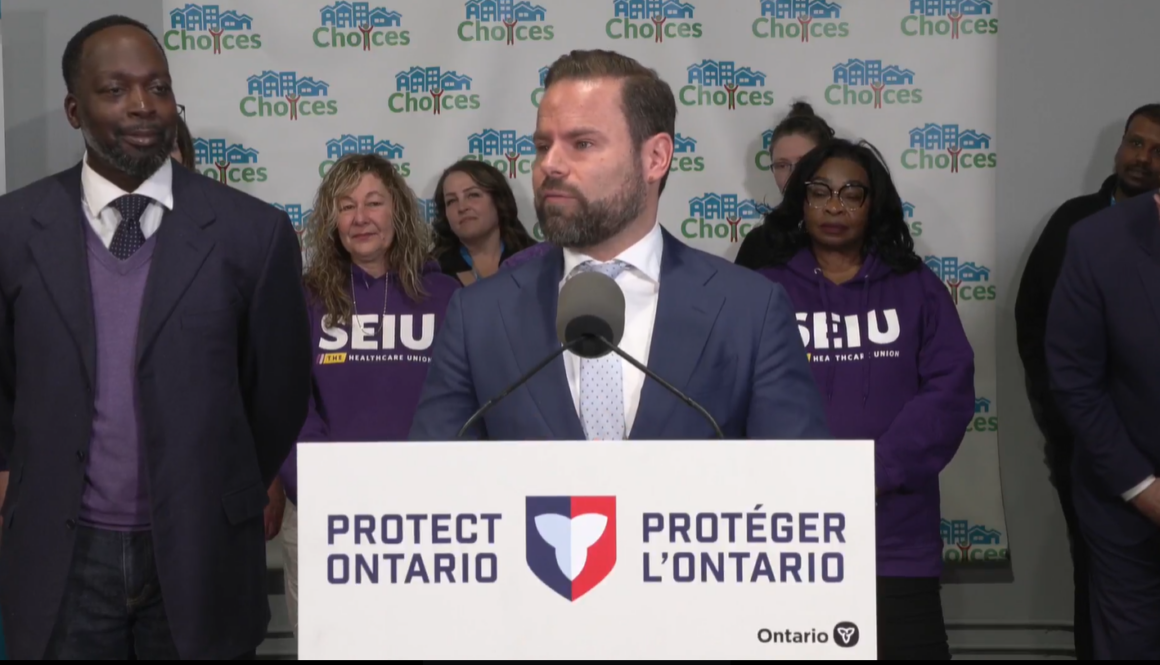
The provincial government intends to expand Workplace Safety and Insurance Board coverage to more employees.
The province intends to make it available to workers in privately operated residential care facilities, retirement homes and group homes.
Labour Minister David Piccini says it creates a level playing field.
“These changes would close long-standing coverage gaps across the sector, giving workers access to WSIB coverage like income replacement, healthcare and rehabilitation services, retraining and return to work supports, while providing employers a clear, consistent rules across the sector,” Piccini.
Piccini says since the nature of their work has changed over the years, so too should the coverage.
Unions are pleased with the province’s announcement.
President of SEIU Healthcare Canada, Tyler Downey, calls it a win that is more than a policy change.
“This is recognition of the dignity of care work, the value of those who do it, and the responsibility we all share to stand behind the people who spend their lives caring for others,” says Downey.
Piccini also sees the benefit helping with the recruitment and retention of employees.
“When you want to attract staff, and when workers go to work and roll up their sleeves every day, often dealing with some of our friends and neighbours with the most complex needs, when we say we have your back and you will have WSIB support, I think it does create a more attractive working environment.”
The province reports that approximately 165,000 workers in Ontario are employed in the nursing and residential care facilities sector.
Over 75% of employers in Ontario in most sectors are subject to mandatory coverage.