A constitutional challenge has been launched over a labour law that restricts any form of job action, including a strike, by nurses in Ontario when trying to negotiate a new contract.
The Hospital Labour Disputes Arbitration Act (HLDAA) was put in place in 1965.
The Act was intended to resolve contract disputes without disrupting essential healthcare services.
President of the Ontario Nurses Association Erin Ariss says it has allowed for a system that sidesteps meaningful collective bargaining.
“Instead, employers have relied on arbitrators to impose contracts that reinforce the status quo and consistently fail to address critical systemic issues like equal wages and understaffing,” says Ariss.
Ariss says the tipping point for them came with last year’s arbitrator-imposed contract that ignored the nurses’ demand for nurse-to-patient ratios.
“This followed more than 15 years without a negotiated settlement by hospital employers,” says Ariss.
More recently, bargaining for nursing homes broke down after only a couple of weeks when employers held firm on their negotiating position, leading to arbitration to decide on a contract.
The union also see HLDAA as a gender equality issue, given that more than 90% of workers impacted are women in a historically female-dominated profession.
“Recognition without respect is meaningless,” says Ariss.
“If the Ford government truly values nurses, it must do more than offer symbolic thanks. It’s time to confront the reality we are living every day and respect our right to the same collective power nurses across Canada have enshrined in our constitution.”
Some Fort Frances High School students are getting a chance to test-drive a career.
They are the latest participants to take part in the school’s co-operative education program.
The program provides students with the opportunity to spend time in a workplace, helping to guide them toward a potential career path.
Students showcased their placements at the annual Co-Op Display Day.
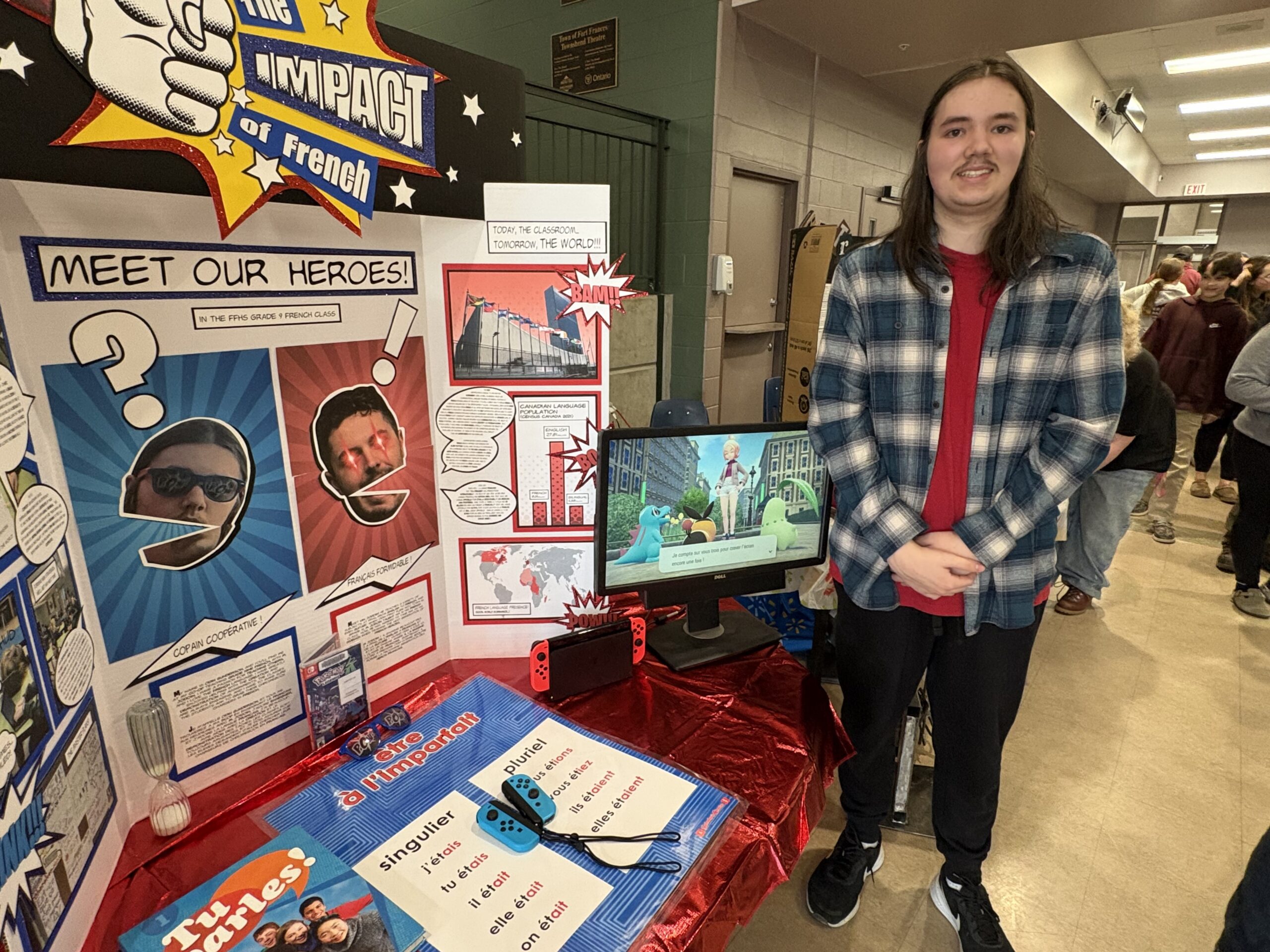
Odin Gunderson spent his time in a grade 9 French class, helping students learn the language.
Odin Gunderson explains the impact of French after assisting in a grade 9 French class, May 6, 2026. Image: Randy Thoms/Acadia News
“I personally love teaching the language French, and I love the language itself,” says Gunderson.
“A number of my family members are teachers, so I wanted to carry on with that, see how I enjoy the profession.”
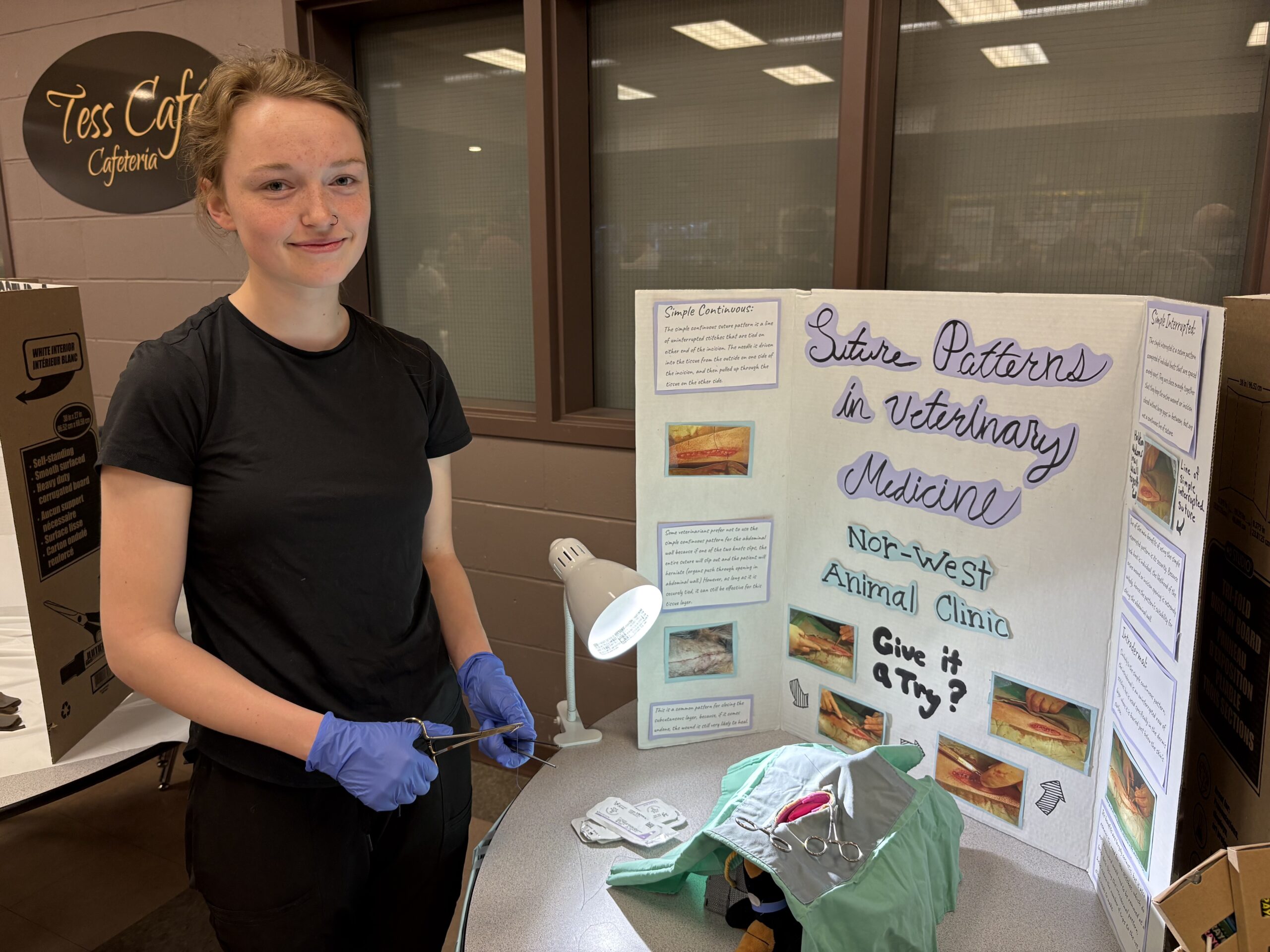
Grade 12 student Cleo Reynolds chose the Nor-west Animal Clinic for her placement, assisting with appointments and surgeries.
Cleo Reynolds practices suture patterns on a stuffed animal, May 6, 2026. Image: Randy Thoms/Acadia News
She says it is an avenue she is interested in.
“I want to be a vet, but it’s a lot of schooling, obviously, and I wanted to make sure it’s something I want to pursue before I go through with all that university education,” says Reynolds.
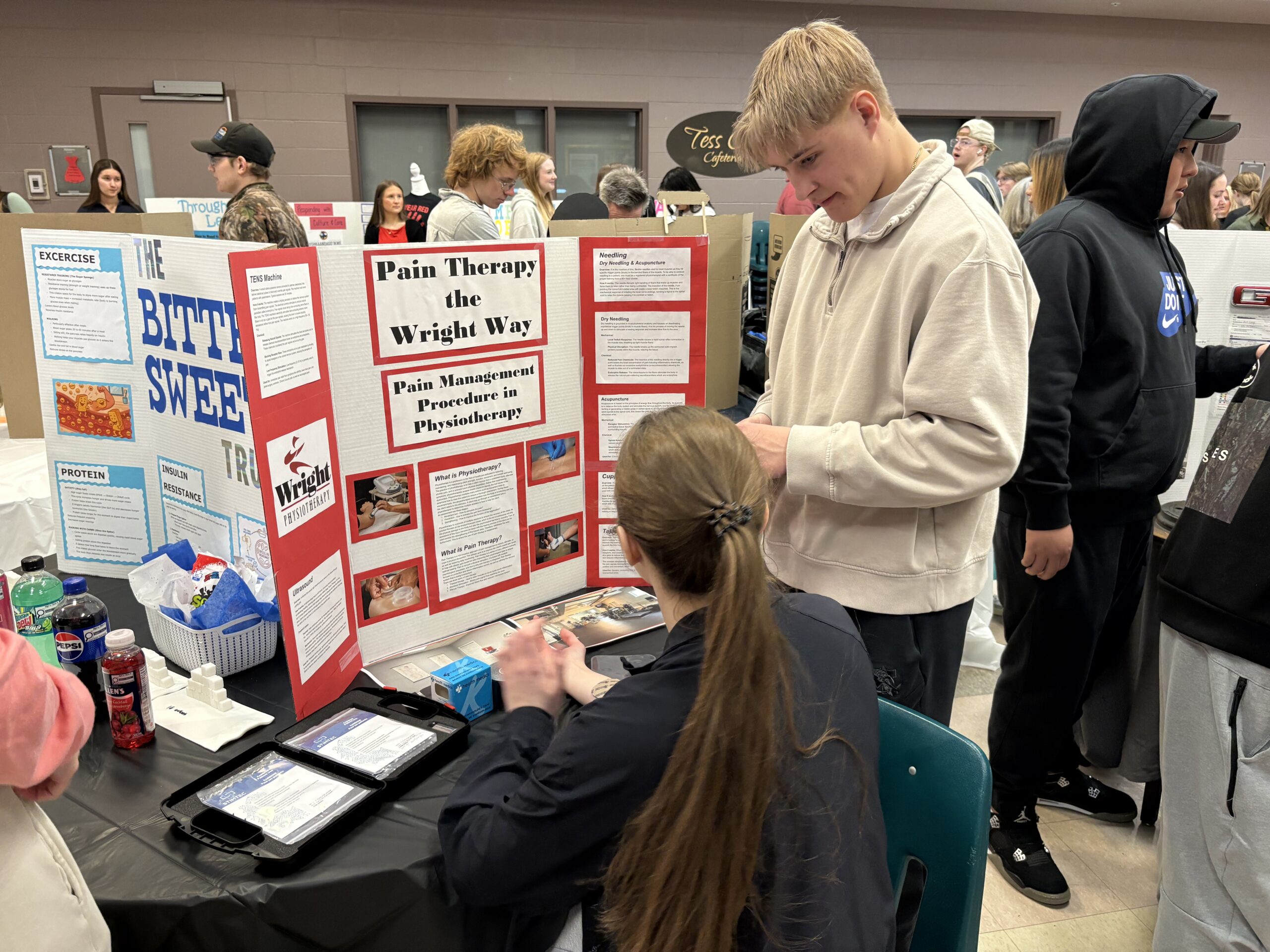
Aiden Loerzel was at Wright’s Physiotherapy, learning about various machines used in pain therapy.
Aiden Loerzel explains the equipment used for pain management at Wright Physiotherapy, May 6, 2026. Image: Randy Thoms/Acadia News
He calls it a great experience.
“I’ve always been really interested in sports medicine,” says Loerzel.
“As an athlete myself, I get hurt a lot. I was pretty interested in the physio aspect and how pain works, and how to reduce it. So I was really interested in helping out with that and learning more from professionals and researching how the chemistry and all that works with the healing and recovery.”
He is now looking at the profession as a career path.
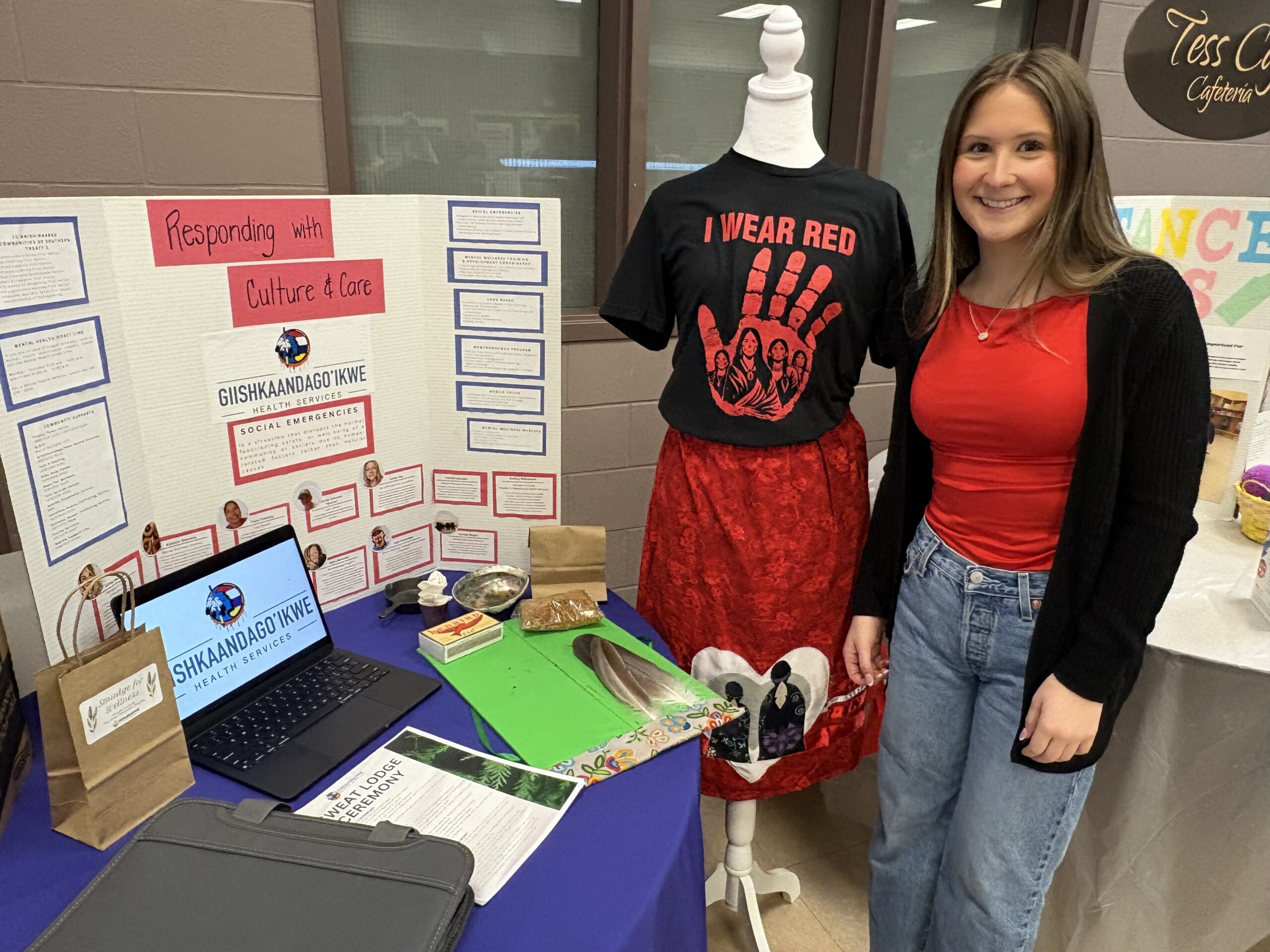
Grade 12 student Blaire Cross selected Giishkaandago’Ikwe Health Services, spending time with a program that responds to crises, as she considers a career in policing.
Blaire Cross explains how Giishkaandago’Ikwe Health Services responses to social emergencies in the area, May 6, 2026. Image: Randy Thoms/Acadia News
“I thought that this would be a really good fit for me because this is also related to mobile crisis and things like that because we’re connected very closely with the OPP,” says Cross.
“It felt really good as a person who could support and understand what other people are going through. But then it was also just a relief to understand that people are getting help and seeking the help that they need.”
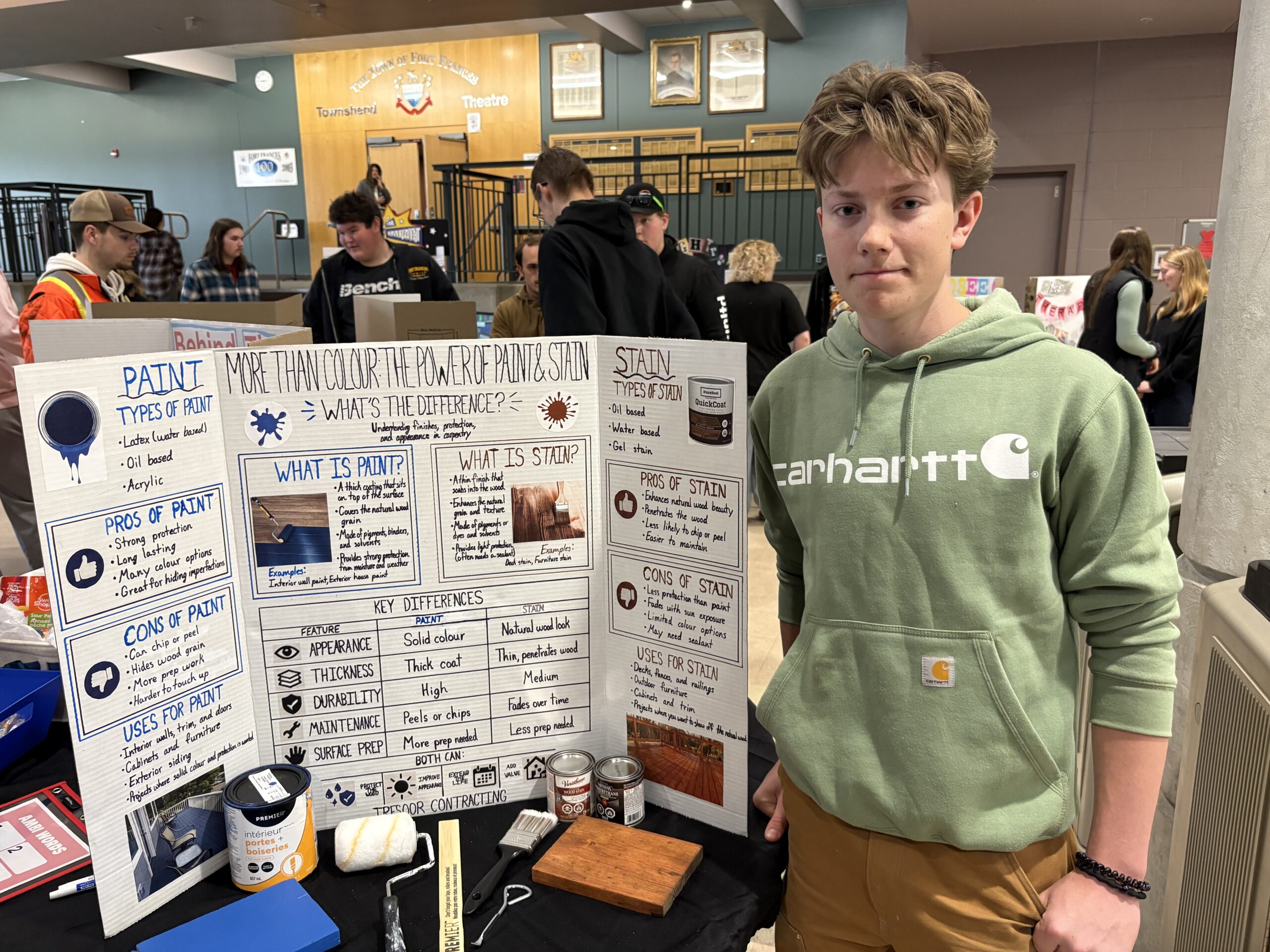
Chase Felix took a trades route, working at Tresoor Contracting, where he was involved in carpentry work.
Chase Felix outlines the difference between stains and paints used during his co-operative education placement, May 6, 2026. Image: Randy Thoms/Acadia News
He says he wanted to get experience in a field he intends to pursue.
“It definitely helped. I do want to do something in the trades for sure,” says Felix.
“It’s a great experience to get out and do stuff and see if it’s truly what you want to do and learn about what you like and don’t like about the career path you think you want to get into.”
Qianna Bell is also interested in the trades.
Qianna Bell explains the use of welding equipment used during her co-operative education program, May 6, 2026. Image: Randy Thoms/Acadia News
She did placement in the high school’s shop classes, with a focus on welding.
“In grade nine, I started in shop classes, and I just continued with it. I figured out I loved welding,” says Bell.
She has already applied to enrol in Seven Generations Education Institute’s welding program.
“I have a lot of fun with co-op. I love doing it every time that I do it. This is my second year. It’s my favourite thing, and I suggest everybody goes and does it.”
Serenity McLeod also experienced the trades by working at RGB trucking to gain knowledge about being a heavy-duty mechanic.
Serenity McLeod displays a brake drum and other parts at her co-operative education display, May 6, 2026. Image: Randy Thoms/Acadia News
“I’ve been into how things work, whether medically or mechanically,” says McLeod.
“(It’s) something I’m looking into. I do want to further my schooling, though, so it’s kind of a fallback, I guess.”
Students say they enjoyed the experience and recommend other students to enrol.
“You get a credit, and you get a lot of experience,” says McLeod.
“You can make new work friends. It’s a way to get your hands on without having to spend a lot of money on tools or try a career path without continuing your education,” says McLeod.
“The co-op is very fun once you get into it. The beginning can be a little bit steep, but as soon as you settle in, you’ll figure out what you really love about it, and you’ll find yourself enjoying yourself more,” adds Gunderson.
The Ontario Public Service Employees Union says the underfunding of community and social services is pushing workers to the brink.
The union has launched a campaign, calling for fair wages for workers and funding increases to the agencies they work for.
OPSEU President JP Hornick says it is a major issue in contract talks.
“Thousands of OPSEU/SEFPO members in the Worth Fighting For campaign are taking a historic stand, not just for wage justice, but for the future of the services and the care that they provide,” says Hornick.
Hornick says 27 bargaining units have filed no board reports in separate negotiations.
The union wants the government to compensate workers who were impacted by wage-restricting legislation that was eventually declared unconstitutional in the courts.
This led to agreements of retroactive increases for some public sector workers, such as those working in colleges and hospitals.
Hornick says thousands of others are waiting for the same treatment.
“These workers have been at the bargaining table with their employers, and they’ve told them as much that the funding just isn’t there. It’s on Ford to make this right.”
The union notes a $1.5 billion funding shortfall for the Ministry of Children, Community and Social Services.
The latest provincial budget shows a 2.4% decrease to the Ministry’s allocation over the next year.
There is an effort to revive a labour council in the Rainy River District.
A meeting is planned for Monday evening at the Fort Frances Library.
Cynthia Woodland, a Political Action representative for the Ontario Secondary School Teachers Federation and Elementary Teachers Federation of Ontario, says the council was very active, but COVID and the passing of a former president left the council dormant for several years.
She notes there has been some renewed interest in getting it back on its feet.
“I’ve been listening to a couple of meetings, different places in town, that we should get this going. People will talk to me, or I’ll talk to them, and I just thought, okay, let’s do it,” says Woodland.
Labour councils often bring unions together to support each other, advocate for workers’ rights, lobby governments, and coordinate community campaigns and activities.
Councils also lend support to other activities such as food drives.
Woodland does not believe it will take much to get the council up and running.
“We still have a charter. That’s still active. It’s just getting all the little details and probably educating some of the younger workers on what it actually means to have a labour council.”
A representative from the Thunder Bay Labour Council will be on hand to offer advice.
Woodland is hoping that with enough interest, they will be able to elect a representative and discuss local activities that the council may be involved, including a labour day picnic.
Monday’s meeting will take place in the Shaw Room of the Fort Frances Library and Technology Centre beginning at 6:30 p.m.
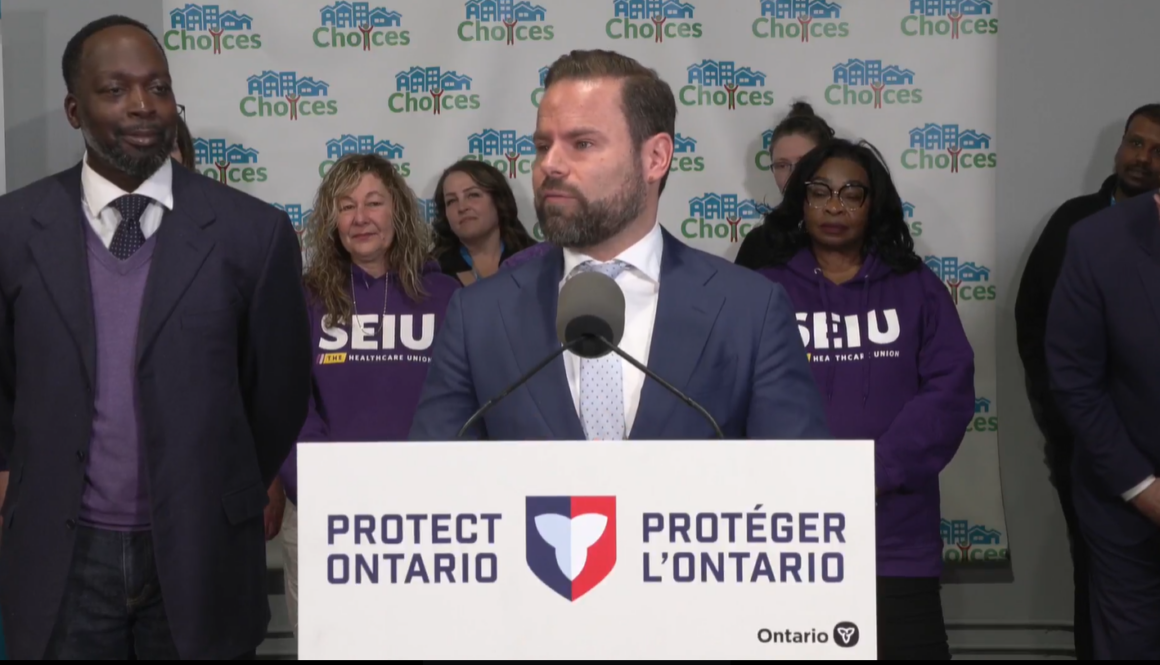
The provincial government intends to expand Workplace Safety and Insurance Board coverage to more employees.
The province intends to make it available to workers in privately operated residential care facilities, retirement homes and group homes.
Labour Minister David Piccini says it creates a level playing field.
“These changes would close long-standing coverage gaps across the sector, giving workers access to WSIB coverage like income replacement, healthcare and rehabilitation services, retraining and return to work supports, while providing employers a clear, consistent rules across the sector,” Piccini.
Piccini says since the nature of their work has changed over the years, so too should the coverage.
Unions are pleased with the province’s announcement.
President of SEIU Healthcare Canada, Tyler Downey, calls it a win that is more than a policy change.
“This is recognition of the dignity of care work, the value of those who do it, and the responsibility we all share to stand behind the people who spend their lives caring for others,” says Downey.
Piccini also sees the benefit helping with the recruitment and retention of employees.
“When you want to attract staff, and when workers go to work and roll up their sleeves every day, often dealing with some of our friends and neighbours with the most complex needs, when we say we have your back and you will have WSIB support, I think it does create a more attractive working environment.”
The province reports that approximately 165,000 workers in Ontario are employed in the nursing and residential care facilities sector.
Over 75% of employers in Ontario in most sectors are subject to mandatory coverage.
The provincial NDP is calling on the Ford government to support legislation that would make it illegal for companies and organizations to hire replacement workers during a strike.
A proposed bill was reintroduced at Queen’s Park last week.
Ontario had legislation in place before former Premier Mike Harris repealed the law shortly after taking office in 1995.
NDP Labour Critic Jamie West says he has seen the impact of that decision when he was working for a company that went on strike.
“And during that time, for the first time in my company’s 50-year history, we had scab replacement workers cross the picket line,” says West.
“I saw firsthand how it artificially lengthens the length of a strike. It makes it more difficult. And with the hindsight of after the strike ending, looking back, I saw how it exploits vulnerable workers who are desperate to make money.”
Niagara Falls MPP Wayne Gates, who was a former labour leader, concurs.
“When you see that bus pull up, full of workers, replacement workers, anti-scab workers, and your heart sinks,” says Gates.
“And now it becomes a set of confrontation, not just between the employer and the union and their members. It becomes a constant fight between replacement workers, anti-SCAB, and the police. The whole process becomes off the rails.”
The NDP notes federal legislation has been in place since 2004.
Quebec and British Columbia have provincial laws that are nearly half a century old.
“It’s time for Mr. Ford and his government to say, yes, we want to protect workers, yes, we want to protect our communities, yes, we want to have a more just society,” says West.
Contract talks between Unifor and Community Living Dryden-Sioux Lookout are scheduled to resume next week.
A conciliator will be involved.
The organization’s 120 employees have been working without a new contract since last August.
The two sides attempted to discuss an new agreement last fall, but talks broke down in November with wages the key stumbling point.
The union says the organizations is offering lump-sum payments in lieu of a general wage increase for some years.
“For anyone to be offered a zero with the kind of inflation we’ve experienced is absolutely unacceptable,” states Katrina Peterson, Unifor Local 324 President, in a release.
“Inflation has risen almost 19% over the last 5 years and as a result, Unifor has successfully negotiated fair wage increases with several healthcare and social services agencies across the region.”
“I would say this employer has been fair in the past, but seriously, you can’t say you care about your staff while watching their pay cheques get stretched thinner year after year and then offer them token wage increases and even wage freezes, ” adds Peterson.
Seniority and safety concerns related to forced overtime shifts are other key issues.
Employees voted this week 100% in favour of strike action to back contract demands.
Stephen Boon, Unifor’s Northern Area Director says they are still committed to working towards a negotiated settlement.
“Our memberships have expressed solid support for their bargaining committees, and we informed them we will continue to work to achieve fair deals in an attempt to minimize any disruptions to the people they are committed to serve,” says Boon.
He adds that if conciliation fails to produce an agreements, mediated talks are still possible.
“However, failing that, our memberships will begin preparations for potential strike action as early as next month,” states Boon.
Ontario’s Premier feels workers should be given the option to work on statutory holidays or not.
Doug Ford is asking his Labour Minister to investigate the idea further.
It stems from his disappointment in seeing several shopping malls closed on Family Day.
Ford feels workers should have the choice to work or not.
“Someone making $20 an hour wants to make $50 an hour and wants to work those 8,10 hours, bring home $500. God bless them. They should have that opportunity,” says Ford.
He says it would result in workers having extra money in their pocketbooks and stimulate the economy even more.
He predicts it would be close to a million extra working hours across the province.
However, Ford is not interested in forcing employees to work on a statutory holiday.
“People will never be forced to go to work. Never, or we’ll charge the company that forces them,” emphasizes Ford.
The Premier did not indicate how long he will give his Labour Minister to review the idea or when any legislation may come to Queen’s Park for further discussion.
Labour groups in Ontario say there are some unresolved issues stemming from the wage-restricting legislation that was struck down by the courts four years ago.
While some public sector workers receive retroactive pay, many others have not.
The Ontario Federation of Labour (OFL), alongside coalition members representing unions impacted by Bill 124, including the Canadian Union of Public Employees Service Employees Union-Ontario (CUPE Ontario) and the Ontario Public Service Employees Union (OPSEU), want the Ford government to address the issue.
OFL President Laura Walton says it should not take years to correct.
“We’re ready to engage in meaningful discussions to resolve this fairly and efficiently. But workers cannot be expected to wait indefinitely for justice after a law has already been ruled unconstitutional,” says Walton
Workers in healthcare, education and the LCBO were among those to benefit from a retroactive bump up in pay.
Union leaders say thousands of others, including developmental service workers, child protection workers, childcare workers, and addiction and outreach workers, have never received any remedy to wages being limited to a one percent increase.
CUPE Ontario president Fred Hahn feels the Ford government is discriminating against those workers.
“They must be given the same respect and the same remedy for Bill 124 as other public sector workers, deserve to be compensated fairly. Not to be locked in unfair low wages,” says Hahn.
“Social services are the foundation of our communities, their work. These workers’ work is required to ensure that we live in a decent and caring province.”
The union leaders say they are prepared to take legal action or labour action in their fight for reimbursement.
JP Hornick, President of OPSEU, estimates that about 25,000 members in 150 bargaining units are deserving of retroactive pay.
Hornick says they sent a letter to the provincial government, indicating their intention of taking legal action to recoup the money for workers.
“We are willing to engage in meaningful discussion with the Ford government to resolve this now before we take this fight back to the courts,” says Hornick.
“These workers had wages stolen. They were affected by Bill 124, and they deserve the remedy now, not three years later, but right now.”
Hydro One and the union representing more than two thousand employees have reached a tentative agreement.
The Society of United Professionals, which covers engineering, supervisory and other professional roles across Ontario, confirmed the proposed contract is now headed to a ratification vote.
Details of the agreement have not been released.
If approved, the deal would be retroactive to October of 2025.
Hydro One employs more than ten thousand people and supplies electricity to roughly one-point-five million customers across the province.