Scientist advises against rushing Ring of Fire road projects
By Mike Stimpson, Local Journalism Initiative Reporter
Source: SNnewswatch.com
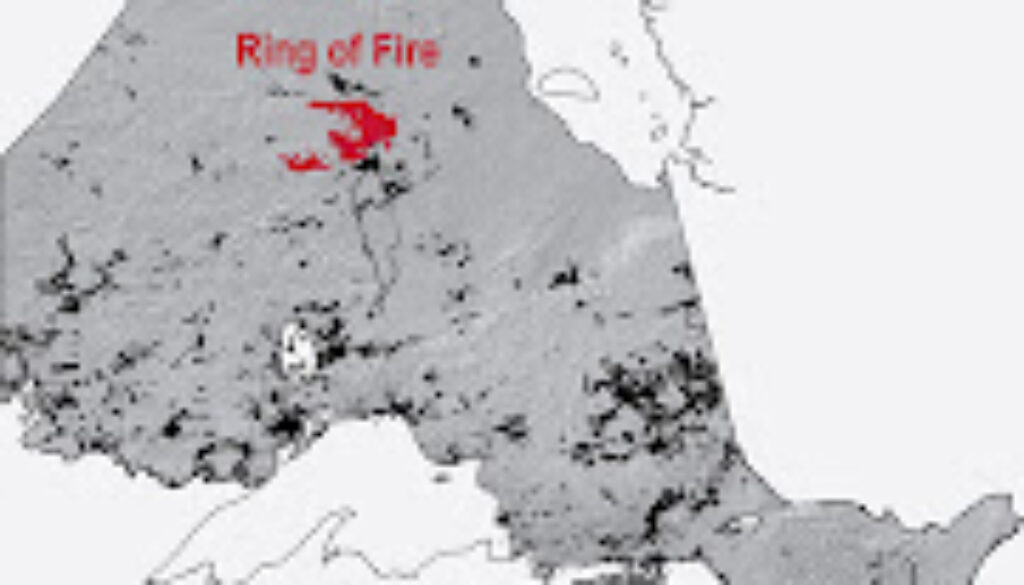
The Ontario government wants to go fast on connecting the Ring of Fire to the highway system, but conservation scientist Adam Kirkwood cautions that haste carries risk.
“There are definitely quite a few risks,” Kirkwood, a research associate with Wildlife Conservation Society Canada, told Newswatch.
Financial risks are real, he said, but ecological risks are his focus and area of expertise.
On March 2, the province released a plan to accelerate construction of all-season roads to the Ring of Fire so that projects could start this June and the first road — the Webequie Supply Road — could open by the end of 2030, four years ahead of schedule.
The roads involved are routes to the Webequie and Marten Falls First Nations, and the Northern Road Link to connect those roads to the mineral-rich Ring of Fire.
Transportation Minister Prabmeet Sarkaria was quoted in a government news release as saying the accelerated timeline was created “so we can unlock Ontario’s full economic potential and cement our position as a world leader in the critical minerals space.”
But going fast will increase the risk of serious environmental impacts, Kirkwood said this week in a phone interview.
A key ecological risk involves the impact roads could have on peatlands, he said.
Much of the region is covered by thick, water-saturated peatlands. And building roads on such terrain is tricky.
Kirkwood said the two best options for making roads on these peatlands are to lay down huge volumes of aggregate fill to compress the peat, or to use synthetic geotextiles to produce a “floating road.”
In fact, he said in a recent opinion piece in the Globe and Mail, those are the only “viable engineering options.”
The floating-road option is the more likely one due to “the limited areas available for aggregate extraction along the proposed corridors,” he wrote in the op-ed.
One ecological consequence, he told Newswatch, would be the release of greenhouse gases on either side of the roadway.
The floating road would compress the peat beneath it and create a damming effect that impedes water flow within the peatlands, he explained.
Peatlands are valued for carbon storage; they’ve been “slowly pulling carbon dioxide out of the atmosphere through photosynthesis” for thousands of years and continue to do so as they grow, Kirkwood said.
“But because it’s so wet and because it’s cold, they don’t decay as quickly as other environments.”
The slower decay has meant greater retention of carbon-rich greenhouse gases, Kirkwood said.
“So in the Hudson Bay Lowlands — which covers parts of Manitoba, Ontario, Quebec — there’s about 30 to 35 billion metric tons of carbon stored just in peatlands.”
Building a road through peatland is “basically like building a dam through the peatland,” Kirkwood remarked.
“On the upstream side of the road, the water that’s moving through the peatland can’t cross the road.
“And so that upstream side is going to get very wet, and you’ll have potentially more ponding of water, and that’s going to affect decomposition.”
The decomposition produces methane, “which is a more potent greenhouse gas than carbon dioxide.”
The greenhouse gas damage doesn’t end there, according to Kirkwood.
On the other side, the peat “will be much drier because the water can’t get there,” he said.
“And when peatlands get drier they can also produce more carbon dioxide than they usually would.”
In short, he said, “there’s a potential shift from that peatland being a sink of carbon where it’s absorbing carbon to being a source of (atmospheric) carbon” which accelerates global heating.
Rushing to build the road risks “causing irreversible damage to ecosystems,” he wrote in his Globe and Mail piece.
“We can’t afford to build this road by trial and error — shortcuts today will cause financial and ecological liabilities tomorrow.”