Now that the province has reversed some of their initial budget cuts, they have a chance to fix other structural problems in the government, according to a political scientist.
That problem is what Tom Urbaniak calls “centralized scarcity,” meaning the political decisions come from the premier’s office.
He says the time in the legislature is extremely limited, with the fall sessions lasting just over a week, so the government can push out their bills as fast as possible before people can “really dig into them.”
“The centre of gravity is the premier’s office. Decisions are being made quite arbitrarily about what to cut and what not to cut, and there isn’t a lot of debate in any democratic forum or in the province at large, simply because there isn’t time or opportunity for that debate to happen,” says Urbaniak, a professor of political science at Cape Breton University.
On Tuesday, the province walked back some of the changes proposed in the budget after massive province-wide rallies calling for the government to maintain funding to several sectors.
Now, the government will bring back $53 million worth of grants and programs that they planned to cut, which will go to African Nova Scotian and Indigenous students, as well as programs for seniors and disability supports.
However, they did not reinstate the cuts to the arts, culture and tourism sector.
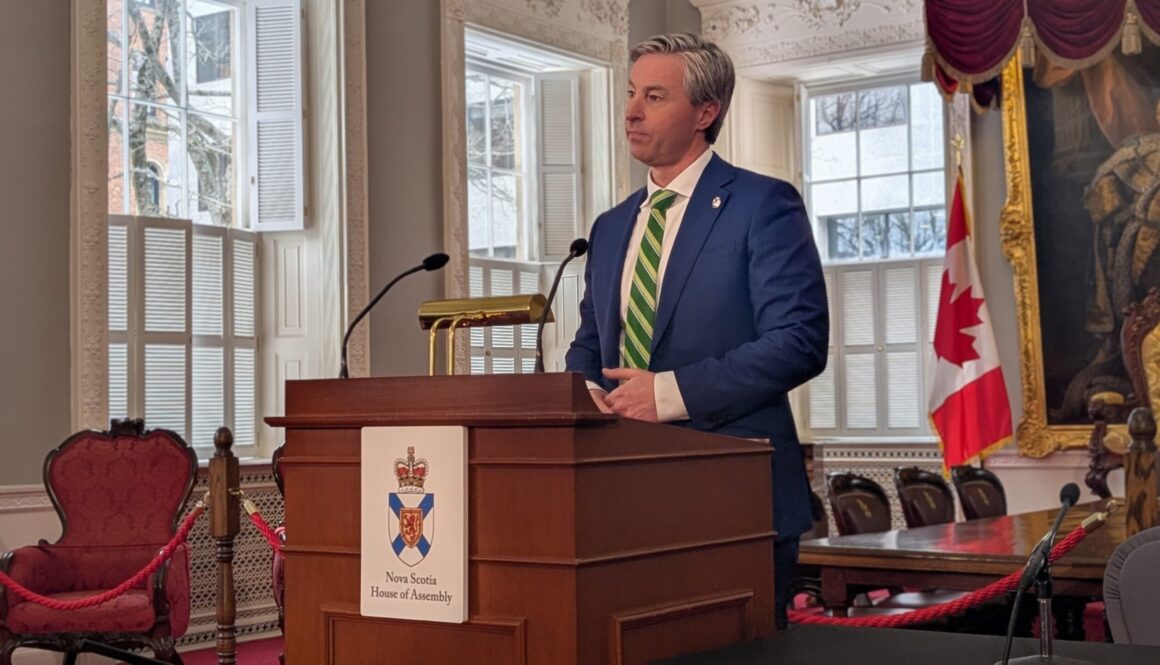
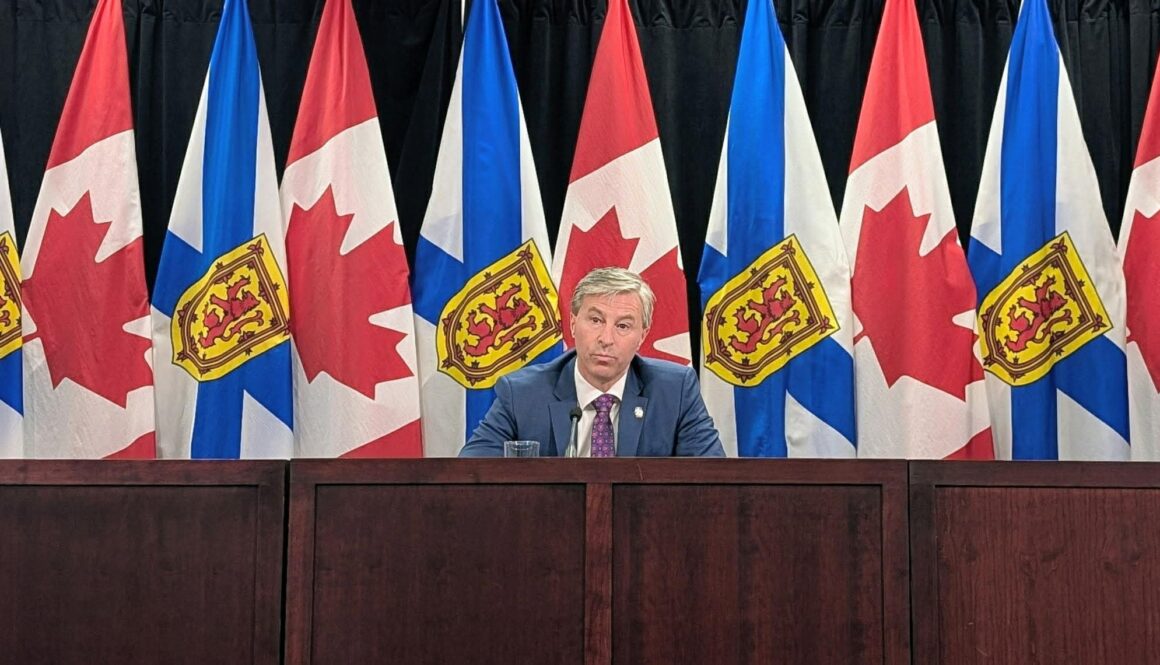
Premier Tim Houston says they got some things wrong.
“For that, I’m sorry,” the Premier told reporters during a news conference on Tuesday.
“I never want Nova Scotians to feel that the government is working against them. We did not do enough ahead of time to explain the seriousness of the challenges we’re facing. We moved too quickly.”
No analysis done, professors say
Talan Iscan, an economics professor at Dalhousie University, agrees that it does not look like the government did any kind of economic analysis in the budget.
Both Iscan and Urbaniak say they believe the ministers sometimes were not aware of what cuts were made or why.
And now, with the province reversing some of the slashed spending, he has more questions.
“How come they can make these decisions without any consultation, without any clear thinking and without any explanation to the public and then respond to public pressure?” says Iscan.
Restoring funding for some of our most vulnerable people, he says, including people with disabilities and seniors, is significant.
But he says people have bigger questions about the environment, arts and culture, and scholarships that have been taken away from students, some of whom he knows.
To fix this, the government needs to be better connected to the communities and people affected by these decisions, he says.
Need more than a Band-Aid solution
Urbaniak says the budget needs more than a Band-Aid solution or amendments. To “give some constructive advice,” he says the government should take several weeks to totally redo it and get input from all sorts of perspectives.
“I hope that the Premier’s manifestation of regret and humility today, which is welcomed with respect to the programs that he has addressed, will actually lead to a bigger discussion of how we do politics in this province and how we develop policy in this province,” says Urbaniak.
“Let’s deal with this in a more mature, more methodical manner.”
Lunenburg council will weigh several options to address leaks in the roof of the historic Lunenburg Academy as the town prepares its upcoming capital budget.
A staff report says the building currently has several active leaks, prompting the need for repairs.
One recommendation would see council increase the project budget to about $1.27 million, including tax, and award the tender for the base portion of the work to Roof Tile Management at $991,554 That option would address the most urgent repairs.
Funding would include $300,000 from grants, $250,000 from the Lunenburg Academy Foundation, with the remaining $720,000 financed through town capital debt.
Council also has the option of completing the entire roof project now. That would require increasing the 2026-27 capital budget to about $2.3 million to cover both the base work and additional repairs that could otherwise be delayed.
A third option would see the town defer the project to a later date.
The roof repairs have been under discussion since 2024, when a condition assessment and design work were completed for the project.
A tender issued in 2025 for the full scope of the work received bids that came in significantly higher than the budget at the time. Council voted in August to defer the project and revisit it during the next budget cycle.
The current tender splits the work into two parts — urgent repairs included in the base bid and additional sections that could be delayed by three to five years.
Council is expected to discuss the project at its March 10 meeting.
Nova Scotia is walking back some of the $130 million in planned budget cuts.
They’re restoring over $53 million in three areas: disability support, seniors and funding for African Nova Scotian and Indigenous students.
Premier Tim Houston says they were honest about the financial situation of the province, and admit some decisions were wrong.
“For that, I’m sorry.” said the Premier during a news conference on Tuesday.
“I never want Nova Scotians to feel that the government is working against them. We did not do enough ahead of time to explain the seriousness of the challenges we’re facing, we moved too quickly.”
He says after listening to the public outcry and concrete examples brought forward, they decided to restore some funding.
Houston says this will increase Nova Scotia’s $1.19 billion deficit, but these programs make a difference, and it was the right decision.
Arts and culture cuts not restored
The cuts to the arts, culture and tourism sector will remain.
Houston says the arts community is valued.
“Arts and culture is a big part of what makes us special. Even though the adjustments remain, I do wish we could do more today.”
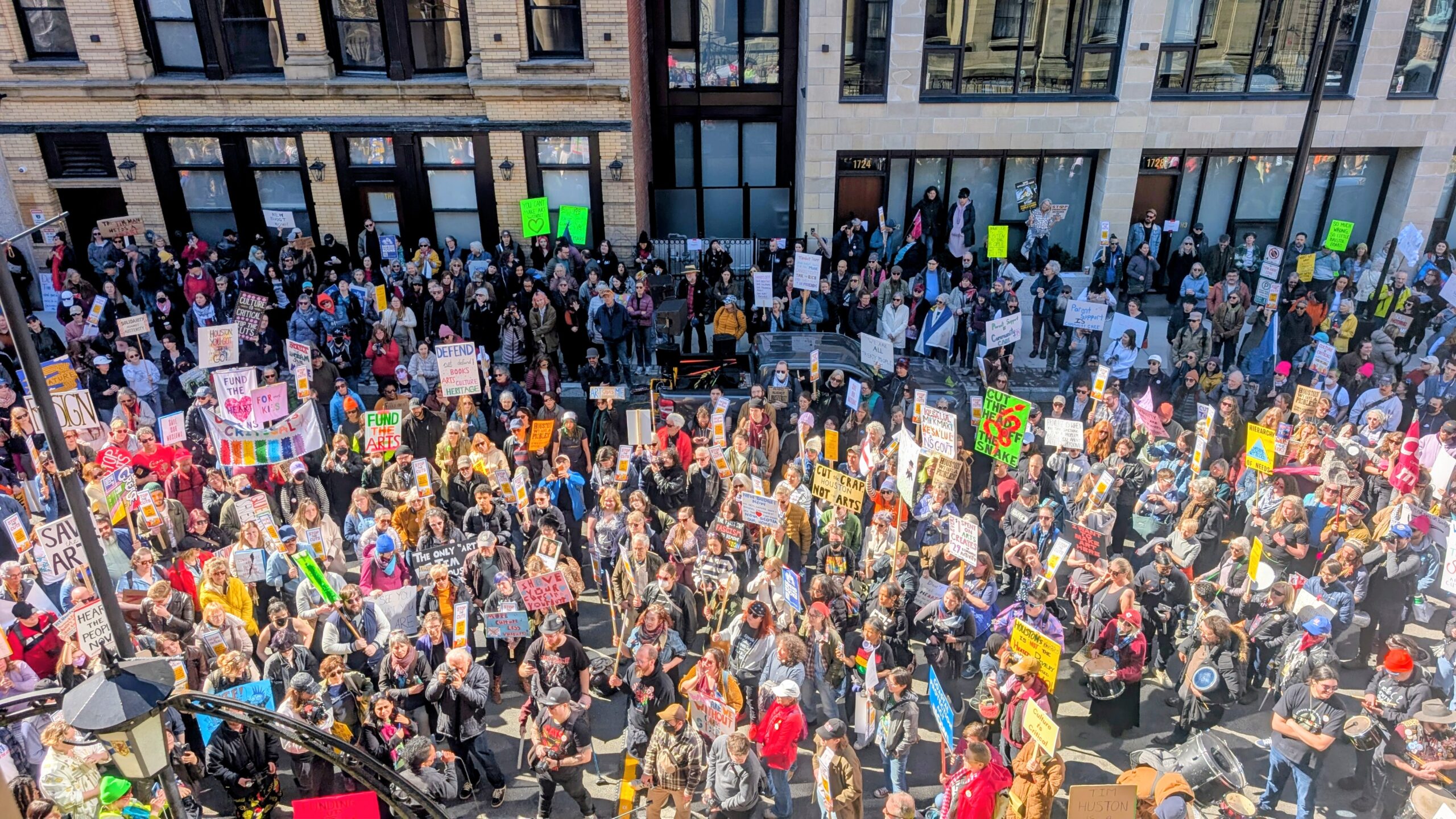
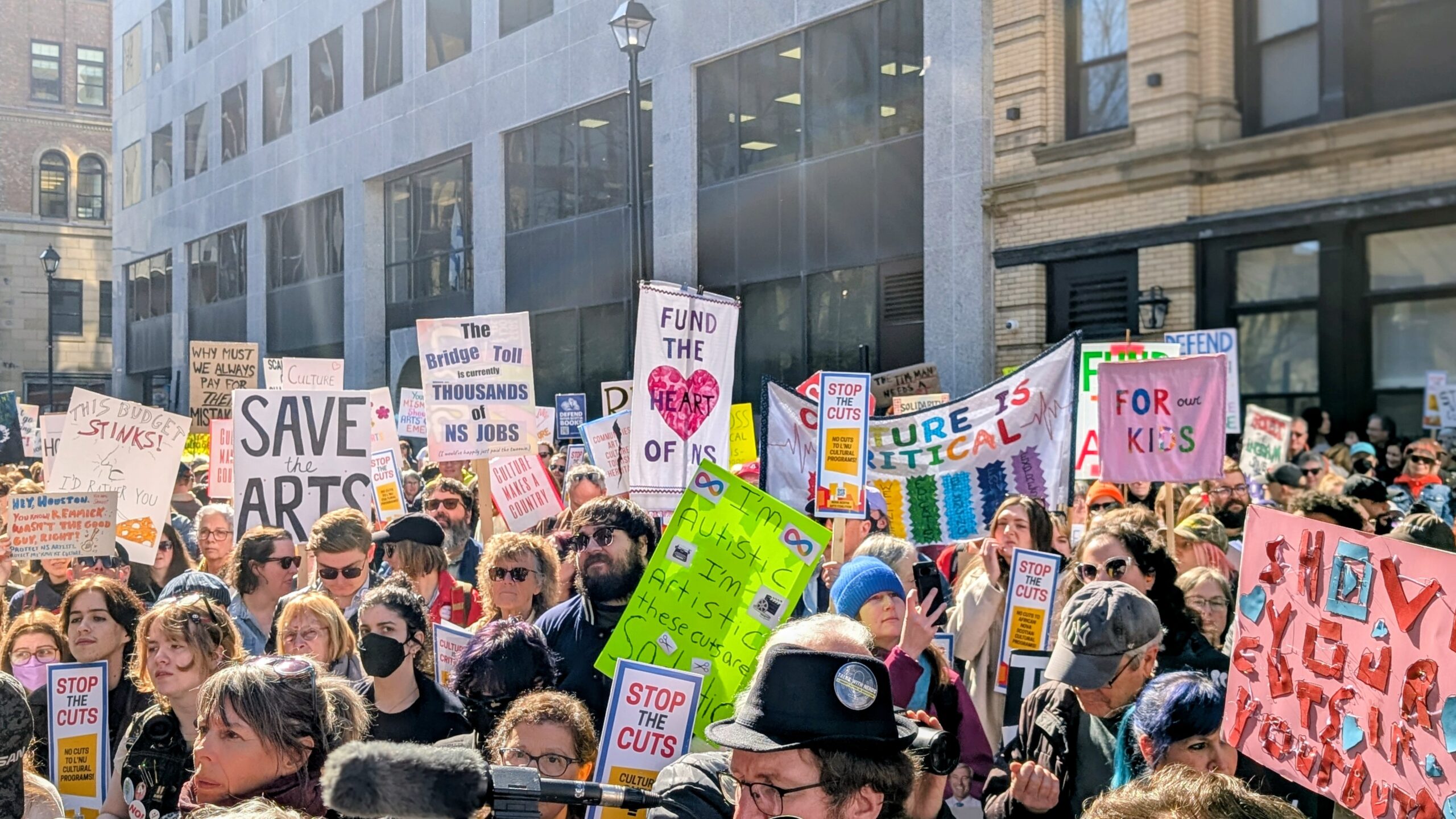
A rally is planned outside Province House Tuesday, hundreds attended one last week, and several smaller rallies across the province.
Rally for arts and culture in Halifax. PHOTO BY NATALIE CHIASSON /Acadia Broadcasting
Chender calls cuts ‘total mismanagement’
The leader of the NDP slammed the government on how they handled the cuts, saying it was “chaos” and “total mismanagement.”
Claudia Chender tells reporters that the situation raises questions about how the decisions were communicated and how government spending is managed.
“I think what we see is total mismanagement,” Chender says. “Again, we have ministers of departments with cuts who cannot speak to those cuts or who say one thing and then say another thing the next day.”
She also pointed to what she described as issues with oversight and budgeting practices.
“Well, I think for one thing we need to know that Nova Scotians are getting value for money,” she says.
Rally for arts and culture in Halifax. PHOTO BY NATALIE CHIASSON /Acadia Broadcasting
‘We chose Nova Scotia’
Artists employed with the Gale Force Theatre say as far as they know their funding has been completely cut.
Lily Falk works as an artist at the theatre, and she says she’s, “really devastated at the cruelty of the cuts.” As an artist who’s in a collaboration, who has a theater company that specifically moved here to this province to make work together, we chose this as our home.”
Franziska Glen says losing the program will affect youth on the Eastern Shore and in Halifax and Dartmouth.
“All of these things are going to be so deeply affected and are also affecting the people that we serve which are kids and families all across the province,” Glen explains.
Glen says some students have told her the improv group she helps run was the only reason they finished high school, and she worries losing it could also harm kids’ mental health.
A difference of opinion on the size of the Ontario government’s spending deficit.
Finance Minister Peter Bethlenfalvy says improved revenues will bring this year’s deficit to $13.4 billion.
That is better than what was forecast in last spring’s budget.
The Financial Accountability Officer has different numbers.
It predicts the deficit to reach $11.1 billion, higher than its original figure.
The FAO bases its number on a projected 3.2% increase in spending combined with a 1.2% decline in revenue.
Both the Finance Minister and FAO acknowledge that Ontario’s Gross Domestic Product, the measure of economic activity, has slowed as U.S. trade tariffs show their impact on exports and business investment.
The FAO forecasts economic growth to remain stable in 2026 before showing a slight decrease between 2027 and 2030.
It also predicts continued deficit spending until then, but lowering to $6.3 billion by 2029-30.
The FAO says numerous risks and uncertainties could impact its outlook.
Strong economic growth could leave the province with a deficit as low as $2.3 billion by 2023.
A weaker economy could result in a $10.1 billion deficit.
Bethlenfalvy is scheduled to release a new provincial budget by March 31, 2026.
After nearly two weeks of deliberations, city councillors convened on Tuesday to ratify the proposed 2026 municipal operating budget.
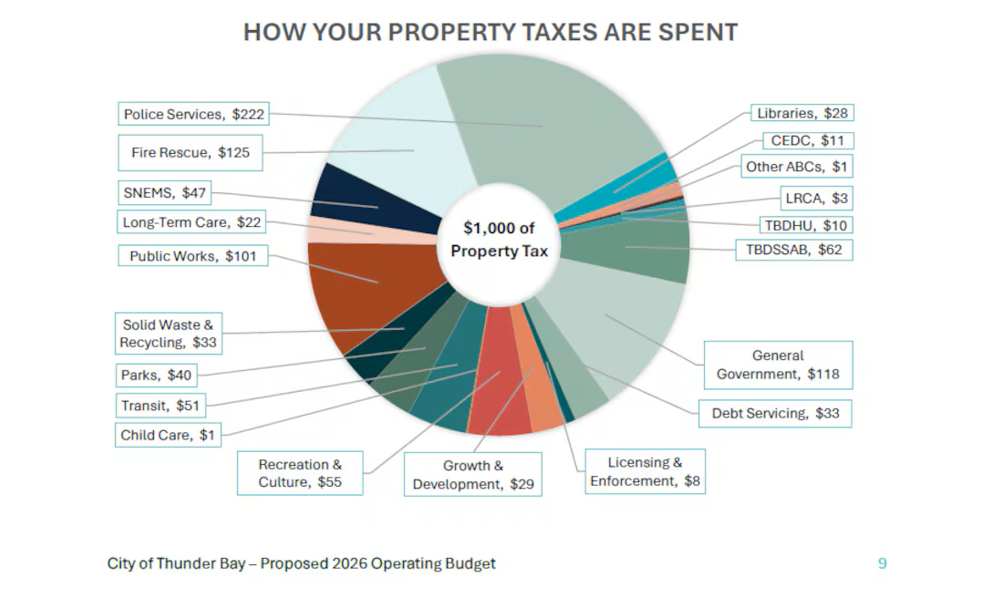
This year’s proposed $412 million tax-supported operating budget calls for hiring new city employees, funding new programs to support the city’s growth plan, and transit improvements aimed at making the bus service more reliable.
City staff successfully managed to cap city service budget increases at 2.6 per cent this year, but plan to raise property taxes by 4 per cent before growth.
Services that the administration cannot directly control, including the Thunder Bay District Health Unit (TBDHU), the Thunder Bay Police Service (TBPS), and the District of Thunder Bay Social Services Administration Board (TBDSSAB), are raising their budgets above the 2.6 per cent target, which the city is using as a justification for raising the tax rate above their goal.
In a meeting on January 26, at the second of four meetings discussing the budget, councillors Rajni Agarwal and Mark Bentz questioned the hiring of 57 new Full-time equivalent (FTE) employees.
Many of the new hires will be employed in two upcoming security and safety-based pilot programs: the Mobile Safety and Security Response Pilot, focused on safer transit rides, and the Downtown Community Safety Ambassador Program, focused on working with businesses in the city’s north and south side downtown cores.
Councillor Bentz wondered aloud what so many new safety personnel could mean for the city: “We continue to hire security guards. Every place has a security guard. We’ve got police being hired… ambassadors, people monitoring. Are we heading towards a police state?”
City Manager John Collin rejected the label, placing blame on the opioid crisis as a challenge municipalities didn’t have to worry about just a few decades ago.
City Manager John Collin speaks during a City Council meeting. (Sam Goldstein/January 28, 2026)
“We are seeing policing costs across the board increase substantially in all municipalities, and we do see most municipalities exploring other options to enhance safety and security, because, quite frankly, in some cases, you don’t need a fully qualified police officer at a fairly expensive wage rate,” he explained.
Among the larger city expenses to come under scrutiny were Workplace Safety Insurance Board (WSIB) costs, paid out for city service members who are injured on the job.
City staff determined that the most expensive cost is for Post-Traumatic Stress Disorder (PTSD), which affects many paramedics and firefighters.
Prevention is one of the focal points of the administration for reducing WSIB costs, with Collin pointing to “slips, trips, and falls” as the primary focus of a revamped safety program.
Collin says the city is “going in the right direction with this,” as WSIB costs are expected to come down 15 per cent compared to last year.
Shane Muir, Chief of Superior North EMS, came before council to offer context on WSIB costs for city paramedics.
He explained that the EMS service has developed wellness services for paramedics in partnership with NWO Psychology Services, which he framed as “one of the most robust wellness programs in the province… It’s been spotlighted by our provincial services as a model to follow, something that we’re very proud of.”
Muir believes the paramedic service’s WSIB costs will go down in the future, arguing that much of the WSIB costs come from historical insurance claims, from before the new wellness programming was developed.
Election costs also came under the microscope during deliberations.
The city uses a reserve fund for its municipal elections, and plans to up its yearly contribution to the reserve by $100,000 per year.
The 2026 election was expected to cost $600,000 when the fund was established, but the expectation is now that it will cost $750,000.
City Clerk Krista Power attributed most of the rising costs to online voting, which has become increasingly relevant as an accessibility tool for those who have difficulty voting.
“There’s additional security measures. There’s additional requirements for accessibility. And staff wages increase every four years as well, and we need staff to run our elections,” she added.
At the meeting on January 28, the third of four, councillors questioned the Thunder Bay Public Library’s (TBPL) increased budget.
Mayor Ken Boshcoff wondered whether the rise of digital services, such as e-books, might lead to decreased costs, but TBPL CEO Richard Togman dashed those hopes.
“There’s no cost savings there,” Togman explained. “In fact, it’s a budgetary issue that we have to manage. It’s significantly more expensive to provide e-resources.”
Togman also mentioned that the library has seen growing demand for its services.
“There’s still really very strong and growing demand for people in this community to physically come into the branches, and we definitely need the staff to be able to accommodate that demand,” he added.
TPBL intends to double its security contingent, from two to four security guards.
The library has had to deal with rising security and safety challenges since the COVID-19 Pandemic, including violent incidents and even one assault on a staff member.
Councillor Brian Hamilton questioned whether hiring new security staff was quantifiably a benefit.
Since the library’s first two security guards were hired, Togman says there has been a 50 per cent decrease in incidents, and an even larger decrease in violent incidents.
Beyond just decreasing incidence rates, he also says both library staff and members of the public report feeling safer and more comfortable in the downtown library branches.
The TBDHU, TBPS, and TBDSSAB, being services whose budgets the city cannot directly control, earned greater interest from City Councillors at budget proceedings.
The TBPS proposed a 9.1 per cent budget increase, which earned the most skepticism from some city councillors.
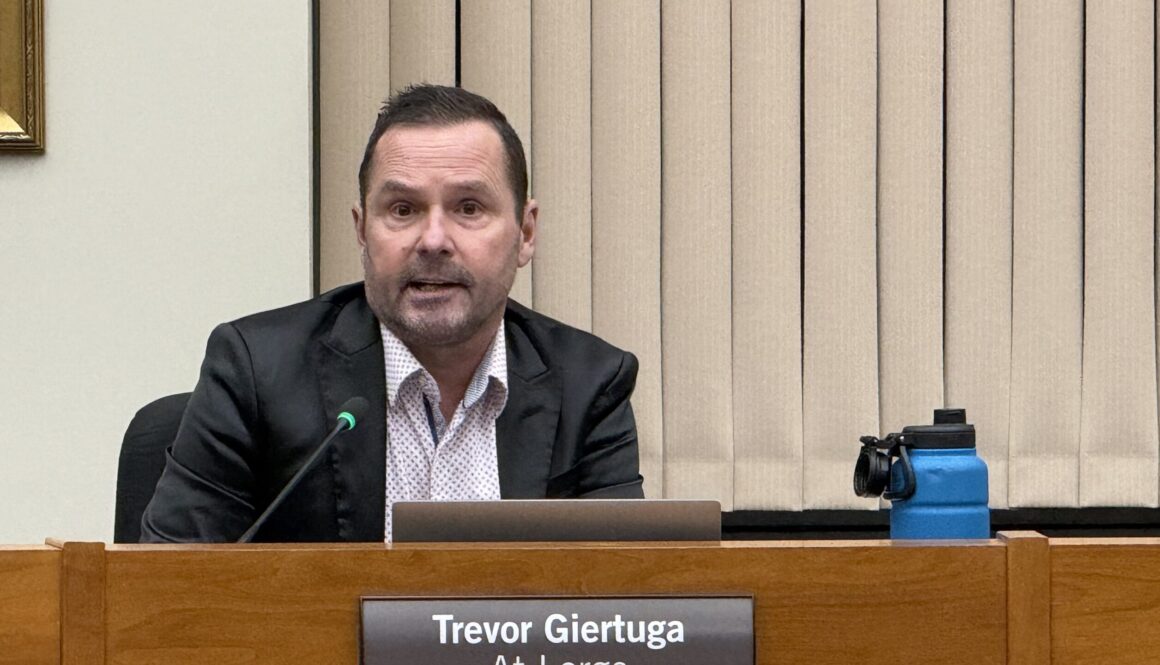
Councillor Trevor Giertuga proposed a motion to send the budget back for police to take a second look, but Council was split down the middle, and his motion ultimately failed in a 6-6 tie.
On Tuesday, City Council re-litigated their motion to send the budget back.
While Councillor Trevor Giertuga continued to frame the vote as a way to send the budget back, Councillor Mark Bentz, who also supported the vote, defined it more as a way to send a message to the province that continued police budget increases are unsustainable.
“It’s not taking this to an arbitration or anything. It’s a symbolic pushback saying we really have to start doing things differently,” Bentz explained. “What we will see if things don’t start changing, and this is across the province, is that police services are gonna start eating into municipal services.”
Councillor Kristen Oliver was absent during the first motion to send back the budget, but opposed the re-vote on Tuesday.
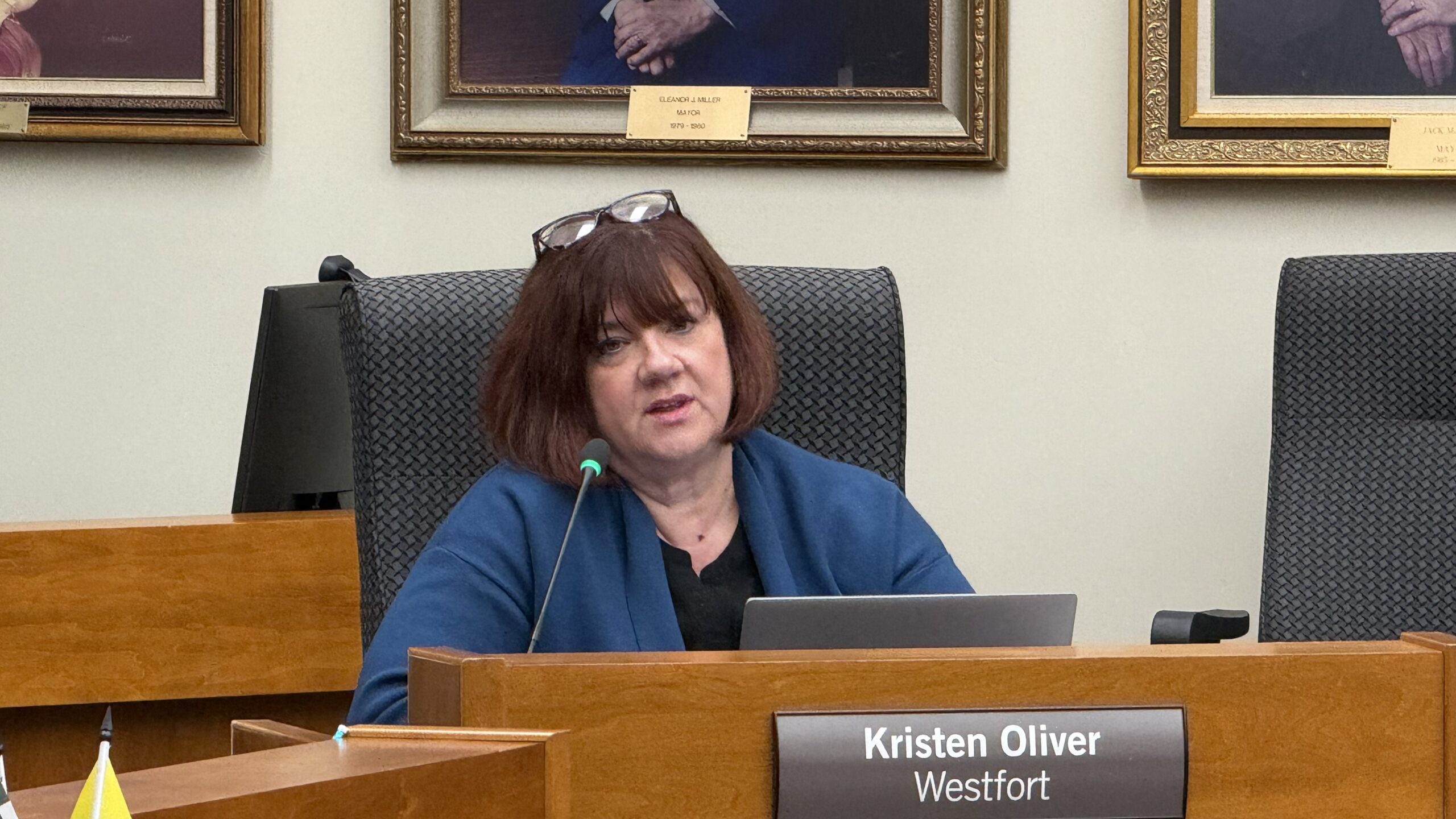
Councillor Kristen Oliver speaks during a City Council meeting. (Sam Goldstein/February 3, 2026)
Though Oliver was a former TBPS board member, she held some criticisms in agreement with many councillors in opposition to the police budget.
“It is not palatable. It is not sustainable. We cannot continue this way for years to come,” she said.
But Oliver still believed the budget needed to be passed: “But I think at this point, the police services need support. The community wants to see policing.”
The re-vote on the motion to send the police budget back for reconsideration failed, with 7 councillors voting NO and 6 councillors voting YES.
Councillors Dominic Pasqualino, Kristen Oliver, Brian Hamilton, Andrew Foulds, Kasey Etreni, Shelby Ch’ng, and Albert Aiello voted NO to the motion.
Councillors Michael Zussino, Greg Johnsen, Trevor Giertuga, Mark Bentz, Rajni Agarwal, and Mayor Ken Boshcoff voted YES to the motion.
With the police budget accepted, City Council then voted to ratify the operating budget, voting in favour with a 12-1 vote.
Councillor Trevor Giertuga was the sole dissenting vote.
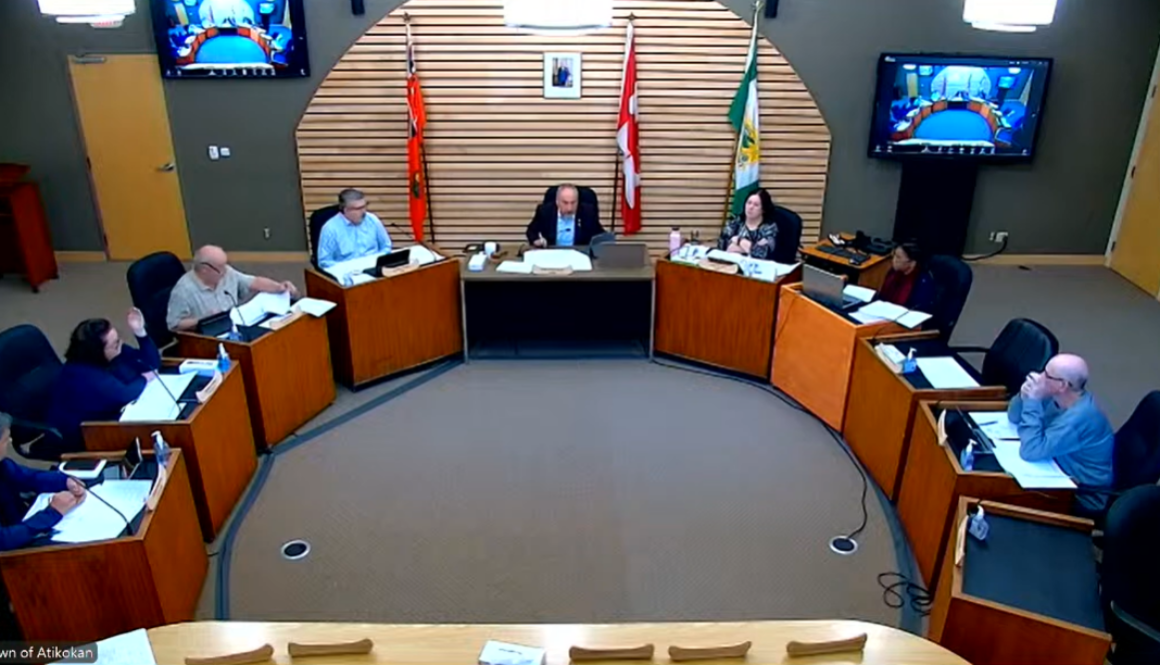
The town of Atikokan intends to spend more than $29 million this year.
The proposed budget reflects Mayor Rob Ferguson’s directive last fall for a budget that included a tax increase of no more than 2%.
He says the use of new legislation achieved the goals he wanted.
“Using my strong Mayor’s powers was, one, to have the budget out earlier, which we’ve been talking about for years,” says Ferguson.
“By getting the budget out earlier, that gives the department heads a clear vision of what they’re going to do and how they’re going to spend their money.”
Ferguson says it also allows the town to get projects moving more quickly and seek out contractors sooner in hopes of getting a better price.
Capital spending is listed at $15.9 million.
The biggest expense will be replacing the bridge on McKenzie Avenue, estimated at $5.5 million, with grants covering about 40% of the construction costs.
The town expects to have more money to work from, with revenue projections to top $20 million.
This includes more than $5.7 million coming from the provincial government and $855 thousand from the federal government.
User fees will account for another $3.7 million.
“This ended up way better than I anticipated,” says Treasurer Brandy Coulson.
“I thought it would be more money from reserves, but because of all the extra revenue we’ve had this year and last, we’re going to be taking less, way less from reserves than I expected.”
The town budgets for more than $5.7 million in funding from the provincial government and another $855,000 from the federal government.
User fees will account for another $3.7 million.
Atikokan will pay about $42,000 more to the District of Rainy River Services Board, $6,500 more to the Northwestern Health Unit and $81,000 more on its policing contract with the Ontario Provincial Police.
Formal approval of the budget is expected to come within the next month.
Thunder Bay’s final city operating budget meeting is scheduled for January 28. The proposed property tax increase is still over council’s target of 2.6%.
The budget was first proposed January 16. City council met Thursday night for the first round of deliberations.
As it stands now, the property tax increase is 4.0%.
City council says its expenses have met the threshold, but agencies, boards and committees outside of their control are to blame for the discrepancy.
“If you have to save your money, you do,” mayor Ken Boshcoff said. “We all got to get through this together. So we need every board and agency to say: if the city of Thunder Bay itself can hold the line, then why can’t we?”
Boshcoff mentioned that marketing and public relations staffing are areas that boards and committees can reduce spending.
“I will say to each and every (board and committee) that they have to do better next year,” Boshcoff said. “If your child wants a larger allowance and you can’t afford it, you just don’t keep giving it to them.”
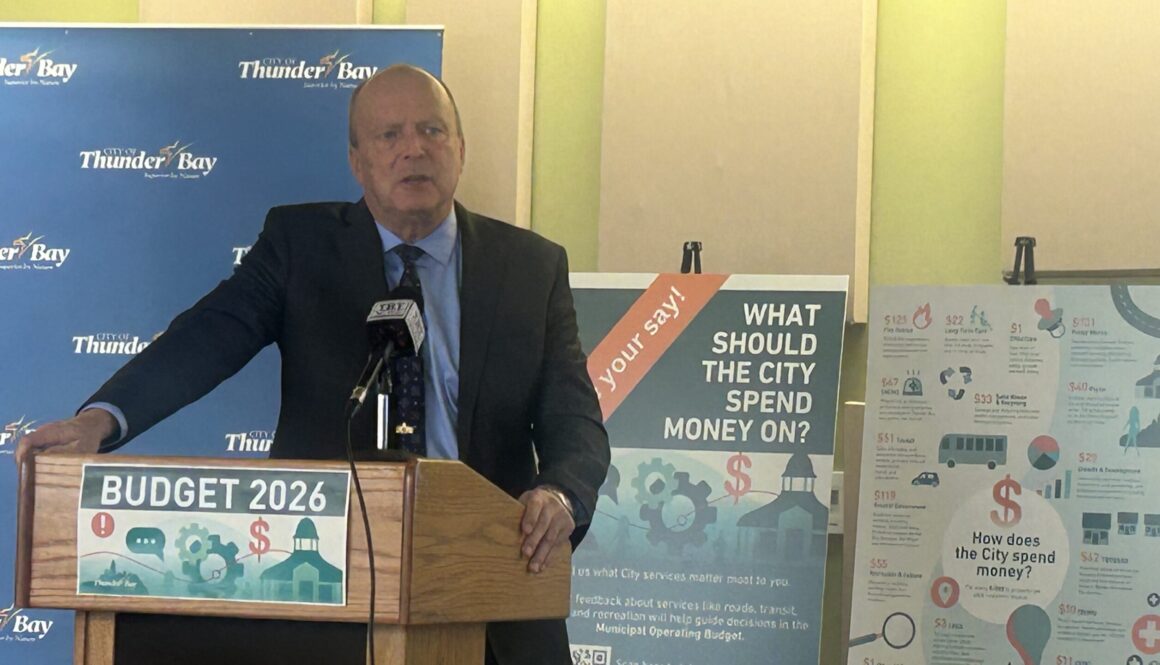
The city of Thunder Bay is proposing a 4% property tax increase in this year’s Municipal Operating Budget.
That number is higher than the city’s 2.6% target, calculated using Canada’s Consumer Price Index. City Manager John Collin says the discrepancy is due to governing bodies outside of the city’s control.
“The good news is, for this year’s budget, we are coming in at 2.6% for the things that are under the direct control of the municipality,” Collin said. “Regrettably, some of our agents, boards and commissions could not achieve the 2.6% target that we asked them to achieve.”
Police services will see the largest raise at 7.9%. That funding will go towards hiring eight new officers.
“We heard from the community, loud and clear, that what they need is those people on the street. We want to see more officers doing the patrols that need to be done,” Police Chief Darcy Fleury said. “The biggest priority right now is having those boots on the ground.”
The city unveiled a draft of the budget at a special meeting Friday afternoon.
Here are some other key investments and enhancements:
Enhanced safety and security initiatives, supporting community safety and well-being
This budget will be reviewed on January 26. You can voice your comments or concerns directly to city council with this online survey. City staff will also pop-up at the Thunder Bay Country Market at the CLE grounds on January 17 from 8am – 1pm and will be receiving citizen feedback on budget-related items.
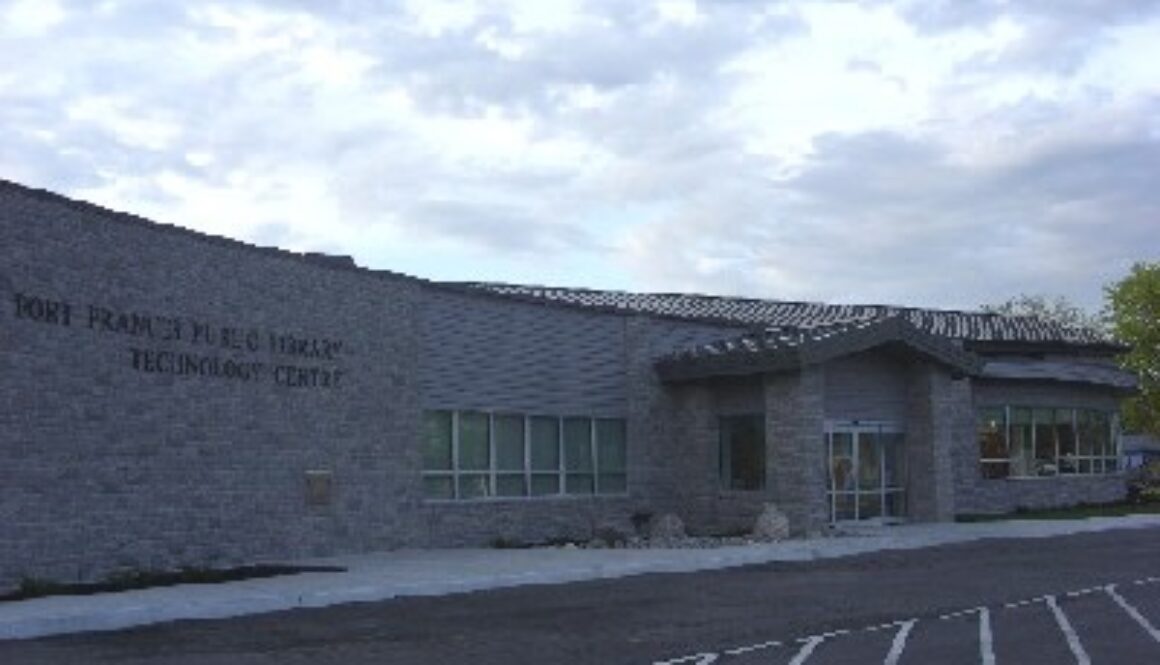
The Fort Frances Public Library Technology Centre wants less money from the town.
The proposed budget for 2026 includes a 1% decrease in the amount provided by the municipality.
The total request is $606,931.
Chief Executive Officer Nadine Cousineau anticipates increased funding in other areas, including the rental of the Shaw Community Hub and use of the photocopier, two of the library’s largest revenue generators.
“We also have a plan in place to increase marketing and advertising of these two services,” says Cousineau.
“I feel very confident with extra effort, we will easily surpass those numbers.”
The library is also receiving a financial boost from Ontario Library Services.
It is providing $1,310, a 44.6% increase over 2025, in funding through its Connecting Libraries Initiative.
“It’s a program through OLS, which is intended to upgrade internet services in unserved and underserved communities,” says Cousineau.
“This will reimburse our connectivity costs for a 12-month period, and we’ll also have a less expensive monthly public internet bill going forward.”
The library will also see a 4.7% decrease in salaries, wages and benefits because of recent staffing changes that have led to new employees starting at the lower ends of the pay scale.
It will save the library more than $22,000.
Cousineau says there are increases in maintenance and repairs, insurance, and software, some due to inflation.
Non-resident memberships will increase 1.9%, matching the rise placed on other town services and programs.
Cousineau says they are holding the line on all other expenses, including programs and the purchase of new library materials.
“What this means for the staff is we’ll work with the same amount of money, regardless of inflation, and still hope to deliver the same level of services to the Fort Francis community.”
No changes in hours of service are planned.
Town council is expected to formally vote on the budget at a later date.
More changes are likely before International Falls city council finalizes its 2026 budget.
The proposed levy increase is currently at just over 5%.
That is down from a 20% increase that was proposed in a preliminary budget in September.
Finance Officer Emma Rudd says several changes were made since then.
“Some significant changes to the draft working budget since the preliminary budget levy was approved on September 22 include the reduction in the ambulance levy from $414,873, which was 10 % of the increase, down to half of that, which is $207,437 or 5%,” says Rudd.
“We reduced the amount that we were gonna replenish the general fund reserves from $1 million to $800,000. At that point, we had removed the airport of $115,500 appropriation. We’ve also removed a police officer through attrition, which has resulted in nearly $120,000 in savings, and then we’ve refined other miscellaneous expenses.”
Rudd says it is possible the levy increase could fall even further as there are further measures yet to be discussed by council that could impact the final figure.
“There’s more movement that’ll be coming forward as well as we continue to have budget meetings in anticipation of a final levy. We’ve continued to work and look at other areas and opportunities for cuts, whether it be in 2026 or future years.”
City Council must finalize the budget before the end of the year.