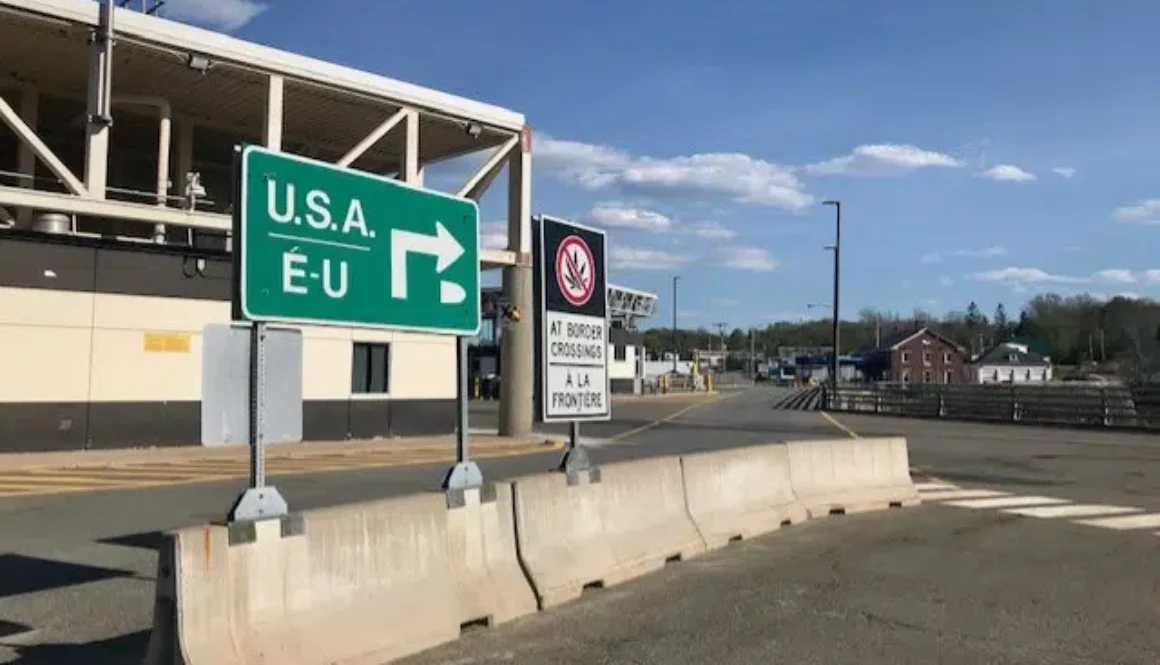
Border towns in New Brunswick see tourism dip amid cross‑border decline
Some border communities in New Brunswick are seeing a slower tourism season, says a local tourism association.
In an email statement, Tourism Industry Association of New Brunswick CEO Ginette Doiron said the association is starting to see “softness” in cross‑border travelling in some parts of the province.
Doiron points to the U.S. political climate as one of the main factors driving down cross‑border visits to communities like St. Stephen.
At the town’s most recent council meeting on April 22, council approved a $2,000 grant requested by St. Stephen’s Chocolate Museum, as the museum required extra funding to cover operational costs due to lower cross‑border visitation.
In a letter sent to council requesting the funding, the museum’s executive director, Jeff McShane, said the museum has seen a drop in cross‑border travelling of approximately 48 per cent over the past year.
According to the letter, the museum’s co‑owner, chocolate company Ganong, had already provided the museum with a $14,000 grant to help offset operational costs. However, McShane said the museum expects higher gas prices and ongoing reductions in cross‑border travelling to further impact visitation levels.
“Despite these challenges we remain committed to maintaining the quality of the visitor experience and preserving the museum as a key attraction for the region,” he wrote.
McShane added that the museum has also reached out to federal and provincial members of Parliament, as well as the minister of tourism, heritage and culture, to seek additional support.
Declining support between Canada and the U.S. affecting cross-border travelling, says professor
St. Thomas University communications and public policy professor Jaime Gillies said that due to tariff tensions and “51st‑state rhetoric,” cross‑border travelling has been in decline in border towns on both sides of the border.
Gillies said the decline was initially seen among Canadian visitors to the United States, as the rhetoric has led many Canadians to refuse to spend money there.
On the U.S. side, Gillies said surveys show that as tariff tensions have “heated up,” American support for Canada — and vice versa — has decreased.
“I think what’s we’ve sort of seen since 2024 is that overall this is really affecting the tourism sector, because there are just simple fewer tourists on both sides,” he said.

Gillies said border towns such as St. Stephen and Calais, Maine, are bearing the brunt of the issue, as their local economies rely heavily on cross‑border travelling and tourism.
He added that affordability challenges are also a key factor behind lower cross‑border traffic. While the issue will take time to “get into the system,” Gillies said governments in New Brunswick and local jurisdictions in Maine have started promotional efforts to encourage people to take more “typical” summer vacation trips.
Like Gillies, Doiron said affordability is also affecting cross‑border travelling this season, as fuel costs can influence how visitors choose destinations and how far they are willing to travel.
RELATED: Survey shows fewer road trips for Atlantic Canadians
RELATED: CBSA says Four Falls port of entry will not reopen
She said while some operators who rely on cross‑border travellers may be feeling pressure, the association does not believe the slowdown is provincewide at this stage.
Instead, Doiron said the situation reinforces the importance of diversification in New Brunswick’s tourism sector.
“We need to continue strengthening our value proposition, encouraging longer‑stays, and ensuring New Brunswick remains a compelling and accessible destination, regardless of where visitors are coming from,” she said.
Doiron added that the organization is working closely with operators and government partners to monitor the situation in real time and adjust strategies as needed.
“The tourism industry in New Brunswick is resilient, and we are well positioned to respond,” she wrote.
Acadia Broadcasting contacted the Municipal District of St. Stephen for comment, but the municipality deferred to Ganong, which did not respond.