Stores or online retailers selling cannabis and related products, but not licenced to do so, could face new fines.
It is one of the measures proposed by the Ford government in an effort to halt illegal cannabis sales.
The province says 30% of all sales are being done by illegal operations.
Pending legislative changes are also intended to give the Alcohol and Gaming Commission of Ontario strong powers to conduct inspections and seize products and equipment.
“Illegal cannabis retailers that operate outside the rules undermine the businesses that play by them and contribute to Ontario’s strong economy,” states Attorney General Doug Downey.
“To help build the strongest economy in the G7 and protect Ontario from threats to our communities, we are proposing measures to strengthen enforcement, protect consumers and support a fair and competitive marketplace.”
Downey intends to introduce the legislation when MPPs return to Queen’s Park next week.
Ontario made recreational cannabis sales legal in 2018, initially launching online sales through a government-run store.
Private storefronts were permitted a year later under strict rules.
Membertou Health Centre wants to warn people that they had cannabis used in the area test positive for fentanyl.
They say they have issued a community drug alert
You can get drug testing strips available at the Health Centre from Monday to Friday, the statement says.
You can also get a naloxone kit, used to help someone who has overdosed, at the Health Centre or the Membertou Pharmasave, as well as from other pharmacies and programs.
There are also some other resources you can find in this social media post:
After months of scrutiny around cannabis regulation, Nova Scotia has introduced higher fines and new offences aimed at strengthening enforcement of provincial cannabis laws.
Under provincial rules, cannabis can only be purchased legally through the Nova Scotia Liquor Corporation (NSLC). However, some — including Mi’kmaq leaders — argue the province’s crackdown, which began in December 2025, infringes on treaty rights they say include self-governance and control over economic activity on their lands.
The changes follow months of tension between the province and some Indigenous communities, including several cannabis store raids on Mi’kmaq territory.
The government says it is now an offence for sellers it considers illegal to advertise or promote cannabis sales, or for landlords to knowingly allow such sales on their property. Those offences carry a fine of $25,000.
New penalties have also been introduced for the sale of larger quantities of cannabis. For amounts of at least one kilogram, fines are set at twice the amount of tax that would have been paid on a legal sale — approximately $3,680 per kilogram.
Additional increased fines include:
$250 to $500 for a person under 19 in possession of cannabis
$600 to $5,000 for purchasing cannabis outside the NSLC
$5,000 to $25,000 for individuals selling cannabis illegally
$15,000 to $50,000 for businesses selling cannabis illegally
Government officials say the measures are intended to limit access to cannabis for underage individuals and reduce illegal sales in the province.
The legislative changes were passed earlier this year. As of June 25, they are now in effect, with accompanying regulations outlining how they will be enforced.
The province says the door is open for discussions with First Nations leaders on cannabis.
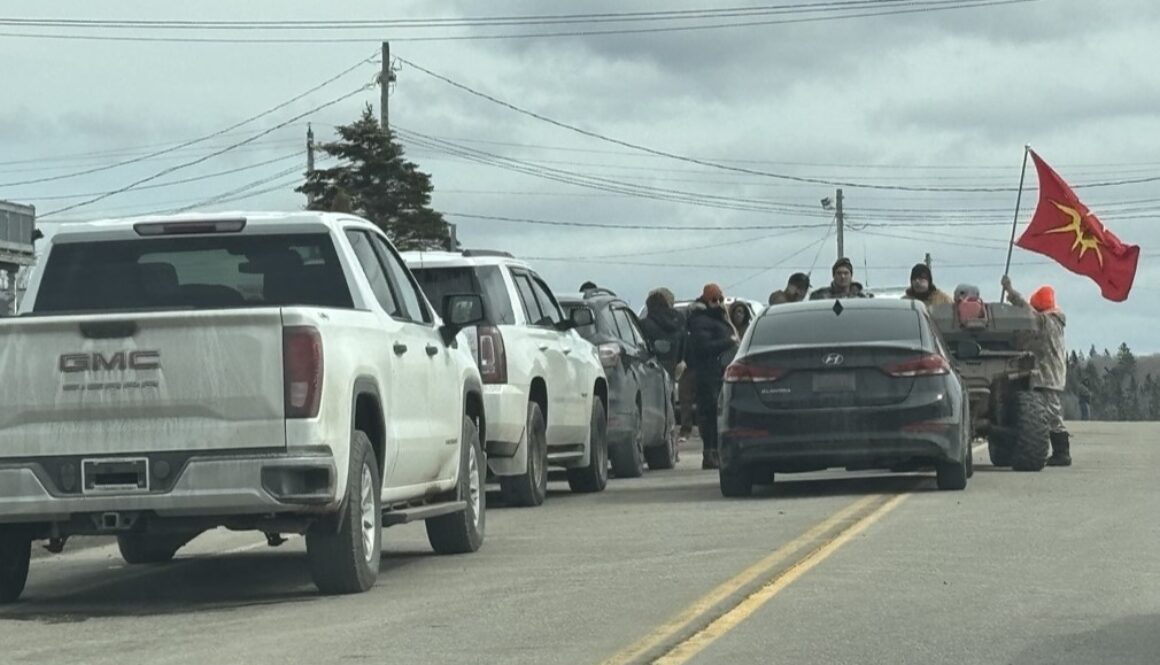
Last Thursday, April 2, members of First Nations communities blocked key highways for several hours.
The protests were over RCMP raids of cannabis storefronts on First Nations.
Tensions are high, First Nations say it’s their Treaty right to sell cannabis on their lands.
Justice minister Scott Armstrong says they’re always open to meeting, but there are policies in place.
“We have a policy where First Nations can actively participate in cannabis sales at NSLC locations, with proceeds going back to the bands. We’re willing to have discussions on that, and other policies,” said Armstrong.
Armstrong says the province strongly supports the RCMP and their actions on illegal cannabis.
“The Cannabis Control Act is the law of the land in Nova Scotia. The Cannabis Act is the law of the land across Canada. Health Canada produced cannabis products are the only legal ones across the country.”
Armstrong was asked what it will take to resolve tensions.
“We’ll have to work on that together. I think the onus is on all leadership to work together to try and find a solution to all of these issues. The issue of public health and safety for young people is a priority.”
Premier Houston issued a lengthy statement over Easter weekend, saying blocking a highway or road is never acceptable.
He said they are ready to work together to address the drug crisis, but they are not prepared to accept the status quo.
Several RCMP cars are parked outside of a cannabis store along Highway 4 in Potlotek First Nation on Thursday. PHOTO: ACADIA BROADCASTING
3 arrested after RCMP vehicles damaged
Meanwhile, RCMP say two men, aged 33 and 30 from Potlotek and a 19-year-old man from River Bourgeois were arrested in relation to mischief Thursday.
This was after several police vehicles were damaged during the protests in Potlotek, RCMP say seven vehicles had damage of some kind, including broken windows and flat tires.
Police say no charges have been laid.
Potlotek First Nation released a statement condemning the vandalism, and asked anyone with information to come forward.
The First Nation said the raid Thursday caused fear, and what followed was a powerful demonstration of unity and solidarity across the community.
Premier Tim Houston is slamming protestors for blocking a few Nova Scotia highways late last week after a cannabis raid in a Cape Breton First Nation.
In a lengthy post on social media, Saturday, Houston said blocking highways is unacceptable and RCMP are doing their job to uphold the law and keep Nova Scotians safe.
“They deserve respect, not confrontation,” said Houston.
“The unlawful obstruction of others is not peaceful. It undermines public safety, respect for law enforcement and the rule of law itself. Our roadways are our lifebood.”
He says that at any given time people could be travelling to medical appointments, hospital, work or caring for their families.
Houston adds, the province wants to work together on the drug crisis and not accept the “status quo”.
RCMP say it was around 7:30 a.m., Thursday, when officers searched an illegal storefront on Highway 4. Two men were arrested.
In response to this, protestors blocked access to Highway 4 in Potlotek.
Officers then left the scene on foot leaving behind their cruisers.
Seven RCMP vehicles left in Potlotek were damaged. RCMP say they had “broken windows, dents, deflated tires, removed tires, and urine-soaked interior surfaces.”
Several RCMP cars parked outside of a cannabis store along Highway 4 in Potlotek First Nation on Thursday. PHOTO: ACADIA BROADCASTING
In a statement, Potlotek First Nation said it’s not a matter of enforcement but rather, jurisdiction.
“Time and time again Mi’kmaq are forced to respond when provincial laws and enforcement actions are imposed on our communities without respect to our rights, our leadership or our authority.”
One protestor told our newsroom officers took fridges, shelves and signs.
Two other highways were blocked in solidarity – highway 105 in Whycocomagh and 102 in Shubenacadie.
Crackdown
It was in December when the province ordered a cannabis crackdown.
In a post on social media, Chief of Sipekne’katik First Nation Michelle Glasgow says it’s not about “weed shops” getting raided. “It’s about the government asserting jurisdiction over Our Communities and over Our Unceded Mik’maq Lands.”
“If we allow this to continue then we are allowing the assimilation of Mi’kmaq into a society that was meant to destroy us.”
At this time, no arrests have been made related to the protests.
A shipping container filled with cannabis was stopped at the Port of Saint John in September.
A press release issued Friday by the Canada Border Services Agency said border services officers in Saint John received information from the agency’s export team in Halifax.
On Sept. 16, officers conducted an examination of a marine container destined for a business in the United Kingdom.
The contents of the shipment had been falsely declared as empty plastic bottles.
During their examination, officers found 16 large cardboard boxes filled with suspected cannabis.
In all, 399 packages of vacuum-sealed cannabis were seized, weighing 218 kilograms.
The cannabis and all evidence were transferred to the RCMP for further investigation.
Although legal in Canada, illicit cross-border movement of cannabis is a criminal offence, punishable by up to five years in prison under the Customs Act and up to 14 years under the Cannabis Act.