A man from Potlotek is facing eight charges after a building was evacuated and firearms were seized.
RCMP say it started late afternoon on Monday when officers received a report that a person with a firearm was inside a unit on New Subdivision Road.
Those in the building were evacuated out of caution when the man was seen holding a firearm inside that was believed to be loaded.
The 36-year-old who was on conditions, did not comply with law enforcement until officers were able to enter the building.
He was arrested just before 10 p.m. and a .308 rifle and ammunition were seized.
The suspect remains in custody and will appear in court for a second time at a later date facing charges including Careless Use of Firearm (two counts), other weapons offences, and Failure to Comply with Undertaking (three counts).
Potlotek Mi’kmaw Nation has chosen its Chief and Council for the next four years.
Band Manager Jocelyn Marshall says approximately 420 voters took part in Tuesday’s election, including advance polls and mail-in ballots.
Chief Wilbert Marshall was re-elected with 195 votes.
Elected councillors are:
-Tyrone Bernard with the highest number of votes with 200.
-Isaiah Bernard and Jimmy Marshall, who each received 163 votes;
-Patrick Isaac with 158;
-Brian Johnson with 154;
-Mary Lee Johnson with 124;
-Jeremy Basque with 120;
-Mary Susan Lauford with 117.
Marshall says four members of the new council are returning, while Jimmy Marshall and Jeremy Basque have previously served as councillors. Brian Johnson and Patrick Isaac will be new members of council.
The newly elected Chief and Council will not take office simply as a result of the vote. Marshall says they must first be formally sworn in.
“That will take place during a community ceremony involving Elders, prayer and smudging. Elected members will receive an eagle feather or another sacred item and make a commitment to act in the best interests of the community and put Potlotek ahead of conflicts or personal interests” says Marshall.
Marshall says the new council will serve a four-year term and believes the community is moving in a positive direction.
“We’re on an incline and we expect to continue on that incline,” she says.
Community members in Potlotek Mi’kmaw Nation will head to the polls next month to choose their next Chief and Council, with a strong field of candidates seeking to help shape the community’s future.
Five candidates have been nominated for the position of Chief: Kenny Basque, Noelle Julian, Tahirih Paul, Wayne Johnson, and incumbent Chief Wilbert Marshall.
Meanwhile, 31 candidates are vying for the community’s eight Council seats. Election Day is set for Tuesday, August 11, with an advance poll taking place on August 6.
Potlotek Band Manager Jocelyn Marshall says the number of candidates reflects a healthy level of interest in community leadership. “I feel like it’s kind of high but, you know, there’s eight seats there. This is the only way people are going to figure out if Chief and Council is something in their future. This is the first step.”
While the election determines who will serve as the community’s elected leaders for the next four years, Marshall says the role of Chief and Council extends well beyond attending meetings or making day-to-day decisions. “The simplest answer,” she explains, “is that they’re elected to provide leadership for the community, to set the direction for the Nation and make decisions that are in the best interests of our members.”
Chief and Council are responsible for establishing the Nation’s vision and priorities, approving budgets and policies, ensuring public funds are managed responsibly, and representing Potlotek in discussions with other governments and organizations. They also provide governance while the community’s administrative staff oversee daily operations and deliver programs and services.
Marshall says maintaining that distinction is essential. “Chief and Council are responsible for governing. They set the direction and make the policy decisions, while day-to-day staff and operations are carried out by administration. That separation helps ensure accountability, transparency and effective leadership.”
Potlotek’s eight Council seats are determined under the First Nations Elections Act, which bases representation on population. Marshall says the community currently has just over 800 members. “We’re just a little bit over 800 members in our community. Per hundred, a seat is given. So there’s eight seats. When we reach 900, we’ll add another seat to Council.”
Eligible Potlotek members living off reserve who wish to vote by mail must request a mail-in ballot. Under the First Nations Elections Act, ballots are issued only upon request and applications must be submitted directly by the voter, along with government-issued identification. The deadline to request a mail-in ballot is August 5.
An advance poll will be held on August 6, followed by Election Day on August 11. Marshall notes that accommodations are available for Elders and others who may have difficulty getting to the polls. “If they contact the Electoral Officer, she’s willing to make accommodations to allow people to vote… We’ve also purchased two 17-passenger buses, so those will be running this year.”
With a full slate of candidates and several opportunities to cast a ballot, Potlotek Mi’kmaw Nation members will soon decide who will provide leadership and represent the community over the next four-year term.
The province says the door is open for discussions with First Nations leaders on cannabis.
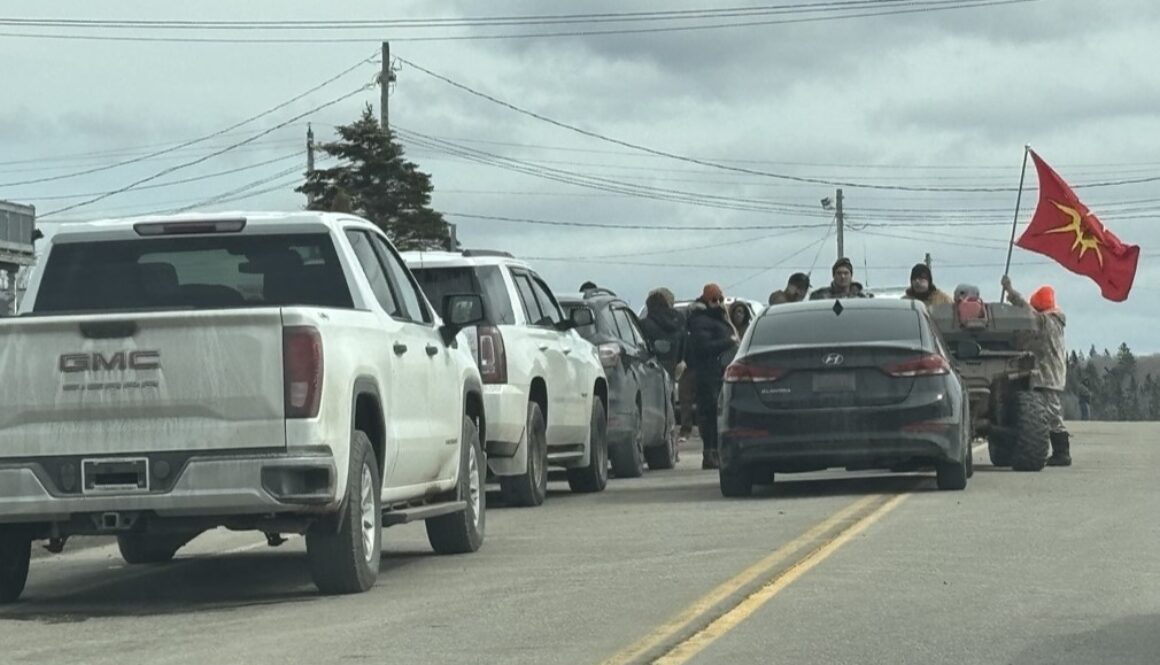
Last Thursday, April 2, members of First Nations communities blocked key highways for several hours.
The protests were over RCMP raids of cannabis storefronts on First Nations.
Tensions are high, First Nations say it’s their Treaty right to sell cannabis on their lands.
Justice minister Scott Armstrong says they’re always open to meeting, but there are policies in place.
“We have a policy where First Nations can actively participate in cannabis sales at NSLC locations, with proceeds going back to the bands. We’re willing to have discussions on that, and other policies,” said Armstrong.
Armstrong says the province strongly supports the RCMP and their actions on illegal cannabis.
“The Cannabis Control Act is the law of the land in Nova Scotia. The Cannabis Act is the law of the land across Canada. Health Canada produced cannabis products are the only legal ones across the country.”
Armstrong was asked what it will take to resolve tensions.
“We’ll have to work on that together. I think the onus is on all leadership to work together to try and find a solution to all of these issues. The issue of public health and safety for young people is a priority.”
Premier Houston issued a lengthy statement over Easter weekend, saying blocking a highway or road is never acceptable.
He said they are ready to work together to address the drug crisis, but they are not prepared to accept the status quo.
Several RCMP cars are parked outside of a cannabis store along Highway 4 in Potlotek First Nation on Thursday. PHOTO: ACADIA BROADCASTING
3 arrested after RCMP vehicles damaged
Meanwhile, RCMP say two men, aged 33 and 30 from Potlotek and a 19-year-old man from River Bourgeois were arrested in relation to mischief Thursday.
This was after several police vehicles were damaged during the protests in Potlotek, RCMP say seven vehicles had damage of some kind, including broken windows and flat tires.
Police say no charges have been laid.
Potlotek First Nation released a statement condemning the vandalism, and asked anyone with information to come forward.
The First Nation said the raid Thursday caused fear, and what followed was a powerful demonstration of unity and solidarity across the community.
Premier Tim Houston is slamming protestors for blocking a few Nova Scotia highways late last week after a cannabis raid in a Cape Breton First Nation.
In a lengthy post on social media, Saturday, Houston said blocking highways is unacceptable and RCMP are doing their job to uphold the law and keep Nova Scotians safe.
“They deserve respect, not confrontation,” said Houston.
“The unlawful obstruction of others is not peaceful. It undermines public safety, respect for law enforcement and the rule of law itself. Our roadways are our lifebood.”
He says that at any given time people could be travelling to medical appointments, hospital, work or caring for their families.
Houston adds, the province wants to work together on the drug crisis and not accept the “status quo”.
RCMP say it was around 7:30 a.m., Thursday, when officers searched an illegal storefront on Highway 4. Two men were arrested.
In response to this, protestors blocked access to Highway 4 in Potlotek.
Officers then left the scene on foot leaving behind their cruisers.
Seven RCMP vehicles left in Potlotek were damaged. RCMP say they had “broken windows, dents, deflated tires, removed tires, and urine-soaked interior surfaces.”
Several RCMP cars parked outside of a cannabis store along Highway 4 in Potlotek First Nation on Thursday. PHOTO: ACADIA BROADCASTING
In a statement, Potlotek First Nation said it’s not a matter of enforcement but rather, jurisdiction.
“Time and time again Mi’kmaq are forced to respond when provincial laws and enforcement actions are imposed on our communities without respect to our rights, our leadership or our authority.”
One protestor told our newsroom officers took fridges, shelves and signs.
Two other highways were blocked in solidarity – highway 105 in Whycocomagh and 102 in Shubenacadie.
Crackdown
It was in December when the province ordered a cannabis crackdown.
In a post on social media, Chief of Sipekne’katik First Nation Michelle Glasgow says it’s not about “weed shops” getting raided. “It’s about the government asserting jurisdiction over Our Communities and over Our Unceded Mik’maq Lands.”
“If we allow this to continue then we are allowing the assimilation of Mi’kmaq into a society that was meant to destroy us.”
At this time, no arrests have been made related to the protests.