In Nova Scotia, maximum regular self-serve prices range from about $1.85 to $1.89 per litre, while diesel is selling for between $2.37 and $2.41 per litre.
On Prince Edward Island, the maximum prices are $1.98 a litre for regular self-serve, more than $2.56 per litre for diesel and above $1.93 per litre for home heating oil.
In Nova Scotia, regular self-serve ranges from about $1.75 to $1.80 per litre while diesel is selling for between $2.35 and $2.40 per litre.
On Prince Edward Island, the maximum prices are almost $1.86 a litre for regular self-serve, more than $2.42 per litre for diesel and $1.80 per litre for home heating oil.
Human Development Council researchers wrapped up NB Power’s evidence period, urging more support for low-income households.
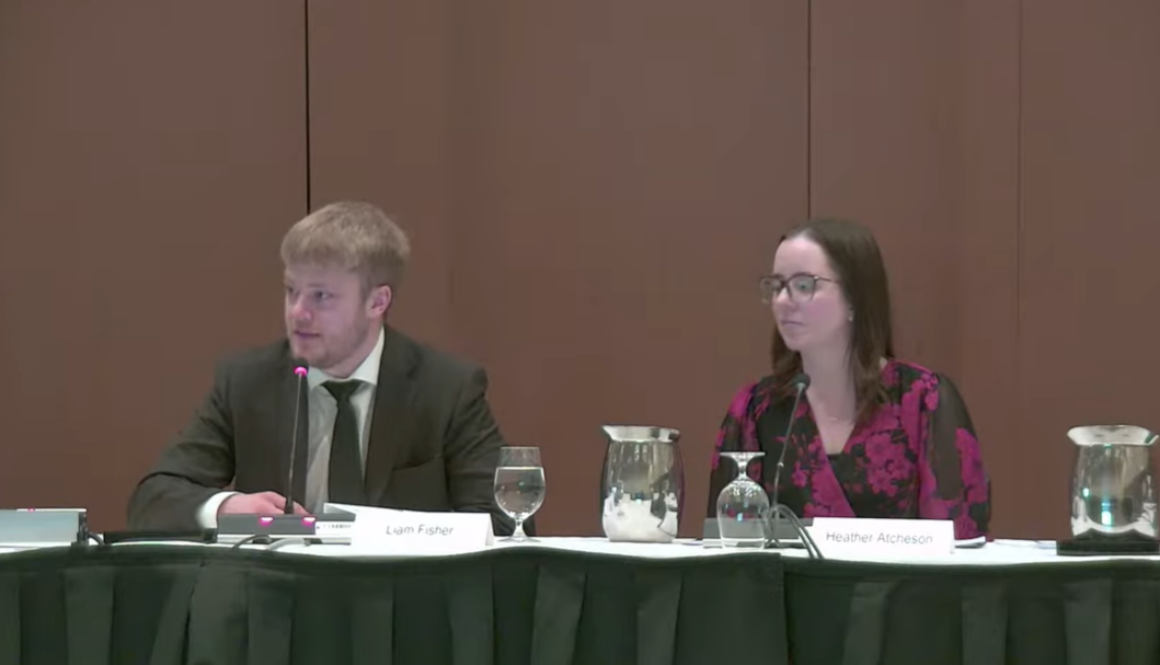
HDC researchers Liam Fisher and Heather Atcheson were the final witnesses in the utility’s two-week-long rate hearings.
The poverty research team authored HDC’s 2025 Energy Report, which the organization submitted as evidence in NB Power’s hearings before the Energy and Utilities Board.
During these hearings, NB Power is seeking approval to raise energy rates by 4.75 per cent for the coming year.
According to various media reports, this is part of a long-range financial plan that, if approved, would see power rates increase by 50 per cent over six years, by March 2028.
During their testimony last Wednesday, the researchers told the hearing that rising electricity prices are creating a serious affordability challenge for low-income households — groups that, according to the report, include seniors, newcomers, people with disabilities and others. They also warned that without targeted protections, future rate increases will continue to disproportionately impact these residents.
“There are projects and programs in place that are addressing other areas of energy poverty,” Atcheson said. “But the low-income affordability piece is something we would recommend be looked at.”
During cross-examination, the researchers suggested that either the province or NB Power consider adopting a low-income affordability program similar to those used elsewhere in Canada.
They pointed specifically to Ontario’s Electricity Support Program, which provides monthly credits to help reduce electricity bills for qualifying low-income households.
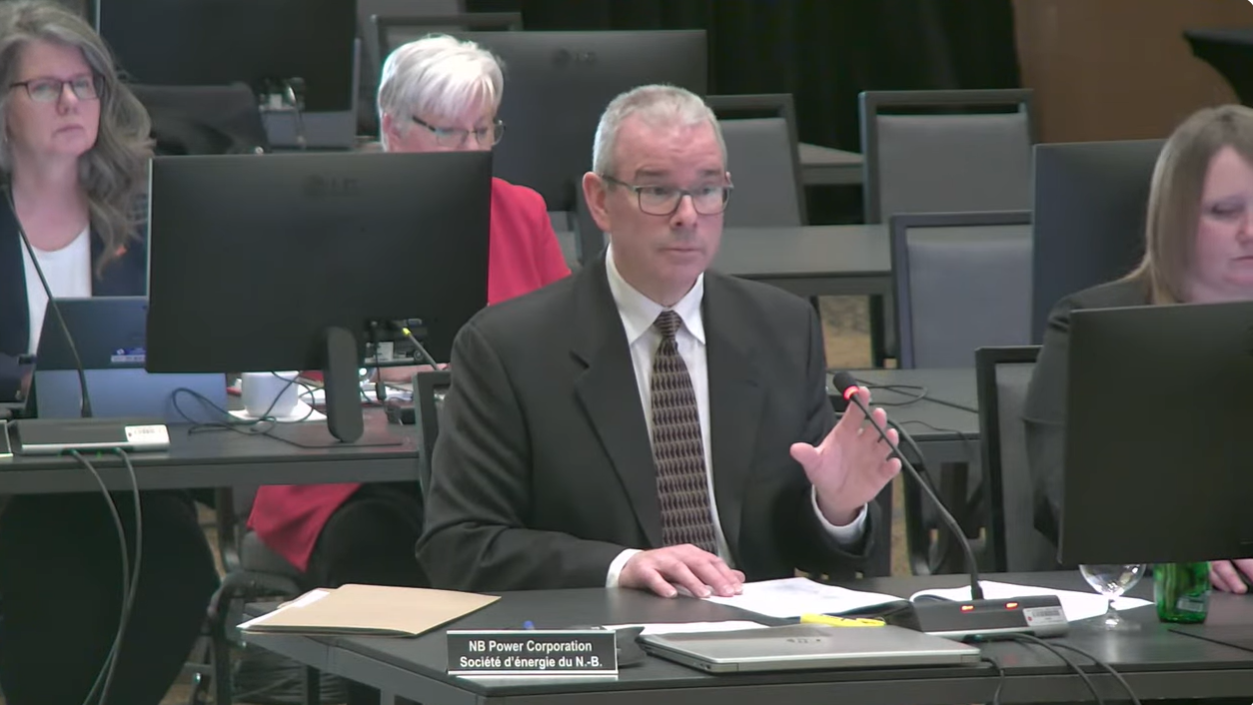
During the hearings, NB Power executives agreed that rising electricity prices would create affordability issues for some of their customers. But in last week’s final arguments, NB Power said the EUB can’t consider affordability when deciding on a proposed rate hike.
In Friday’s final-arguments hearing, EUB chair Christopher Stewart asked the utility’s lawyer, John Furey, what the board could do if the proposed rates were deemed unaffordable for some residents. Furey said the board didn’t have jurisdiction over those issues.
John Furey is NB Power’s lawyer. PHOTO: EUB/YOUTUBE
“That is a matter of social policy that each of the courts of appeal I referenced have said is best left to government,” he said.
Furey said NB Power acknowledges that rate changes in the recent years have created challenges for some, but argued the utility needs the rate hike to invest in infrastructure, maintenance, and major projects like the Matacquac Dam and Point Lepreau.
A decision on any rate increase is reserved by the board and is expected in the coming months. However, since NB Power’s hearings were delayed by several weeks, the board has suggested any decision will not affect rates until June.
In Nova Scotia, regular self-serve ranges from about $1.62 to $1.66 per litre while diesel is selling for between $2.11 and $2.15 per litre.
On Prince Edward Island, the maximum prices are almost $1.69 a litre for regular self-serve, $2.19 per litre for diesel and $1.67 per litre for home heating oil.
Fuel prices in the province have been climbing up and plunging back down, like a roller coaster, since the latest conflicts in the Middle East began.
Mount Allison University Political Science Professor Dr. James Devine told our newsroom that the Canadian economy is being impacted.
“The area where the fighting is in the Persian Gulf. There’s a narrow area of the Persian Gulf called the Strait of Hormuz through which about 20 per cent of the world’s oil supply goes, “Dr. Devine said.
“On top of that, a large amount of liquid natural gas also comes from that region. The country of Qatar is one of the biggest producers of liquid natural gas, and it shut down its facilities because of the conflict. All of these things are going to start having an impact on the global economy, in part on oil prices, which we’ve seen already.”
He added different parts of the country have felt the impacts in different ways.
“The price of gasoline is going to go up. The price of consumer products will also go up because transportation costs are going to increase. In part because of the price of gasoline, but also because of insurance. The insurance that’s required for the transportation of oil from the region will go up as well, and it will cost more to ship it to North American markets,” Dr. Devine stated.
It’s like a roller coaster ride, up, down, up, and then down again.
The New Brunswick Energy and Utilities Board made its weekly fuel price adjustments overnight.
The interrupter clause was implemented last week and again this week for diesel and furnace oil, forcing prices up, but the weekly cost change brought prices back down.
Diesel is down again, this time dropping by 15.7 cents a litre to a maximum of around $2.00.
Furnace oil dipped 14.3 cents to a maximum of around $1.92.
No impact for regular self-serve fuel prices by the interrupter clause earlier this week, but prices rose overnight on Thursday, up eight cents a litre to a maximum of around $1.50.
In Nova Scotia, regular self-serve ranges from about $1.52 to $1.57 per litre while diesel is selling for between $2.01 and $2.05 per litre.
On Prince Edward Island, the maximum prices are just over $1.61 a litre for regular self-serve, $2.10 per litre for diesel and $1.69 per litre for home heating oil.
The maximum for regular self-serve gas is down 1.6 cents a litre to around $1.39.
Diesel prices jumped again, rising 5.6 cents a litre to a maximum of around $1.94.
Furnace oil rose 4.8 cents to a maximum of around $1.84.
The New Brunswick Energy and Utilities Board made its weekly price adjustments overnight.
In Nova Scotia, regular self-serve ranges from $1.36 to $1.40 per litre while diesel is selling for between $1.81 and $1.86 per litre.
On Prince Edward Island, the price for regular self-serve is around $1.49 per litre, diesel costs around $1.88 per litre, and home heating oil is selling for a maximum of $1.29 per litre.
No good news for those needing to fuel up this week.
Diesel users are paying 11.4 cents a litre more, increasing the maximum to over $2. It is sitting at around $2.01.
Furnace oil is up 10.3 cents to a maximum of around $1.92.
The maximum price for regular self-serve fuel also increased, but not as much as the others. It went up 1.6 cents to around $1.41.
In Nova Scotia, regular self-serve ranges from $1.38 to $1.42 per litre, while diesel is selling for between $1.87 and $1.91 per litre.
On Prince Edward Island, the price for regular self-serve is around $1.49 per litre, diesel costs around $2.02 per litre, and home heating oil is selling for a maximum of $1.29 per litre.