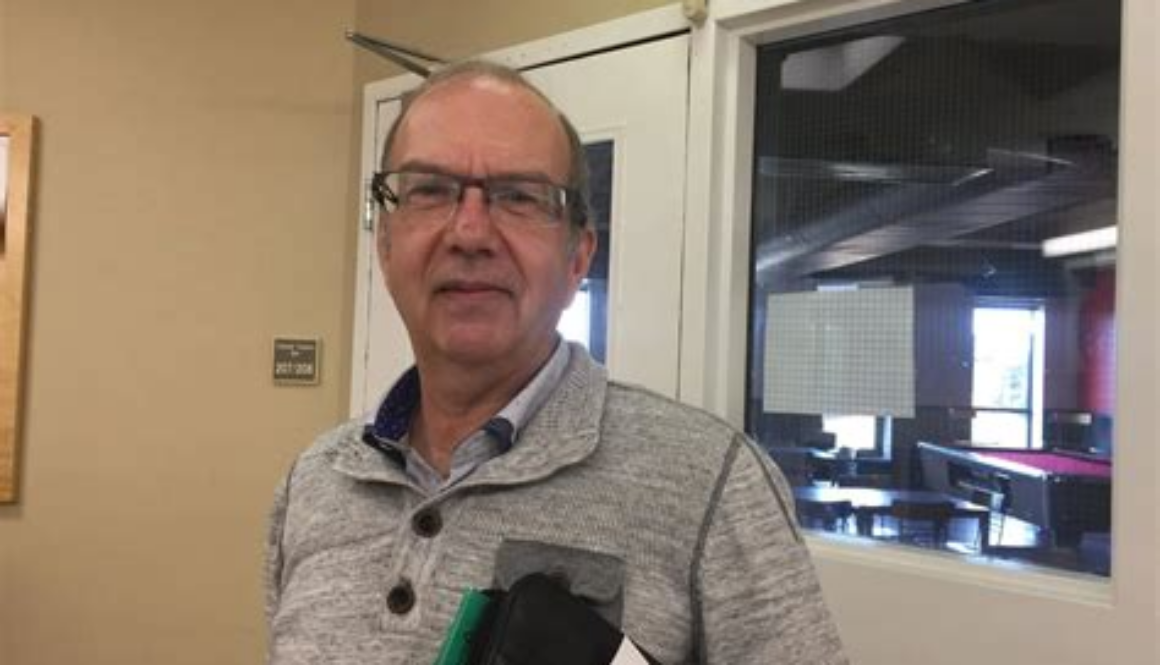
Incumbent Fred Mota has secured a third term as head of council in Red Lake, earning 55 per cent of the vote and defeating challenger Warren Badiuk.
In the race for council, voters elected Jason Vinet, Jamie Kristoff, Debra Geary and Janet Hager from a field of seven candidates.
“I’m truly humbled by the support from the community that I’ve received and how Red Lake has entrusted me with a third term as mayor,” Mota said in an election night interview with the Acadia newsroom. “I look forward to completion of a lot of projects we’ve initiated.”
Mota was first elected mayor in 2018 and has served on a number of municipal and regional bodies during his time in office. He chairs the municipality’s Truth and Reconciliation Committee and serves on the Community Health Care Committee and Events Centre Committee.
Looking ahead to his third term, Mota pointed to housing as the municipality’s top priority, saying a shortage of homes could hinder Red Lake’s ability to capitalize on major economic projects planned for the region.
“The first thing we need to accomplish is affordable housing for our community,” he said. “We need a large workforce here and we don’t have the housing.”
Mota said his council will also focus on preparing for several major developments, including Kinross Gold’s proposed Great Bear project, Frontier Lithium and the new transmission line connecting northwestern First Nations communities.
“We’re looking forward to building our relationships for a strong economic future for everybody,” he said.
Mota said he is optimistic about working with the incoming council, which includes three returning councillors and one newcomer.
“I’m excited for that energy to be brought in and to help us focus and move us forward in a fashion where we can all work together,” he said.
The longtime mayor said his motivation remains seeing major projects through to completion and helping position Red Lake for continued growth.
“I really want to see Red Lake be successful,” Mota said. “The residents entrust me with that mayoral position to advance us to be successful.”
With one week to go before election day, Thunder Bay voters will have another opportunity to meet candidates seeking municipal office.
Two local businesses, Bay Village Coffee and Half-Way Motors, are hosting an open meet-and-greet for candidates running for mayor and councillor at-large on Tuesday from 6 p.m. to 8:30 p.m. at Half-Way Motors Nissan on Memorial Avenue.
“No speeches, no stage, just neighbours, talking” is the event’s tagline.
Organizers say all 10 mayoral candidates and 14 candidates running for council’s at-large seats have been invited to attend.
Rather than a traditional debate or forum, the event is being billed as an informal opportunity for voters to meet candidates one-on-one. Candidates will be stationed throughout the showroom, allowing residents to drop in, ask questions and discuss issues important to them.
The event follows a candidates’ night held at Bay Village Coffee on October 13, which organizers say attracted a full house.
“People don’t need another speech. They want to talk. Last week at the shop, neighbours stood and talked with candidates one to one, and the only complaint I heard was from people who hadn’t known it was happening. This is everybody’s chance. Come ask your questions — about safety, about housing, about whatever matters to you — and vote knowing a little more. We’re grateful to Half-Way Motors for providing the room the event needs.”
Alan Forbes, owner of Bay Village Coffee
Voting is now open ahead of municipal election day on October 26.
The race for council’s at-large seats is among the most crowded contests on the ballot, with 14 candidates competing for five positions. All Thunder Bay voters can cast ballots for up to five at-large candidates.
The meet-and-greet is free and open to the public.
Interview with mayoral candidate Brenda Sedgwick coming soon
As Dryden voters prepare to head to the polls, mayoral candidate Derek Ouellette is positioning himself as an alternative to the city’s current leadership, promising greater transparency, stronger community engagement and an internal focus on accountability.
Ouellette said his campaign is rooted in a belief that city hall has become disconnected from residents and that rebuilding public trust must be a priority for the next council.
Background
Ouellette has called Dryden home since 1999 and brings a history of public service to the mayoral race. A former firefighter and paramedic, he spent nearly three decades working in emergency medical services across Northern Ontario and later trained first responders, including First Nations response teams.
He now operates a local medical training company and remains active in the community through volunteer work with organizations such as the Dryden GM Ice Dogs, the Lions Club, the OPP Police Services Board and Team Rubicon Canada.
“The people’s candidate”
Asked what he would do differently if elected mayor, Ouellette returned repeatedly to the idea of transparency.
He said residents deserve more direct communication from their elected officials and a clearer understanding of how decisions are made at city hall. In his view, transparency is often discussed by politicians but not always put into practice.
“In my opinion, I’m the people’s mayor, because I’m not a politician. I’ve worked my whole life in first response,” he said. “My goal was always to help people, and here I can help on a huge platform. But the only way that is going to work is if I’m open and available to the people when they have concerns.”
Ouellette said he would create a public email address where residents could contact him directly, promising to check it daily and respond promptly.
“If I can’t answer your question, I’m going to find you someone who will. People are unhappy because they’re not informed. They don’t feel welcomed when they ask questions. I want to bring trust back to our elected officials.”
According to Ouellette, rebuilding confidence in municipal government begins with creating a more open dialogue between council and the public.
Building Dryden as a tourism hub
Economic development is another major pillar of Ouellette’s campaign.
He believes Dryden’s location in the heart of northwestern Ontario gives it a natural advantage and an opportunity to become a stronger regional centre. With major mining and resource projects underway across the region, Ouellette said the city should focus on attracting workers, businesses and investment.
Beyond industrial growth, he sees tourism and entertainment as important opportunities.
The Dryden docks (file photo)
“The mill is stable right now, so what we should be doing is building our community to bring in tourism.”
Ouellette suggested building on existing attractions and events, including the agricultural fair and rodeo, to draw more visitors to the community and generate economic activity.
“Imagine having an incredible waterfront here where people can come and celebrate what we do and who we are. We could have a huge youth powwow, we could have entertainment. We could have so many things to celebrate, and I think Dryden’s gotten away from that over the years. We should focus on growing our community as the centre point for entertainment here in northwestern Ontario.”
Finding housing solutions
Like many communities across the region, Dryden continues to face housing pressures.
Rather than immediately prescribing specific solutions, Ouellette said the city first needs a clearer understanding of what types of housing residents require. He supports conducting a detailed assessment of local needs before determining where resources should be directed.
He identified affordable housing and housing options for seniors as key concerns, while also expressing support for alternative housing models such as secondary suites and “granny suites.”
Ouellette said addressing the housing shortage will require flexibility and creativity, along with policies that encourage development while meeting the community’s specific needs.
Accountability and collaboration
Accountability was also a central theme of Ouellette’s campaign.
The issue comes amid ongoing debates over council conduct. Last week, incumbent mayor Jack Harrison described conflicts involving a councillor and concerns about the treatment of municipal staff as one of the biggest disappointments of his first term, arguing the situation had become a distraction from council’s broader work.
Asked about those concerns, Ouellette said he believes many residents have lost confidence in local government and that a different leadership style is needed after more than a decade under largely the same administration. He said rebuilding public trust and improving accountability at city hall would be among his top priorities if elected.
“I’ve lived my whole life on accountability. As mayor, I’m going to make sure people hold me accountable, and I’m going to hold them accountable. We need to put the people first.”
Making his case to voters
As he seeks the mayor’s chair, Ouellette describes himself as a community-minded leader rather than a career politician.
Drawing on his background in public service and emergency response, he said he would bring a people-first perspective to city hall and focus on making Dryden a safe, welcoming place to live, work and raise a family.
Ultimately, Ouellette’s message to voters centres on reconnecting leadership with the community.
“I’m one of us. I’m a guy that has morals and values. I want to take those same core values to our leadership. If I can do one thing, it’s to give the community a voice and a safe place to work and play.”
Eligible voters in Thunder Bay can expect to receive their Voter Information Letters in the mail this week ahead of the upcoming municipal election.
The letter contains information on how to access online voting, as well as details about each voter’s designated polling location for Election Day.
Residents are being reminded to make sure their voter information is up to date. Changes can be made right up until Election Day.
The voters list serves as the official register of eligible electors and is used to provide election information and help ensure that only eligible voters are able to cast a ballot.
Anyone who does not receive a Voter Information Letter is encouraged to contact the Voter Help Line at 807-622-VOTE (8683), email thunderbayvotes@thunderbay.ca, or visit a designated voter assistance location to update their information and confirm their voting eligibility.
More information is available through the City of Thunder Bay’s election hub.
With municipal election day just six weeks away, the Canadian Mental Health Association is launching a new online resource aimed at helping Ontario candidates better understand some of the biggest challenges facing their communities.
The new CMHA Briefing Room provides practical information on mental health, addictions, homelessness and community safety, while also offering wellness resources to help candidates manage the demands of the campaign trail.
“Municipalities are dealing with the impacts of mental health and addiction every day, whether through homelessness and encampments, community safety concerns, supportive housing or pressure on local services,” said Camille Quenneville, CEO of CMHA Ontario. “The CMHA Briefing Room gives candidates access to credible, evidence-informed information.”
The resource is intended not only for candidates, but also for municipal leaders, members of the media and the public.
Topics covered in the briefing room include:
Mental health and addictions: Understanding community challenges and evidence-based responses.
Homelessness and housing: Examining the links between housing, homelessness, mental health and addictions.
Community safety: Exploring how mental health and addiction issues intersect with public safety concerns.
Solutions and policy: Highlighting evidence-informed approaches and the role of community mental health services.
CMHA says the resource is designed to help candidates understand where municipalities can take action and where additional support from provincial and federal governments may be required.
Saint John saw nearly a three per cent increase in voter participation in this municipal election.
The Human Development Council says it reflects growing interest in local issues and a stronger desire to vote.
On May 11, New Brunswickers headed to the polls to elect their next municipal governments. Across the province, several major cities saw competitive mayoral races, including three candidates in Fredericton and four in Moncton.
Saint John also had a three-way mayoral race, with incumbent Donna Reardon facing Coun. Barry Ogden and business owner Blaine Harris. The city council race was similarly competitive, with five of 10 incumbent councillors choosing not to run.
Overall, voter turnout in Saint John reached 37.4 per cent — up 2.8 percentage points from 34.5 per cent in 2021. HDC executive director Randy Hatfield said the contested mayoral race, multiple open council seats and ward-level issues all contributed to the increase.
“Turnout rate in municipal campaigns is very low in Canada, and New Brunswick is no exception, and Saint John is no exception,” he said. “But it seems voter turnout rate [in Saint John] has almost returned to 2016 level, so it’s trending in the right direction. It’s moving up and I’m glad for that.”
HDC data shows turnout was about 38 per cent in 2016.
Hatfield noted turnout is influenced by several factors, including socioeconomic conditions. Research shows older people, university graduates, employed individuals and homeowners are more likely to vote.
This helps explain differences across wards. Ward 3 recorded the lowest turnout at 28.4 per cent, compared to 47.8 per cent in Ward 1, 37 per cent in Ward 2 and 36.1 per cent in Ward 4. Ward 3 includes the lower west side, the South Central Peninsula and Waterloo Village — areas with higher poverty rates and three of the city’s five priority neighbourhoods.
“The literature suggest that people on low incomes don’t vote as often as folks who have more money,” Hatfield said.
Higher turnout in Ward 1 was driven by different issues. Hatfield said concerns about homelessness and affordability played a role citywide, but opposition to Beacon AI’s proposed data centre was a key factor in Ward 1.
“The data centre issue I think that probably propelled one of the ward councillors to victory,” he said. “It certainly had a large turnout when we did municipal forums for the ward.”
To help inform voters, HDC launched the Saint John Votes 2026 campaign on April 16 in partnership with Civic Tech Saint John. The initiative provided information on candidates and hosted six livestreamed forums featuring questions from residents.
Hatfield said the Ward 1 forum drew the largest audience, reflecting strong public interest in the data centre debate. Ward 1 ultimately elected incumbent Coun. Greg Norton and newcomer Sherri Colwell-McCavour, who campaigned on responsible growth and addressing residents’ concerns.
Hatfield added that low turnout can sometimes signal voter satisfaction. For example, it would explain why Quispamsis and Rothesay reelected the same council for this term.
However, Hatfield said several results pointed to a desire for change in Saint John: incumbent councillors Mariah Darling and Paula Radwan lost their seats, and candidates Blaine Harris and Barry Ogden together received more votes than incumbent mayor Donna Reardon.
“If you look at the data, you could probably argue that there was a level of dissatisfaction or frustration that drove more people to the polls this time,” he added.
The results are in! Students across New Brunswick got a real feel for politics through a hands-on experiential learning program that brings the voting process into the classroom.
On May 11, students from elementary, middle, and high school cast more than 50,000 mock ballots for official candidates in a parallel election.
In the end, 112 schools across 51 municipalities submitted their Student Vote results. Ballots were cast for mayors, councillors, advisory committee members, and district council members.
Fredericton led the way, with 3,370 students participating across 13 schools in the city.
All municipality results are available online, broken down into by each individual school.
More than 175 schools across New Brunswick are taking part in the province’s largest Student Vote ever, giving kids a hands-on introduction to local politics.
Ahead of the May 11 municipal elections, more than 15,000 elementary, middle, and high school students are expected to cast mock ballots in their classrooms.
The Student Vote is a program run by CIVIX, a non‑partisan registered Canadian charity focused on helping students learn about elections, government budgets, elected representatives, and digital media literacy.
Registered schools will receive a range of non‑partisan educational materials designed to teach students about the election process while encouraging them to do their own research. To make the experience more realistic, schools are also provided with ballots, ballot boxes, and voting screens.
Students will vote for local mayors, councillors, and education council members in their communities, spanning 62 municipalities and rural districts.
Educators say the program helps students understand how elections work in real life, while showing them the importance of local democracy by bringing the voting process directly into the classroom.
Student Vote results will be released publicly after polls close on election day, with results broken down by individual schools.