
Lakehead University unveils upgraded Nursing Specialties Lab
The next generation of nurses in northwestern Ontario will have access to more realistic, hands-on training thanks to a major upgrade at Lakehead University’s School of Nursing.
The university officially unveiled its newly refreshed Nursing Specialties Lab on Friday, showcasing a range of new simulation technologies and learning tools designed to better prepare students for careers in health care.
Among the additions is an Anatomage Table, an interactive digital anatomy platform that allows students to explore the human body in impressive detail. Using scans of real donated cadavers, the table provides a layer-by-layer view of anatomy, helping students develop a deeper understanding of the body’s systems and structures.
“It’s essentially a large iPad that comes preloaded with six cadavers,” said second-year nursing student and anatomy tutor Olivia Bickers. “You can see the different structures, you can move it around and see how everything clicks together. Everybody is very impressed — it has that ‘wow’ factor.”
The upgraded lab also features several high-fidelity simulators designed to recreate real-world clinical scenarios.
One of the most eye-catching is “Mama Anne,” a childbirth simulator that can be used to train students in both routine and emergency delivery situations.
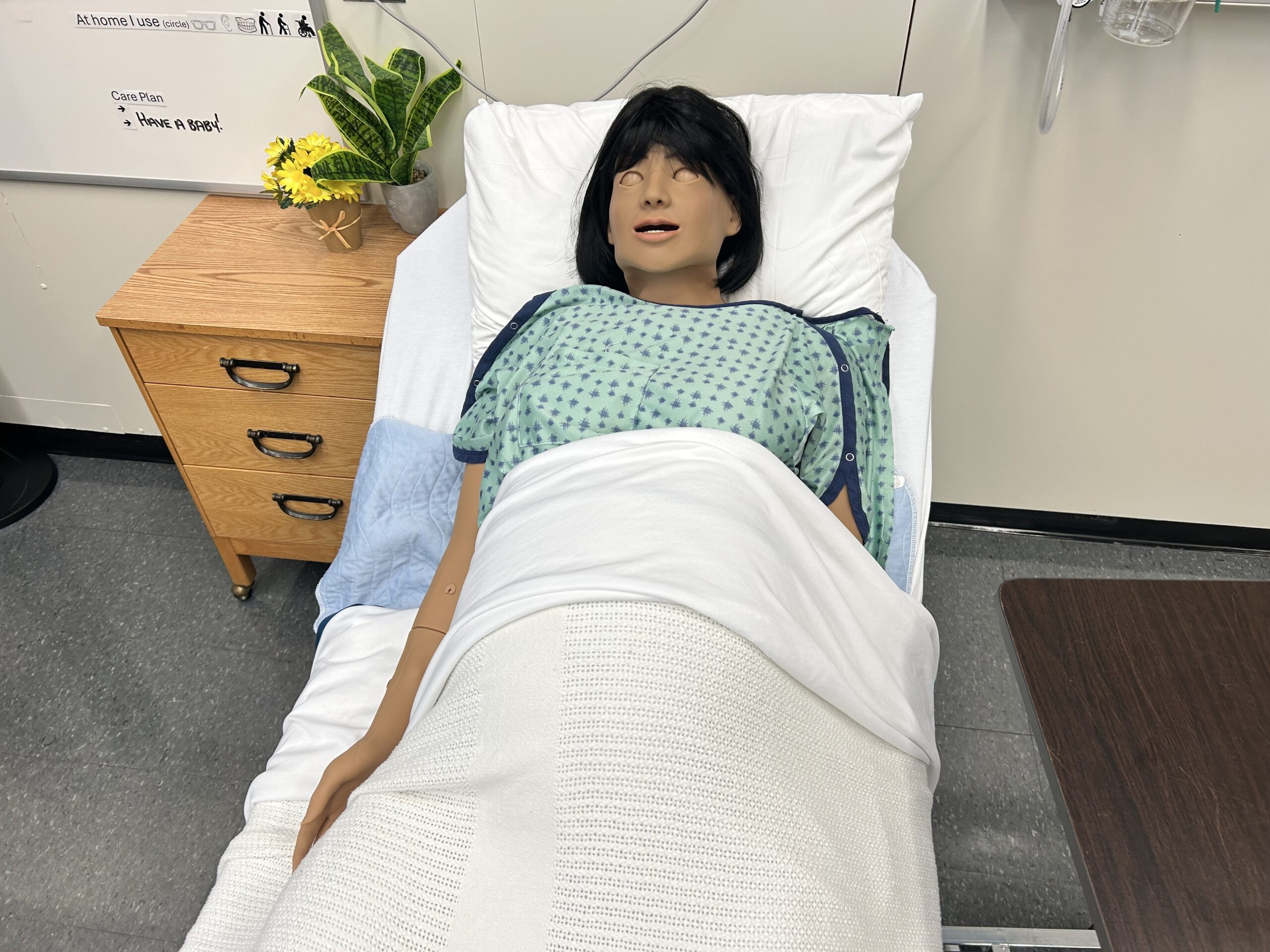
“Students don’t always get to see a baby being born, but they can see one here in the lab,” said program director Kristen Jones-Bonofiglio. “We can have blood, we can have a hemorrhage. She can also have an abnormal delivery. For example, we can do a shoulder dystocia where the shoulder gets caught a little on the way out.”
The lab is also home to Gwen, a pre-teen simulator with Down syndrome that helps students learn how to care for children with diverse developmental and health-care needs.
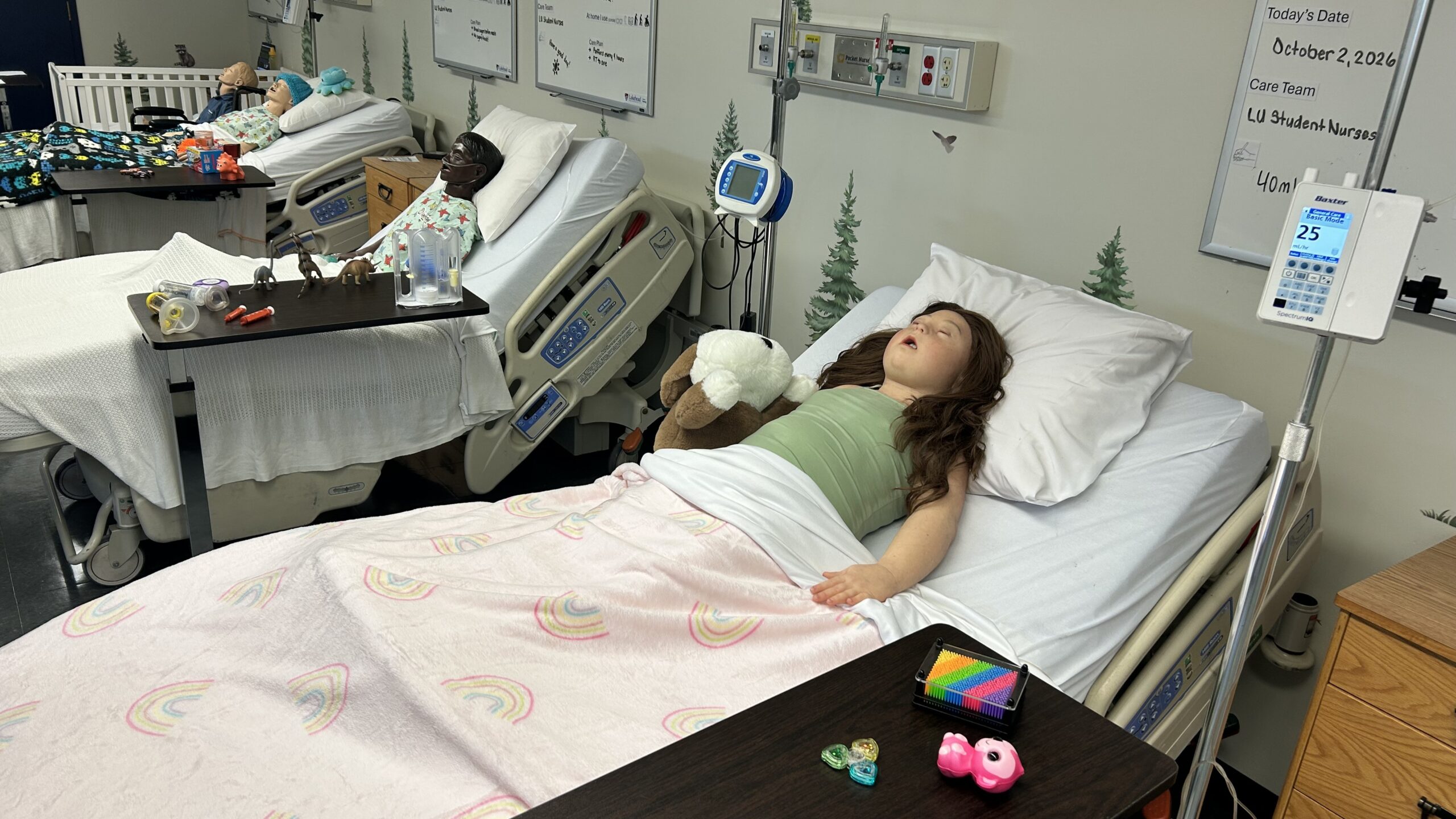
Additional infant and pediatric simulators provide students with opportunities to practice assessments, interventions and patient communication in a controlled environment before entering clinical placements.
“Seeing realistic mannequins in practice helps build confidence. In real clinical placements, different problems and situations arise, but it helps you stay calm and say, ‘okay, I’ve seen this in simulations,'” said fourth year nursing student Mmesoma Mwanonenyi.
The event also included a celebration as staff and students revealed the identity of the lab’s newest newborn simulator. Following a gender reveal, the infant was officially introduced and given a name during Friday’s unveiling.


(From left) Mmesoma Mwanonenyi, Olivia Bickers, Piper Lidkea and Kristen Jones-Bonofiglio celebrate the arrival of the School of Nursing’s newest infant simulator. (Jacob Henriksen-Willis / Oct. 2, 2026)
The investment comes as health-care organizations across northwestern Ontario continue to face demand for nurses and other front-line health professionals. University officials say the upgraded lab will help ensure graduates enter the workforce with experience using modern technology and responding to a wide variety of patient scenarios.
The refreshed Nursing Specialties Lab is expected to play a key role in training future nurses who will go on to work in hospitals, long-term care homes, clinics and Indigenous communities across the region.

