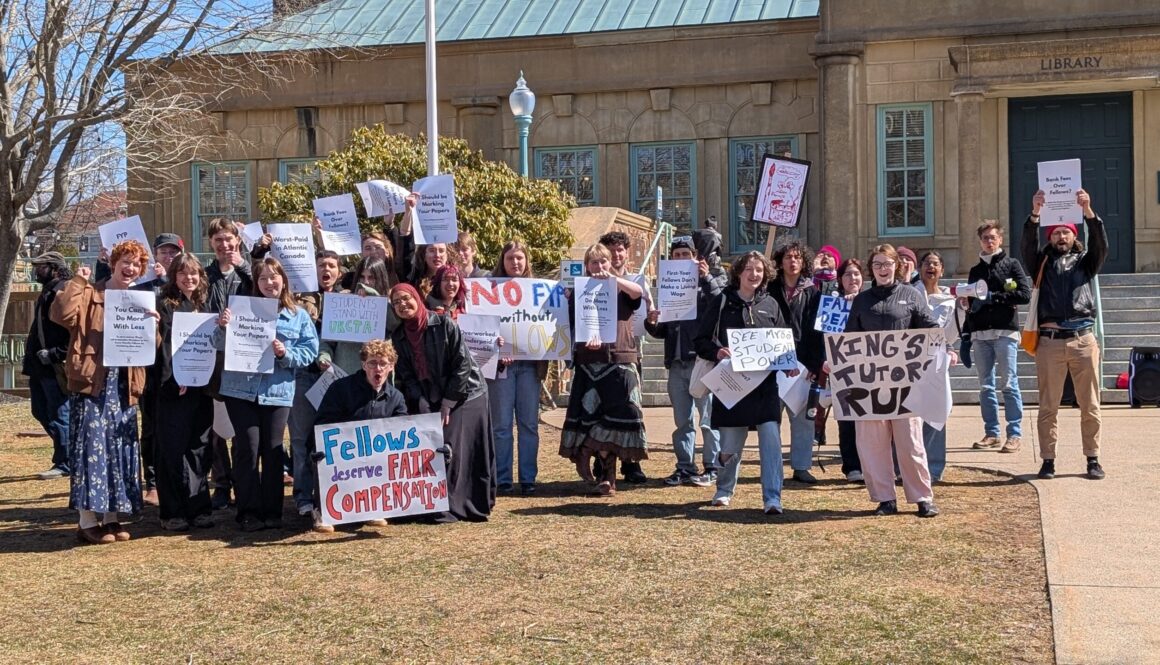
At the University of King’s College, faculty fellows and students rallied over working conditions in the Foundation Year Program (FYP).
Faculty Fellows—a small group of eight on-campus union members who handle about 70% of teaching and marking—say they face low wages and short, non-renewable contracts of about three years. While they form close bonds with first-year students, frequent turnover brings new instructors every few years.
One Faculty Fellow, Veronica Curran, says their union is now in the final phase of conciliation talks on Tuesday after months of negotiations.
A rally led by students was held in solidarity, concerned about losing tutors mid-term. First-year Alexandra Rose says the fellows make university “life-changing” despite rising costs.
Rose says, “I came all the way from Ontario to Kings, like people come from all over the country. And they come because these people are experts at what they do, and they’re the only ones who dedicate their time to doing this program where you move through all of history. And it’s expensive to do university and it’s getting harder and harder, but the teachers actually make it worth it.”
Rally organizer Mia Colle pointed to disruptions like delayed feedback when tutors leave. Curran added: “These are often the teaching staff who make the closest bonds with first-year students who often are cited as the reason students want to study at King’s, they’re not given permanent positions.”
Curran said fellows earn the lowest pay among full-time faculty in Atlantic Canada and are seeking contract renewals, fair wages, and capped class sizes. She recalled a student speech:
“Just to give you an example. One student said that during the student strike while they were not attending classes they were keeping up with their readings and they realized in that moment that the foundation year program is not about the texts, but it is the fellows, the teachers. It would not be foundation year program without fellows. And it was very touching to hear that because we we really pour our hearts and souls into this job, and we love the students as well.”
Students and fellows say the rally is key to protecting the program’s close-knit structure, but if an agreement isn’t made, the strike could happen as soon as Wednesday.
Premier Tim Houston is slamming protestors for blocking a few Nova Scotia highways late last week after a cannabis raid in a Cape Breton First Nation.
In a lengthy post on social media, Saturday, Houston said blocking highways is unacceptable and RCMP are doing their job to uphold the law and keep Nova Scotians safe.
“They deserve respect, not confrontation,” said Houston.
“The unlawful obstruction of others is not peaceful. It undermines public safety, respect for law enforcement and the rule of law itself. Our roadways are our lifebood.”
He says that at any given time people could be travelling to medical appointments, hospital, work or caring for their families.
Houston adds, the province wants to work together on the drug crisis and not accept the “status quo”.
RCMP say it was around 7:30 a.m., Thursday, when officers searched an illegal storefront on Highway 4. Two men were arrested.
In response to this, protestors blocked access to Highway 4 in Potlotek.
Officers then left the scene on foot leaving behind their cruisers.
Seven RCMP vehicles left in Potlotek were damaged. RCMP say they had “broken windows, dents, deflated tires, removed tires, and urine-soaked interior surfaces.”
Several RCMP cars parked outside of a cannabis store along Highway 4 in Potlotek First Nation on Thursday. PHOTO: ACADIA BROADCASTING
In a statement, Potlotek First Nation said it’s not a matter of enforcement but rather, jurisdiction.
“Time and time again Mi’kmaq are forced to respond when provincial laws and enforcement actions are imposed on our communities without respect to our rights, our leadership or our authority.”
One protestor told our newsroom officers took fridges, shelves and signs.
Two other highways were blocked in solidarity – highway 105 in Whycocomagh and 102 in Shubenacadie.
Crackdown
It was in December when the province ordered a cannabis crackdown.
In a post on social media, Chief of Sipekne’katik First Nation Michelle Glasgow says it’s not about “weed shops” getting raided. “It’s about the government asserting jurisdiction over Our Communities and over Our Unceded Mik’maq Lands.”
“If we allow this to continue then we are allowing the assimilation of Mi’kmaq into a society that was meant to destroy us.”
At this time, no arrests have been made related to the protests.
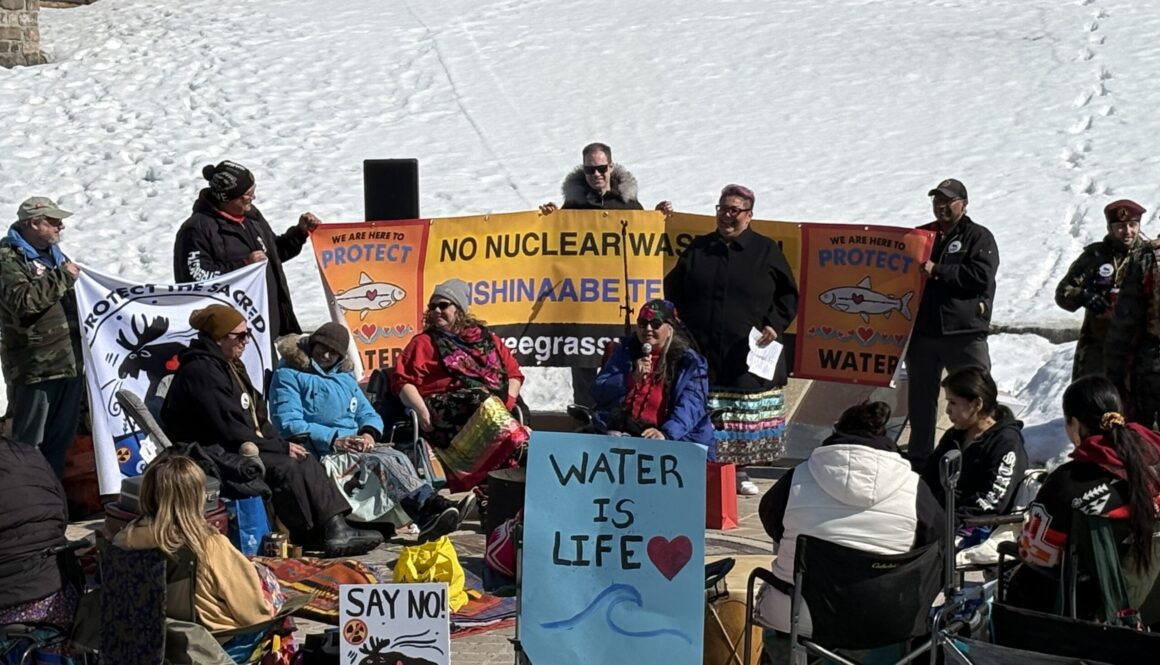
A hundred protesters gathered in Winnipeg on World Water Day to oppose a proposed nuclear waste repository near Ignace, Ontario.
The planned site is located near critical watersheds that flow into Lake Winnipeg, prompting concerns about potential downstream contamination. Indigenous land defenders and environmental advocates warn that any risk to these systems could have lasting impacts on communities that rely on them.
Grassy Narrows land defender Judy Da Silva spoke at the rally, saying her community “will not be poisoned again,” referencing the long-term effects of mercury contamination they have already endured.
Opponents of the project argue that storing nuclear waste in the area poses serious long-term risks. They point out that radioactive materials can remain dangerous for thousands of years, and that leaks—if they occur—could be impossible to fully contain or reverse.
Indigenous leaders and environmental groups are calling for the project to be halted, emphasizing the need to protect water sources, Indigenous lands, and future generations from potential harm.
Student union leaders say they “were met with excuses” instead of real solutions when discussing strike repercussions during their latest meeting with the Department of Education.
In a statement online, Alexina St. Pierre-Farrow, chairperson of the Canadian Federation of Students–Nova Scotia (CFS-NS), says the response received from government officials has only added fuel to student anger as they gear up for what organizers call Nova Scotia’s first province-wide university strike March 15 – 21 over deep budget cuts.
Specifically addressing Advanced Education Minister Brendan Maguire in her letter, stating “no more excuses”, St. Pierre-Farrow condemns post-secondary funding reductions and demands answers on supports for Indigenous learners and grant-reliant students. It follows a student-led press conference with other Halifax university representatives held on February 26.
They say the walkout next week will involve campuses like Dalhousie, Saint Mary’s, NSCAD, King’s, and Acadia.
Students are reviving Quebec’s iconic red square strike symbolism. PHOTO BY NATALIE CHIASSON /Acadia Broadcasting
Students say they’re already “squarely in the red” from high tuition, rents, and job scarcity, plus cuts to key financial aids. Representatives are calling for a 20 per cent tuition cut, equal fees for international and domestic students, and protection for programs serving marginalized groups.
Organizers say the goal of their protests are to tell the Houston government that students “need tangible, meaningful action, and they need it now.” They plan to join the thousands taking part in ongoing arts and culture rallies across the province tomorrow outside Province House, while their strike remains scheduled to begin on Sunday.
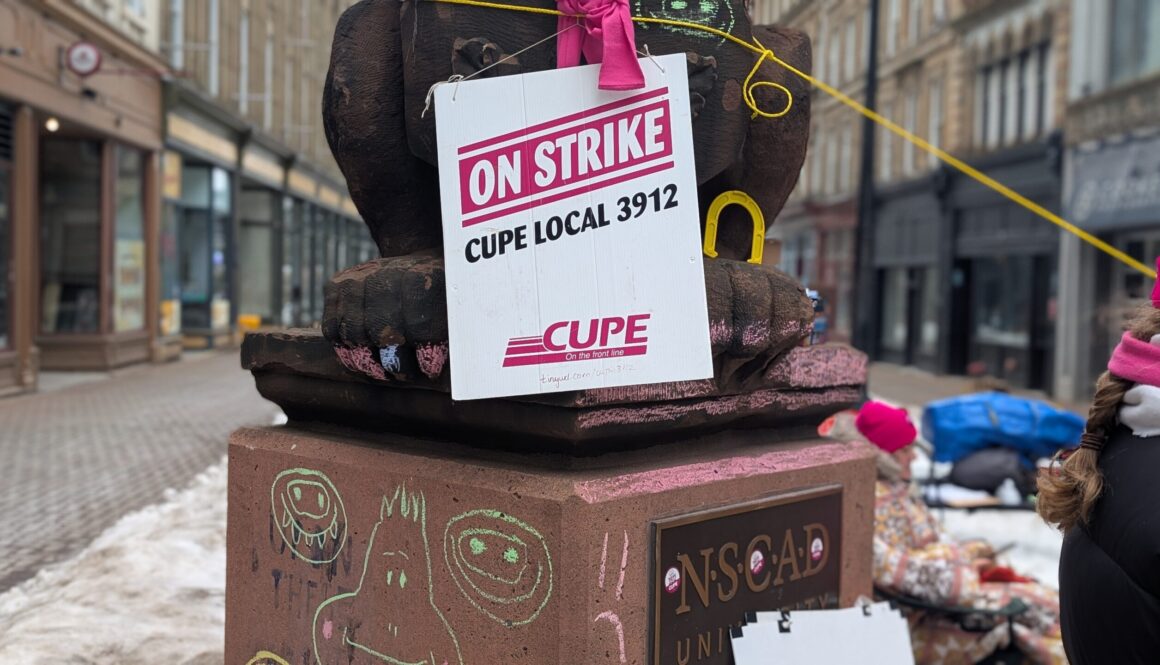
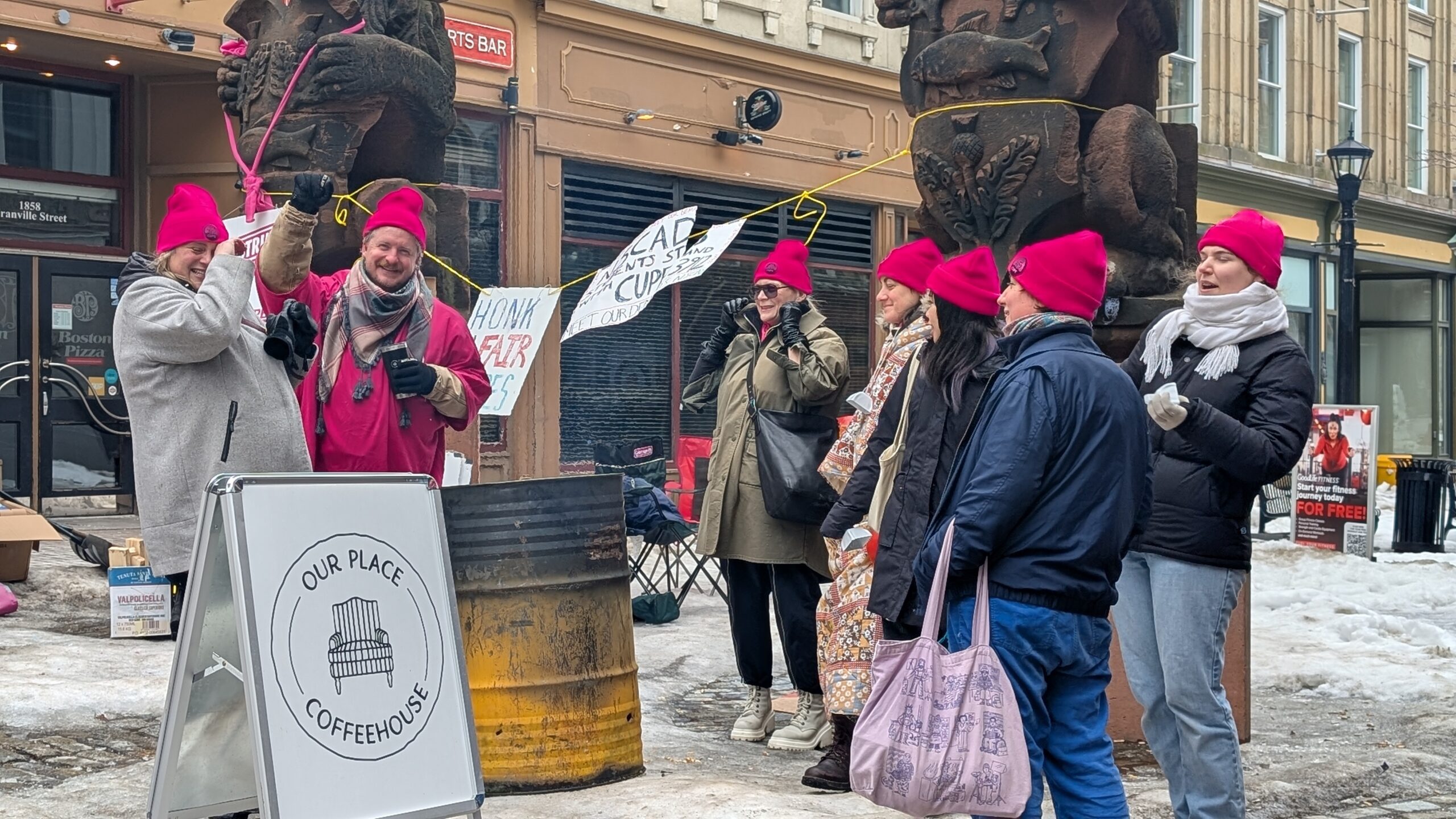
Staff at NSCAD University are on the picket lines this week, striking for fair wages and job security. The move comes nearly two years after employees became certified with CUPE Local 3912 and began bargaining for their first contract.
CUPE and NSCAD staff strike. PHOTO BY NATALIE CHIASSON /Acadia Broadcasting
Union representative Lachlan Sheldrick said NSCAD built its strong reputation in the Maritimes during the 1980s and 1990s, when staff were well compensated. But that reputation hasn’t kept up with time.
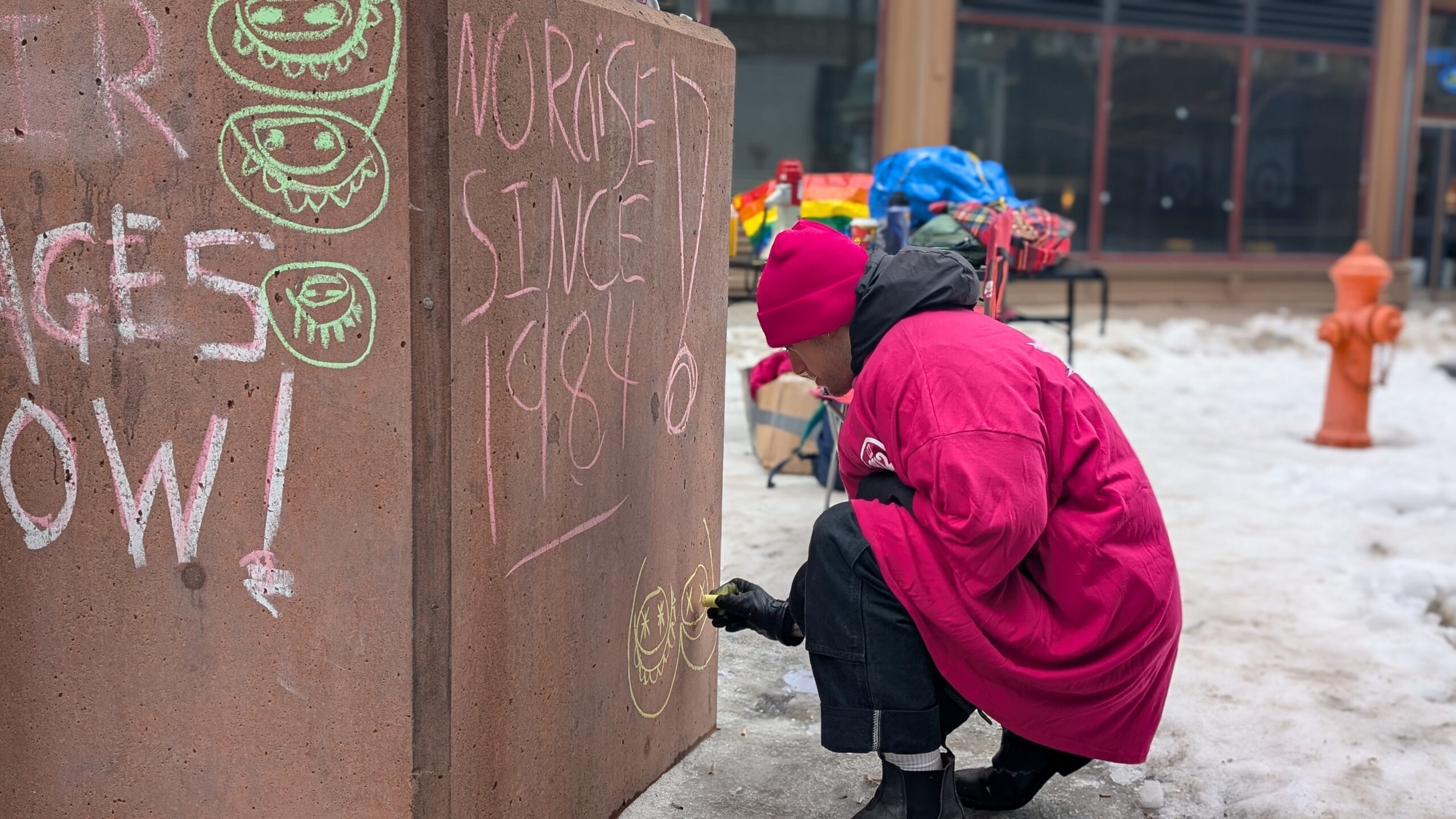
“And that pay has not gone up for our members, for our teaching assistants, and research assistants. That pay has not gone up since 1984. So people here today are making the same money that their parents might have been making had they been here 40 years ago,” Sheldrick explained.
CUPE and NSCAD staff strike. PHOTO BY NATALIE CHIASSON /Acadia Broadcasting
Staff began striking outside NSCAD’s downtown Halifax campus on Duke Street on Wednesday and continued picketing today despite the cold.
Union president Lauren McKenzie smiled as she told our reporter that she’s proud to stand with the workers.
“I’m not willing to stand aside and let these folks sort of wither in these poor work conditions that NSCAD has set for them, because we see how valuable they are,” McKenzie glowed.
CUPE President Lauren McKenzie talking with passerby about the strike on Duke Street. PHOTO BY NATALIE CHIASSON /Acadia Broadcasting
This is the third time within recent months that CUPE members at post-secondary institutions took job action in Halifax.
Dalhousie, Mount Saint Vincent, and Saint Mary’s all accepted agreements with part-time staff in the fall of 2025.
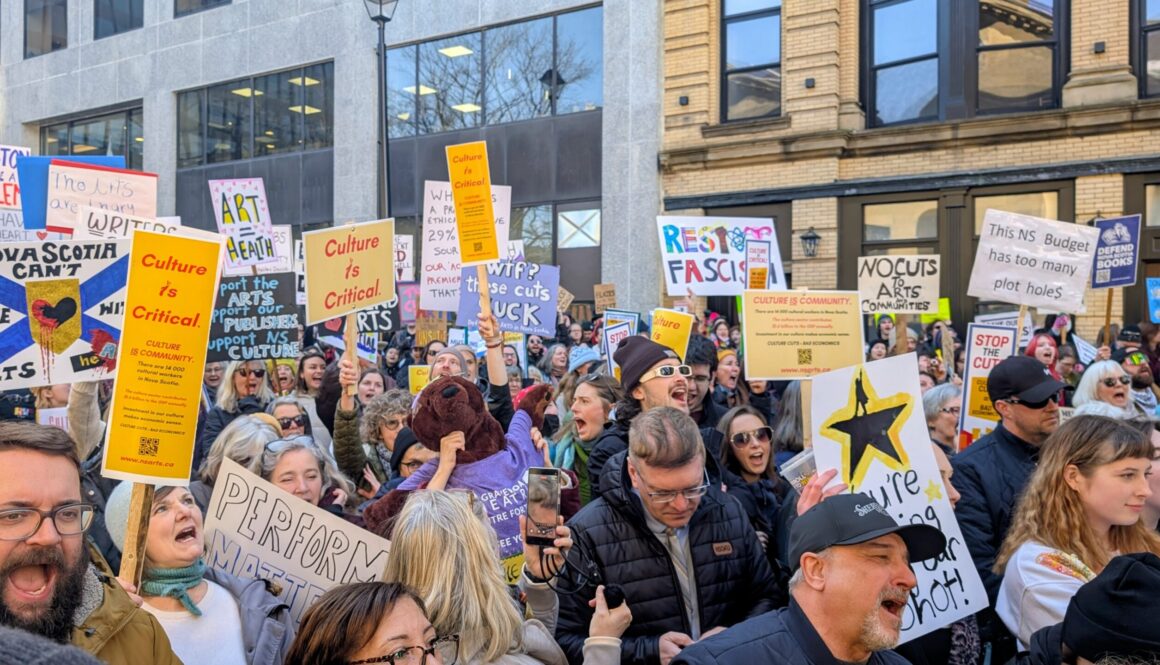
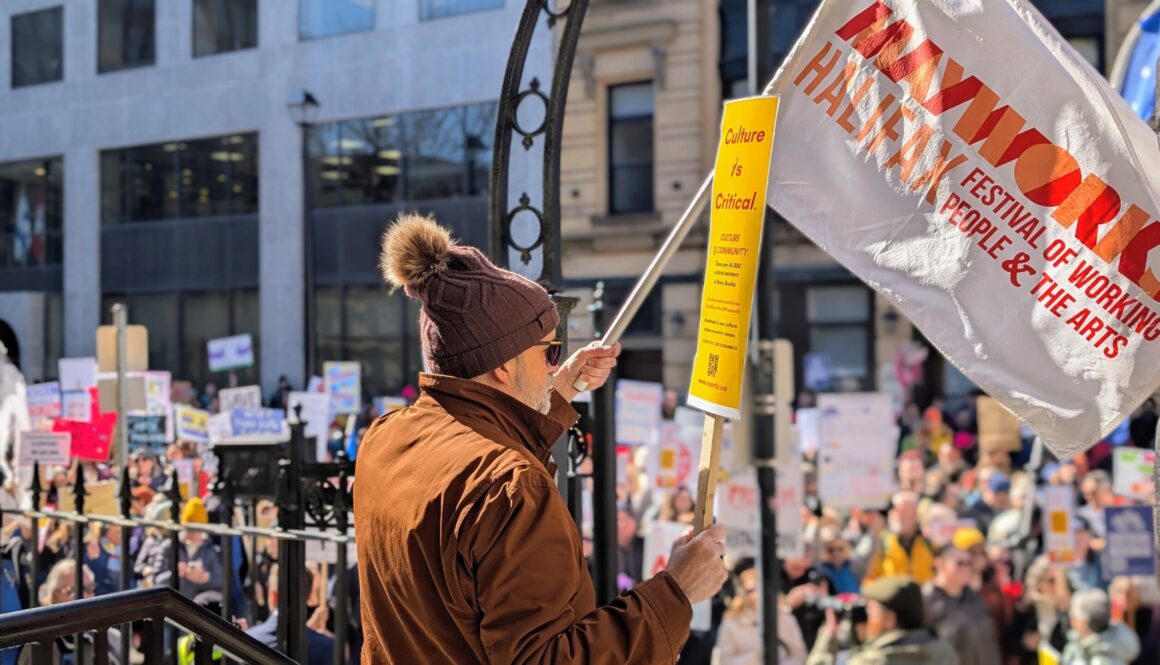
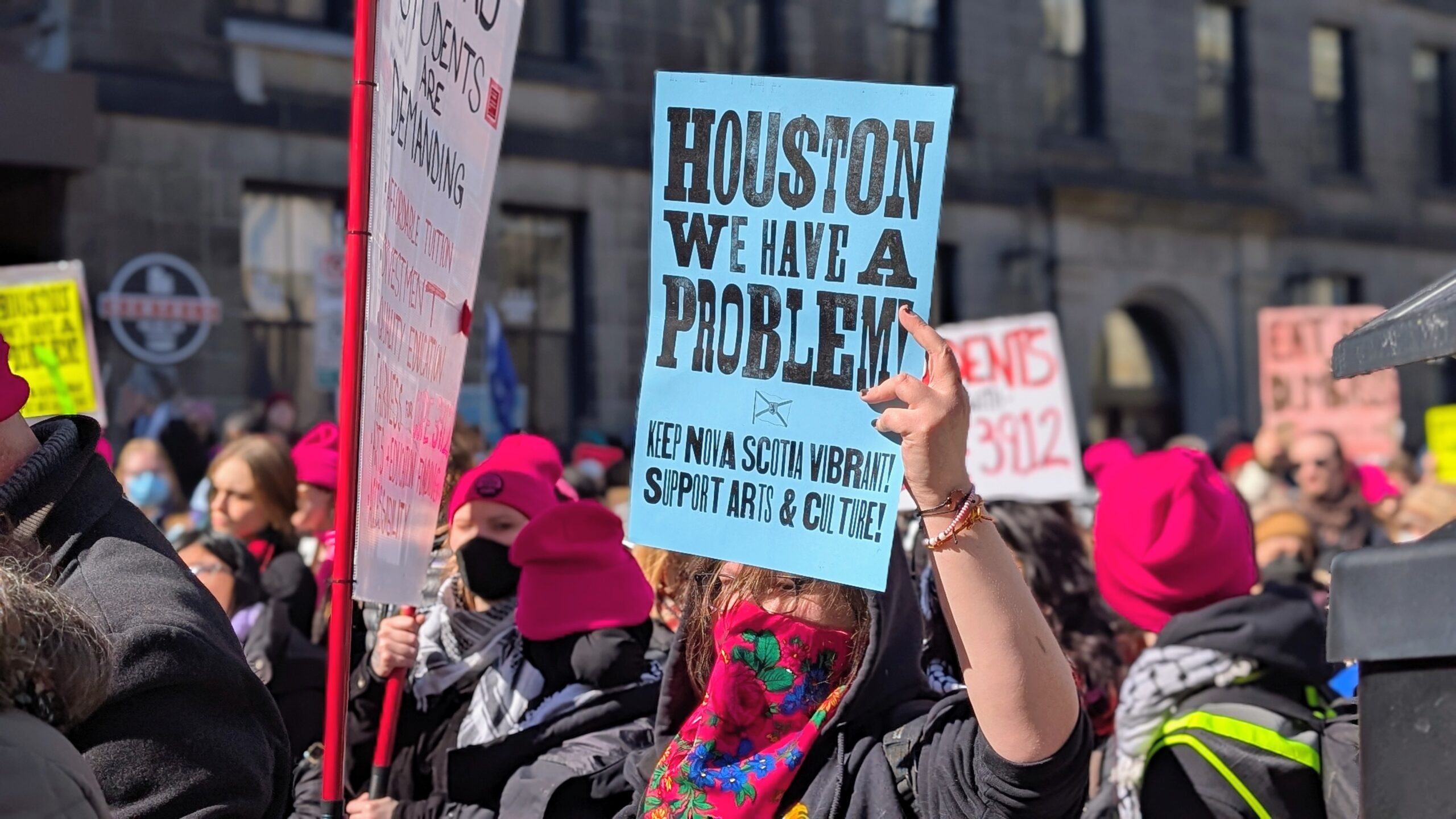
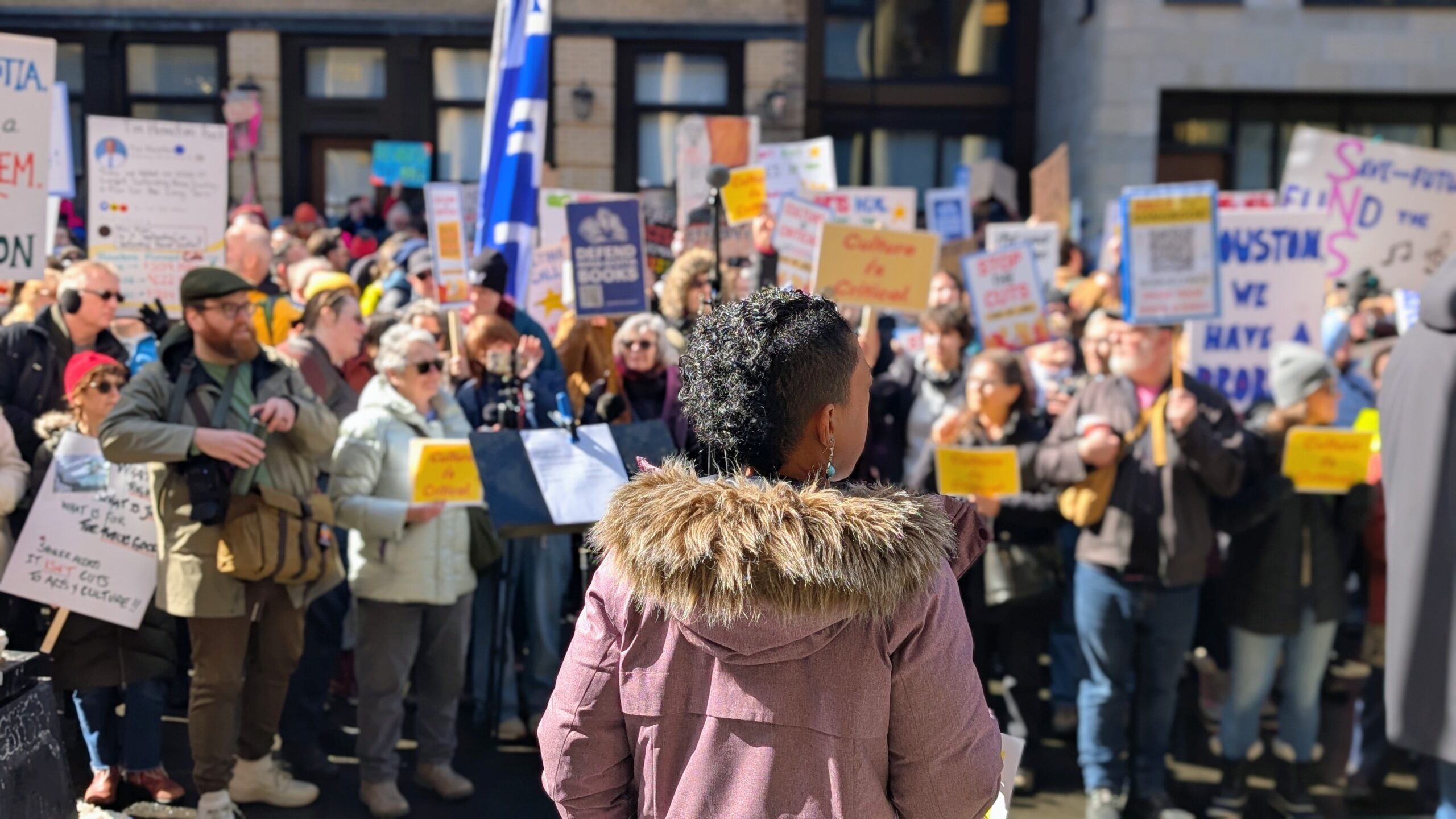
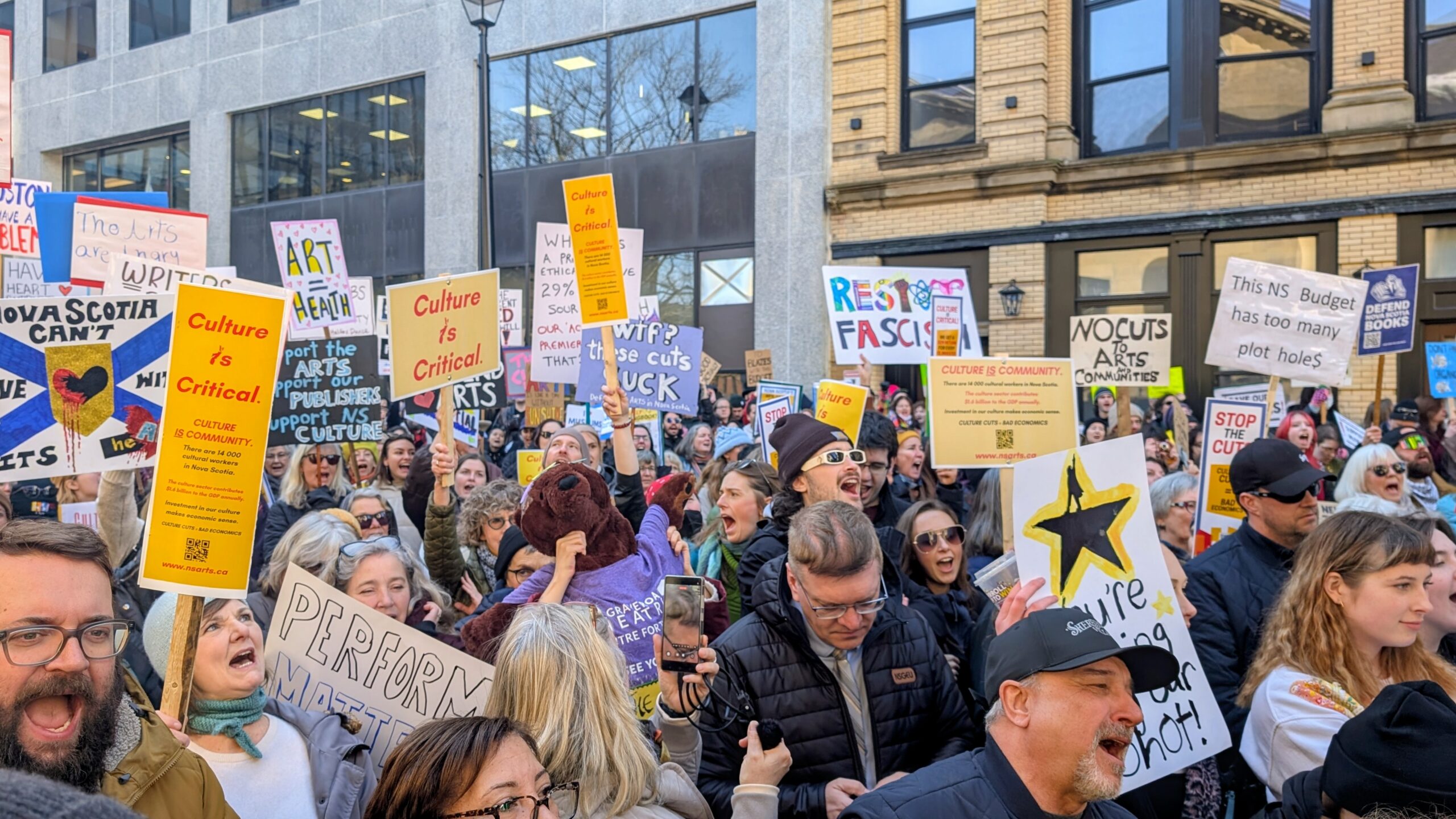
Thousands of people from across Nova Scotia gathered to protest the Houston government’s recent cuts to arts, heritage, and culture. Creatives from every corner of the province made their stance clear, with demonstrations taking place in Halifax, Yarmouth, Truro, and Windsor.
During the rally, advocates led cheers, chants, and songs as the crowd raised its voice outside the House of Assembly during Question Period, determined to make sure they were heard.
Rally for Arts, Heritage, and Culture in Halifax. PHOTO BY NATALIE CHIASSON /Acadia Broadcasting
MLA for Dartmouth North, Suzanne LeBlanc, spoke passionately about the heartfelt letters she’s received over the past week from Nova Scotians feeling the impact of these cuts.
“A mom who is devastated that their daughter was not going to have performances at their school anymore. I had someone write me to just say they live in a small town, and they understand how important the little museum is,” LeBlanc said, her voice shaking as she shared real people’s stories. “I heard from a young dancer who has been volunteering with Dancers with Disabilities every Saturday, and she is devastated that she doesn’t get to do that anymore.”
Artistic Director at Live Art Dance, Liliona Quarmyne, speaking at a rally for Arts, Heritage, and Culture in Halifax. PHOTO BY NATALIE CHIASSON /Acadia Broadcasting
As the demonstration grew louder, protesters demanded the Premier come outside and address them, chanting “bring him out” so powerfully that it could be heard for blocks.
Rally for Arts, Heritage, and Culture in Halifax. PHOTO BY NATALIE CHIASSON /Acadia Broadcasting
Rallies held in southwestern N.S.
About 75 people rallied outside Yarmouth MLA Nick Hilton’s office.
Signs read: ‘art saves lives,’ ‘support the arts,’ and ‘get in tune with Nova Scotians.’
Organizer Kathryn Davidson says the cuts slam the door on our ancestors.
“It disrespects everything that makes our beloved province so special to thousands of yearly tourists, and so many of us that are proud to call Nova Scotia home,” Davidson said.
NSGEU members were also in attendance, and say the cuts will hurt their members.
“It’s just a sad situation all around,” said local NSGEU member Lynette Hayward-Byrd.
“A lot of these cuts will hurt families, who live right here in this community. We want the Houston government to reverse this decision.”
Protestors plan to write letters to the Premier, Minister and MLAs.
Hilton responds via open letter on social media letter
Meanwhile, Yarmouth MLA Nick Hilton said he would address concerns directly in person, if he could.
In a statement on social media, he says he’s required to be in Halifax at the Legislature, representing the people of Yarmouth.
Hilton pointed to $100 million in the budget for Yarmouth, on things like the emergency department, Mariners Centre, housing, and renovations at the Th’YARC.
He adds the impact of job losses are not lost on him, but they will continue to support tourism as they push for long-term sustainability of the Yarmouth ferry.
Hilton promised to listen and make sure the community’s voice is heard.
Shelburne rally hosts over 100
In Shelburne, a rally was held in front of a museum that’s slated for closure.
Protestors gathered in front of the Ross-Thomson House and Store Museum, which was affected by the budget cuts.
Linda McNichol organized the event, and says people have worked hard to promote tourism.
“It’s going to really affect tourism. Places like restaurants, B&B’s, everything. Along with our spirit and culture, who we are as a community,” said McNichol.
The group also marched to MLA Nolan Young’s office, and will write letters to him and government officials.
Solidarity rally in Antigonish
In the northeastern part of the province, a solidarity rally is planned in Antigonish.
Andrea Boyd, Artistic Director for Theatre Antigonish and Festival Antigonish told us they planned it for later in the day so more residents could attend.
Boyd says hearing about the shocks was shocking, devastating, sort of unbelievable and everybody is feeling it.
“If it’s not a direct impact, because maybe you don’t directly receive those funds. It’s demoralizing,” said Boyd.
She added, the arts sector contributes $989 million to Nova Scotia’s GDP and supports more than 14,000 jobs.
Houston says difficult decisions need to be made
While chants were heard loudly in Province House, Premier Tim Houston said difficult decisions need to be made and times are tough.
“We are focusing on protecting health care, we are focusing on protecting school lunch programs, protecting students. We are focusing on the core services of Nova Scotians,” said Houston.
He stressed they are doing those things while keeping taxes down.
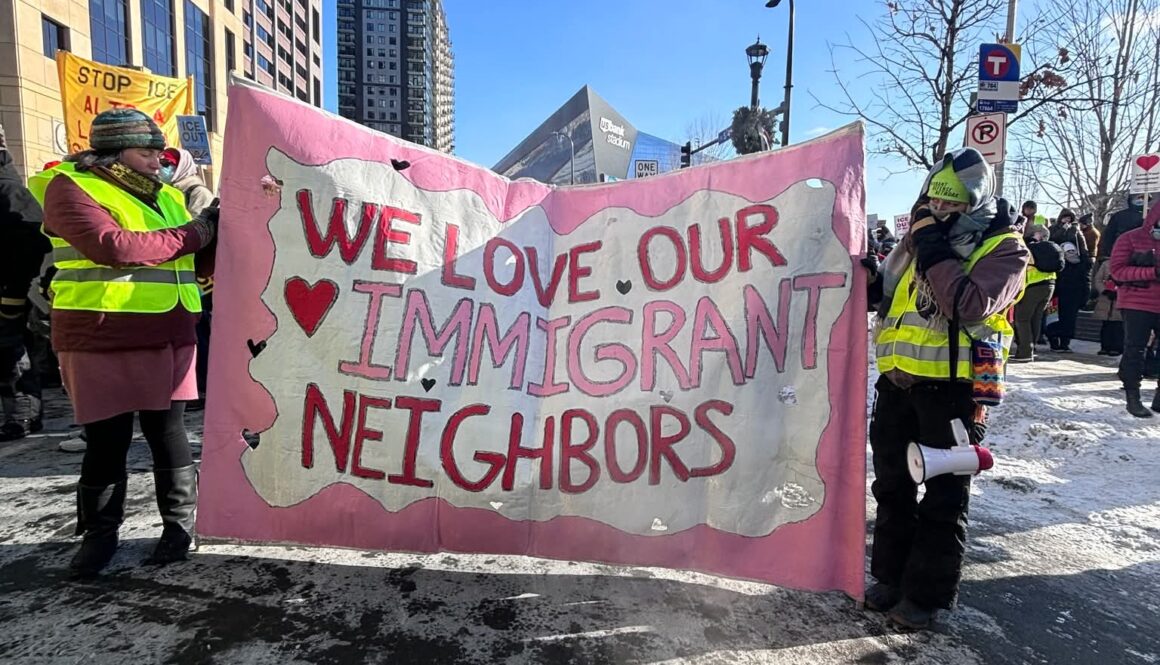
Minnesotans are coming to grips with another fatal shooting carried out by federal immigration officers, and local voices say they are balancing grief with a strong will to keep defending the constitutional rights of their neighbours and surrounding communities.
Saturday’s fatal shooting of Alex Pretti in Minneapolis came a little more than two weeks after the Renee Good tragedy.
The descriptions by Trump administration officials of both shootings have been widely criticized by the public for falsehoods, with many claiming video contradicts statements defending officers’ actions.
The Minnesota-based Communities Organizing Latino Power and Action, or COPAL, says the deaths are the result of a reckless ICE operation.
Francisco Segovia, executive director of the group, says people in vulnerable neighbourhoods are walking a tightrope right now.
“We’re now in a very scary moment, and as an immigrant myself,” says Segovia.
“I know other immigrants as well who are expressing their concern are also fearful of becoming a target. The balance between being fearful and finding courage, it goes day by day.”
He notes the growing unity in Minnesota, including a large-scale protest last Friday, shows communities are standing firm, no matter the exhaustion being felt.
COPAL called on ICE to leave the state immediately and to release legal observers and peaceful protesters who’ve been detained.
The Department of Homeland Security has routinely accused residents and elected officials in Minnesota of interfering with the expanded immigration enforcement, but opponents counter ICE agents are responsible for the tensions.
Naomi Kritzer, a writer and St. Paul resident, says she feels anger over how Trump administration officials characterized the shootings and the residents who were killed.
She wants meaningful action from elected leaders, asking Democrats to exhaust any powers they have to stop ICE activity and for Republican members of the state’s congressional delegation to not blindly support what’s happening.
“This is not a complicated moral question,” contends Kritzer.
“This is a situation where our state is being occupied for no reason.”
The political implications loom large this week, with the U.S. Senate expected to consider a government funding bill amid pressure to exclude ICE funding.
Segovia points out the public pressure helps, but he is skeptical that the funds will be dropped, pointing to approval in the House.
In the meantime, he calls on people to donate to organizations like his as they assist community members in hiding.
“Rent, food and legal help are the three main categories that we have seen,” says Segovia.