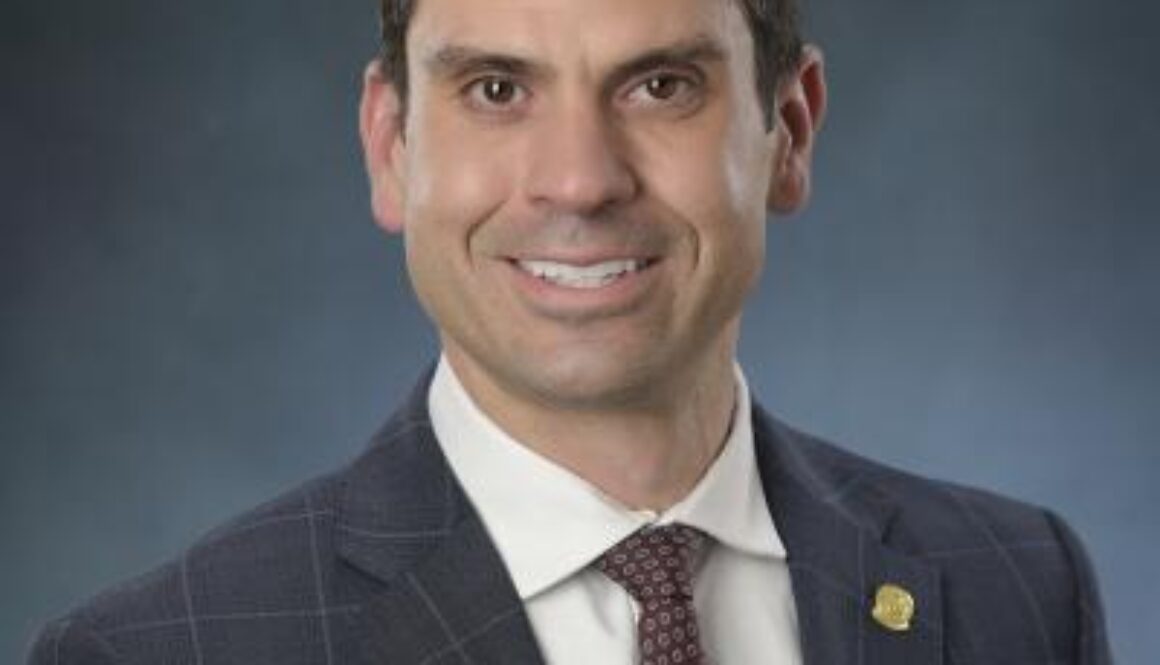
Katherine Del Salto is a multimedia journalist originally from Guayaquil, Ecuador. She came to Canada in 2021 to pursue a journalism degree at St. Thomas University. If you have any story tips, you can reach Katherine at delsaltok@radioabl.ca.
A Saint John police officer is facing assault charges following an investigation by the Serious Incident Response Team
In a press release issued Thursday morning, the Saint John Police Force said the officer has been charged with assault causing bodily harm and assault with a weapon.
In July 10, the Saint John police contacted the SiRT regarding the alleged force used by one of their officers during an arrest that took place on July 5.
According to the release, officers were responding to a motor vehicle collision on the Harbour Bridge when one of the vehicles involved fled the scene. A brief pursuit followed, ending in the Main Street North area.
The adult male driver was taken into custody, with several officers involved in the arrest. The Saint John police said the man sustained injuries and was taken to hospital afterward.
In a separate release issued Thursday, SiRT said it initially determined in August that the case did not meet its mandate after receiving additional information from police.
However, in early November, the New Brunswick Public Prosecution Services independently referred the incident to SiRT due to concerns about the officer’s alleged use of force. SiRT then launched a formal investigation.
Saint John police said the officer has since been reassigned to administrative duties pending the outcome of the criminal proceedings. A Police Act investigation will follow once the court process concludes.
The officer is scheduled to appear in Saint John provincial court on June 15, according to SiRT.
The City of Bathurst was the only municipality in New Brunswick selected as one of Atlantic Canada’s Top Employers for 2026.
The city announced the award in a press release Tuesday.
The competition is administered by the editors of Canada’s Top 100 Employers and evaluates organizations based on eight criteria, including workplace culture, benefits, training and community involvement, among others.
Sarah Morton, Bathurst’s senior director of corporate services, said the recognition puts the city on the map as a strong employer.
“I think we are proving ourselves as a community where you can work, live and grow, and where you can build an amazing career in such a great corner of the province,” she said.
Other winners include New Brunswick companies like NB Liquor, Brunswick Credit Union Ltd., Horizon Health Network, Irving Oil, and Nova Scotian companies like Killiam Apartment REIT, within others.
However, of the 17 entities in New Brunswick that received the recognition, Bathurst was the only municipality to do so this year and one of 60 organizations named across Atlantic Canada.
In a press release issued Tuesday by Mediacorp Canada Inc. — the company behind Canada’s Top 100 Employers — editors said this year’s winners were organizations that supported employees “through every stage of life and career.”
“What stands out about this year’s winners is their long-term mindset,” wrote Richard Yerema, executive editor at Mediacorp.
“They understand that attracting talent is only the beginning — the real challenge is helping employees put down roots, grow their careers and see a future for themselves in Atlantic Canada,” he wrote.
According to a detailed explanation provided by Mediacorp’s editors, Bathurst’s workplace fitness initiatives, “generous” pension contributions and maternity and parental leave top‑up programs were among the reasons the municipality was selected.
Morton said the programs are part of the municipality’s broader focus on enhancing workplace culture, an effort underway for the past five years.
She added the city is especially proud of the achievement because it was recognized the first time it applied for the competition.
“We knew we were in a great place, and it feels amazing to have that recognized,” she said.
In recent years, municipalities across New Brunswick have introduced new initiatives to retain employees amid challenges such as less competitive salaries and difficulties filling highly specialized roles.
Morton said she hopes Bathurst’s recognition can serve as an example for other municipalities struggling with recruitment and retention.
“We are always open to collaborating and sharing,” she said.
“I think that supporting your employees through programs in their work life as well as their home, day-to-day life is what really keeps employees.”
A Saint John councillor is calling for regular reports from the city’s new community safety team.
During Monday’s city council meeting, Greg Norton proposed a notice of motion requesting that the team report to council. Norton said the idea came from his role on the Saint John Police Board of Commissioners.
He said that council receives monthly police reports detailing community work, which helps members understand budget pressures and identify areas for improvement. Because the community safety team performs similar functions, Norton said comparable data is needed to justify the use of taxpayer dollars.
“It’s important to understand what they are exactly doing, and looking for those data sets is part of the conversation,” he said.
The city announced the pilot community safety services team in December in response to concerns about safety and disorder in Waterloo Village, uptown Saint John, and the Thorne Avenue–Rothesay Avenue corridor.
GardaWorld was awarded a $780,000 annual contract to provide a 24/7, non-police presence to patrol those areas and respond to non‑emergency issues. The team began work in February.
Norton said anecdotal feedback suggests the service is benefiting the community but emphasized the need to measure its effectiveness and determine the appropriate scale of the program.
“Sizing the service can only be done when we have the data to support that discussion,” he said, adding that detailed reporting would help assess whether the pilot is a good use of public funds.
According to an email statement from the city, the community safety team falls under the Growth and Community Services department of the City of Saint John and reports to the Community Standards Compliance team.
However, Norton believes the team is better suited to report to the council, particularly the Public Safety Committee.
“Voters elect us to be stewards of the dollars that we spend, and so it’s important that they speak to us and report directly to us, as we represent the public,” he said.
In a separate email statement Wednesday, city of Saint John spokesperson Lisa Kennedy clarified that the team is already scheduled to present at the next Public Safety Committee meeting.
New Brunswick transgender health advocates are raising concerns that the province’s latest budget did not include funding for gender‑affirming health care.
The government released its provincial budget last week which, despite an estimated $1.39‑billion deficit, includes the highest health‑care investment in New Brunswick’s history.
The province plans to spend about $4.8 billion on health care in 2026–27, an increase of $710 million over last year.
Some key investments include $170.4 million as part of the physician services agreement with the New Brunswick Medical Society, $30 million to expand the collaborative clinic model, and $50 million to continue modernizing and digitizing the health‑care system.
However, dedicated funding for a gender‑affirming clinic — and a coordinated, system‑wide program to support it — was not included.
In a press release last Tuesday, the New Brunswick Transgender Health Network, Chroma NB and Alter Acadie expressed disappointment over the lack of funding, saying it fails to address the “serious” barriers trans New Brunswickers face when trying to access care.
“Gender‑affirming care is life‑saving primary health care,” wrote Dr. Kathleen Taylor, a Fredericton family doctor who provides gender‑affirming services and volunteers with NBTHN.
“The absence of any targeted investment means people in New Brunswick will continue to navigate a fragmented and inconsistent system, often without clear points of access to care, which we know results in poorer mental and physical health outcomes,” she added.
According to the organizations, New Brunswick is the only Atlantic province without a gender‑affirming care clinic.
They argue the clinic and program they proposed would have represented only about 0.04 per cent of total health‑care spending — roughly $2 million.
Without such a program, the groups said trans New Brunswickers will continue to struggle with accessing or maintaining hormone therapy, finding safe and inclusive primary care, and navigating a health‑care system that “too often lets them fall through the cracks.”
Acadia Broadcasting reached out to the Department of Health for comment but did not receive a response before deadline.
With new federal legislation targeting organized retail crime, the Retail Council of Canada is renewing its push to curb rising theft in New Brunswick.
Jim Cormier, the council’s director of government relations for Atlantic Canada, said the introduction of Bill C-14 — which targets auto theft and organized crime through stricter bail conditions and tougher sentencing — has strengthened the organization’s call for increased police patrols in major retail areas across the province.
“We’d love to see more beat cops in communities across New Brunswick,” he said.
Cormier said a stronger police presence in high‑traffic retail zones can help deter organized retail crime groups.
Since 2020, he said, these networks have become more active, fuelled by the rise of online marketplaces, their increased use during the pandemic and inflationary prices — trends now affecting smaller provinces like New Brunswick.
“These organized retail criminals are just waltzing into stores, taking what they want,” he said. “They’re not even bothering to cover their faces lately, and they don’t run because they know nothing is going to be done to them.”
Cormier said the council met last week with Saint John police chief Robert Bruce, who chairs the New Brunswick Association of Chiefs of Police, to discuss ways they can work together.
While he described the conversation as positive, he said the council hopes to do more, including sharing best practices with local members.
The organization would also like to see the provincial government invest in increased policing in key retail districts. But with the provincial budget for 2026–27 forecasting a deficit of nearly $1.4 billion, Cormier said the council understands funding may be limited. Still, he said the RCC will continue speaking with police and policymakers to find solutions.
He said improving incident reporting will also be a priority, as police staffing decisions are often driven by statistics.
“We know cops aren’t the be‑all and end‑all, but it certainly helps if you have a visual deterrent,” he said.
Cormier added that retailers often feel frustrated when they do report crimes, saying police response times can sometimes be slow. That frustration is compounded, he said, by a justice system that appears to release retail crime offenders quickly.
He said the council is not focused on first‑time offenders, but rather on prolific repeat offenders who may use violence or threats.
Cormier also met last week with Public Safety Minister Robert Gauvin to update him on the council’s advocacy efforts and to continue pushing for provincial support to help fund municipal policing — a model used in provinces such as Manitoba and Nova Scotia.
Human Development Council researchers wrapped up NB Power’s evidence period, urging more support for low-income households.
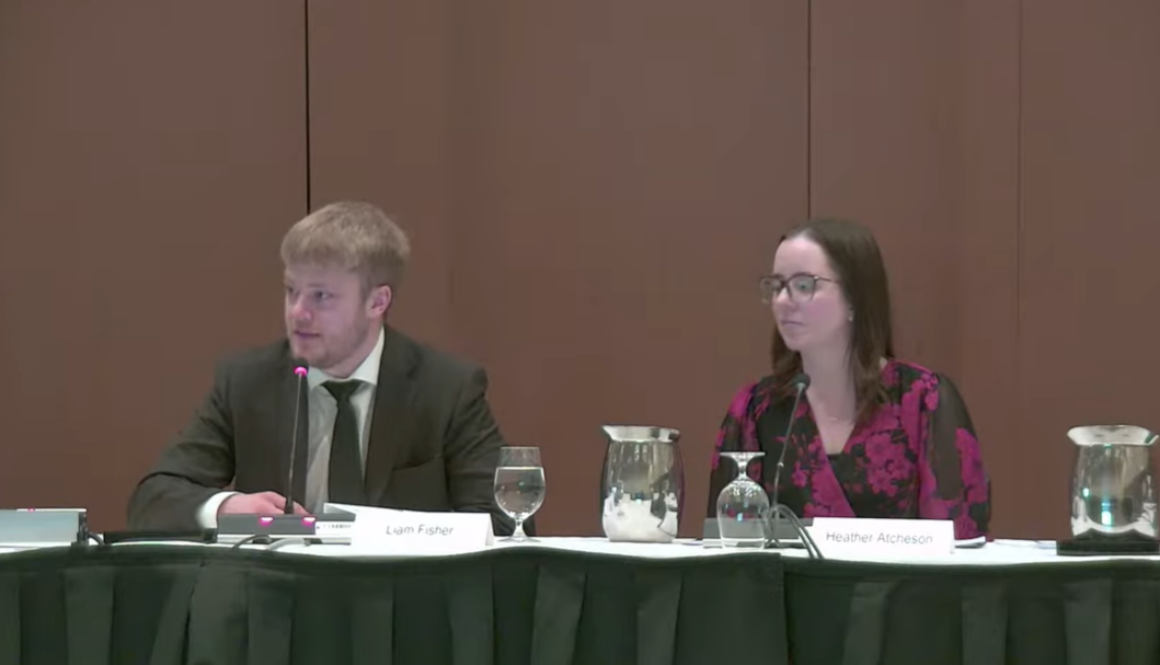
HDC researchers Liam Fisher and Heather Atcheson were the final witnesses in the utility’s two-week-long rate hearings.
The poverty research team authored HDC’s 2025 Energy Report, which the organization submitted as evidence in NB Power’s hearings before the Energy and Utilities Board.
During these hearings, NB Power is seeking approval to raise energy rates by 4.75 per cent for the coming year.
According to various media reports, this is part of a long-range financial plan that, if approved, would see power rates increase by 50 per cent over six years, by March 2028.
During their testimony last Wednesday, the researchers told the hearing that rising electricity prices are creating a serious affordability challenge for low-income households — groups that, according to the report, include seniors, newcomers, people with disabilities and others. They also warned that without targeted protections, future rate increases will continue to disproportionately impact these residents.
“There are projects and programs in place that are addressing other areas of energy poverty,” Atcheson said. “But the low-income affordability piece is something we would recommend be looked at.”
During cross-examination, the researchers suggested that either the province or NB Power consider adopting a low-income affordability program similar to those used elsewhere in Canada.
They pointed specifically to Ontario’s Electricity Support Program, which provides monthly credits to help reduce electricity bills for qualifying low-income households.
During the hearings, NB Power executives agreed that rising electricity prices would create affordability issues for some of their customers. But in last week’s final arguments, NB Power said the EUB can’t consider affordability when deciding on a proposed rate hike.
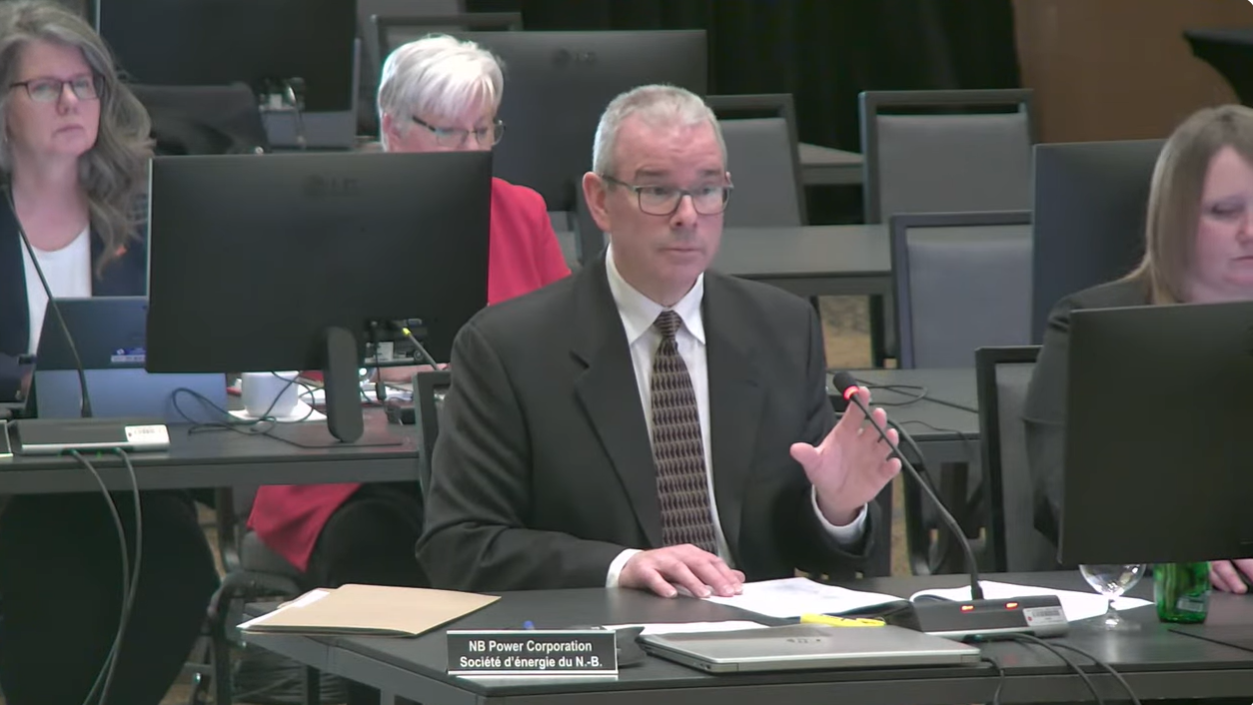
In Friday’s final-arguments hearing, EUB chair Christopher Stewart asked the utility’s lawyer, John Furey, what the board could do if the proposed rates were deemed unaffordable for some residents. Furey said the board didn’t have jurisdiction over those issues.
John Furey is NB Power’s lawyer. PHOTO: EUB/YOUTUBE
“That is a matter of social policy that each of the courts of appeal I referenced have said is best left to government,” he said.
Furey said NB Power acknowledges that rate changes in the recent years have created challenges for some, but argued the utility needs the rate hike to invest in infrastructure, maintenance, and major projects like the Matacquac Dam and Point Lepreau.
A decision on any rate increase is reserved by the board and is expected in the coming months. However, since NB Power’s hearings were delayed by several weeks, the board has suggested any decision will not affect rates until June.
New Brunswick chambers of commerce are raising concerns about the lack of long-term economic strategy in the province’s latest budget.
The government presented the 2026–2027 provincial budget on Tuesday, revealing a deficit of nearly $1.4 billion. This is the second year in a row the budget has projected a shortfall of more than $1 billion.
Before the budget was tabled, Premier Susan Holt had warned of “difficult decisions.”
The government made cuts primarily to the civil service, promising to eliminate 1,400 positions over the next three years, phase out the provincially run veterinary field service, and review underutilized assets.
At the same time, the government announced major investments in health care, with plans to spend $4.8 billion.
However, some chambers of commerce in the province say the budget lacks long‑term economic measures to address the deficit and growing debt.
Shannon Merrifield, CEO of the Saint John Region Chamber of Commerce, said that with a significant deficit and rising debt, the government needs a clear strategy to drive revenue growth.
“We haven’t seen a clear strategy where we recognize that we need to invest to grow, but spending alone isn’t the strategy,” she said.
Merrifield said that for Saint John, she would have liked to see more investment in infrastructure and immigration, arguing that filling workforce gaps and setting out a clearer infrastructure plan could help the city become “a corridor” to the rest of Canada.
She added that even though the budget makes important investments, the chamber is concerned about the timeline of the cuts.
“It’s something that needs to be addressed now and not four years down the road,” she said.
Like Merrifield, Kim Wilson, CEO of the Chamber of Commerce for Greater Moncton, said her chamber is concerned about the level of spending and the lack of cuts.
“We feel it is unsustainable for New Brunswick to continue to add to the net debt over the mandate of this government,” she said.
Wilson said the chamber is “disappointed” by the lack of focus on an economic strategy. She agreed that investments in health care and education are essential, but said the government also needs to build an economy capable of generating wealth and tax revenue to fund the services it is investing in.
Kim Wilson is the CEO of the Chamber of Commerce for Greater Moncton; she says the province recent budget lacked investments in businesses. PHOTO: KIM WILSON/CHAMBER OF COMMERCE FOR GREATER MONCTON WITH PERMISSION.
Wilson said she would have liked to see population‑growth strategies — such as immigration — and property tax reforms to support businesses in southeast New Brunswick.
With an aging population and Moncton’s rapid growth, she said securing the future workforce and supporting business investment are key to the province’s economic development.
“Investments in the private sector are imperative,” Wilson said. “Investments in businesses mean you create more tax base for the province, for the communities in which we operate.”
“Investing in businesses is investing in the communities and in their growth.”
The 2026–2027 budget includes measures the government says can generate revenue, such as the introduction of tolls on non‑New Brunswick vehicles, investments to reduce contraband tobacco, and measures to crack down on illegal lobster sales.
According to the budget, the province expects to receive $10.4 million in annual revenue from the tolls, a $3‑million increase in annual revenue from a reduction in contraband tobacco purchases, and $5 million to $8 million in previously uncollected tax revenue from unreported lobster sales.
However, with the province yet to release its economic development strategy, Wilson said many questions remain for businesses.
The government has introduced legislation aimed at improving access to the civil justice system for survivors of intimate partner violence.
In a press release Wednesday, the Department of Justice and Public Safety said the government is proposing amendments to remove limitation periods for non‑sexual harm in intimate relationships. The changes would also apply when the survivor was financially, physically, or emotionally dependent on the person who harmed them.
According to the release this will signify an expansion of claims survivors of domestic violence can file without a limitation period, which includes claims for damages, for trespass to the person, and assault or battery for acts of a sexual nature.
“These relationships can involve fear, control, and power imbalances that make it extremely difficult for survivors to come forward within the standard limitation periods,” said Justice Minister and Attorney General Robert McKee in the release. “This legislation recognizes those realities.”
If passed, the bill would also remove limitation periods to file claims for recent or historic misconduct.
This means that people who have experienced sexual assault, intimate partner violence or similar ham in a relationship of dependance would be able to file claims regardless of when the misconduct took place, unless the claim had already been settle or it had been decided by the courts.
Additionally, the changes would align New Brunswick’s laws on these matters more closely with those in other Canadian jurisdictions.
The government’s freeze on operating grants could force universities to make tough decisions.
In Tuesday’s budget, the government announced it was freezing universities’ operating grants at 2025–26 levels, citing that post-secondary enrollment peaked in 2004 and has been in steady decline since.
This means post-secondary institutions in New Brunswick won’t face budget cuts; however, they also won’t receive additional funding for the 2026–27 period.
Camila Baquerizo Bayona is vice-president education for the St. Thomas University Students’ Union.
She says the lack of additional funding will strain an already “underfunded system.”
“We are already seeing some of the loopholes happening within our student services, and we understand this is a bigger problem than our university administrations,” she said. “This is mostly a matter of understanding that education right now is clearly underfunded.”
Baquerizo Bayona said that since the beginning of the school year, the student union at STU has been advocating for the university to reinstate services cut due to budget constraints.
In September, STUSU launched a campaign to save the international student coordinator position — a role Baquerizo Bayona said was pivotal, as it assisted international students who had just arrived at the university and were learning to adapt to a new country.
At the same time, Baquerizo Bayona said the union discovered through its student reports and statistics that mental health services for STU students were being overwhelmed because the school didn’t have enough counsellors.
She said that with the international student cap, STU, like many other post-secondary institutions, has experienced substantial revenue losses the university is still trying to compensate for.
With the freeze in operating grants, Baquerizo Bayona said she is concerned that other student services — such as the experiential learning program, which connects students to the workforce through internships — might face further cuts.
“How do we expect to keep increasing our enrollment, keep producing students and helping them, if [the government] is constantly cutting funds?” she said. “Cutting the chances for people to access education.”
Acadia Broadcasting reached out to STU, which declined to comment, saying it will be a few weeks before the university has a full picture of the ramifications of the freeze on grants.
Université de Moncton changing its operating model
In a press release Tuesday, the Université de Moncton announced it was accelerating its “operational transformation process” because of the province’s grant freeze.
The university said that although the government hasn’t formally imposed budget cuts, inflation and commitments made to its community mean the freeze represents “a real revenue loss” for the institution.
The university was already exploring operational transformation, but said the announcement gave it the opportunity to accelerate the process, which will examine whether shared services can be combined across the three campuses to run more efficiently.
However, as the freeze on grants was announced in the spirit of a “more in-depth discussion,” the university said it is willing to seize the opportunity to weigh in on these conversations.
Fundy Shores is looking to increase access to health care in its municipality with a pilot project.
The municipality has developed the Paramedicine Clinic Pilot, a project that aims to recruit paramedics and other health professionals, including licensed practical nurses and registered nurses, to run a clinic residents can visit for preventive care.
Fundy Shores Mayor George “Denny” Cogswell said the municipality decided to explore the pilot because access to health care was one of the “main things” residents were looking for.
“We felt that paramedics in the province are very well underutilized as health-care professionals, and we thought that would be a good place to start,” he said.
Cogswell said some of the services residents wanted access to included blood work, diabetes management and getting prescriptions filled.
He added that in a rural community like Fundy Shores, which has 2,200 people, health-care providers such as paramedics or registered nurses “could get a lot more health care done.”
“Paramedics right now are doing a lot — they are running an emergency room within an ambulance — so why can’t we take some of that out there and put it into a clinic?” he said.
Cogswell said the project is still in its early stages but noted the municipality has shared the pilot with the Paramedic Association of New Brunswick for feedback, which he said has been positive.
The municipality has also shared the pilot with the Department of Health and is waiting to meet with officials to explore funding options, Cogswell said.
If it can secure funding, Cogswell said the municipality would build a clinic in the new community complex it is developing, which he expects will be completed by 2030.
Paramedics association open to pilot project but highlights hurdles
Chris Hood, executive director of the Paramedics Association of New Brunswick, said that to move health care forward, “we need to think out of the box.”
He believes the pilot project Fundy Shores is exploring is a positive step toward better access to health care for the community. But he said the municipality will need to set up the clinic in a more collaborative way.
“It’s all good to take an X-ray and put a cast on, but then someone needs to deal with the follow-up care,” he said.
Chris Hood, executive director of the Paramedic Association of New Brunswick. PHOTO: CHRIS HOOD/SUBMITTED
Hood also said the municipality may face challenges in recruiting and retaining staff and may have to find a way to “sell” the community as a place for health professionals to practise.
Despite some of the kinks that may need to be worked out, Hood said the association is open to working with the municipality and providing advice as it explores the pilot project.
“We are interested in all kinds of innovation, and we need to think about that more, so I encourage communities to reach out if they are thinking about these types of things,” he said.