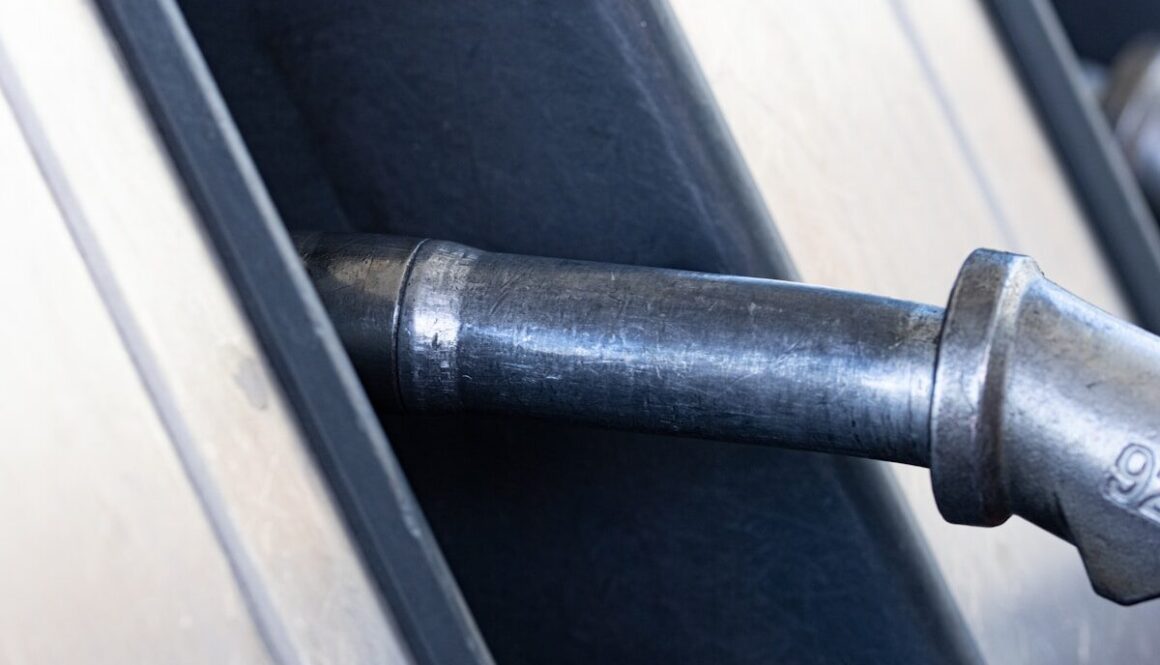
In Nova Scotia, regular self-serve ranges from about $1.62 to $1.66 per litre while diesel is selling for between $2.11 and $2.15 per litre.
On Prince Edward Island, the maximum prices are almost $1.69 a litre for regular self-serve, $2.19 per litre for diesel and $1.67 per litre for home heating oil.
Fuel prices in the province have been climbing up and plunging back down, like a roller coaster, since the latest conflicts in the Middle East began.
Mount Allison University Political Science Professor Dr. James Devine told our newsroom that the Canadian economy is being impacted.
“The area where the fighting is in the Persian Gulf. There’s a narrow area of the Persian Gulf called the Strait of Hormuz through which about 20 per cent of the world’s oil supply goes, “Dr. Devine said.
“On top of that, a large amount of liquid natural gas also comes from that region. The country of Qatar is one of the biggest producers of liquid natural gas, and it shut down its facilities because of the conflict. All of these things are going to start having an impact on the global economy, in part on oil prices, which we’ve seen already.”
He added different parts of the country have felt the impacts in different ways.
“The price of gasoline is going to go up. The price of consumer products will also go up because transportation costs are going to increase. In part because of the price of gasoline, but also because of insurance. The insurance that’s required for the transportation of oil from the region will go up as well, and it will cost more to ship it to North American markets,” Dr. Devine stated.
The Housing, Mobility, and Engagement Research Lab (HOME-RL) at the University of New Brunswick is conducting a survey to understand people’s experiences with housing displacement, damage, evacuation, or loss in natural disasters or extreme weather in Atlantic Canada.
Dr. Julia Woodhall-Melnik, Associate Professor and Canada Research Chair in Resilient Communities, leads the study.
“We are looking to speak with folks who have experienced some kind of housing damage or evacuation, housing loss, or evacuation with no damage related to extreme weather events or climate change.”
She says the goal is to ensure that disaster response policies are shaped by those who have lived through such events.
Individuals at or above the age of majority are eligible for participation if they have experienced housing damage or loss, were evacuated or displaced due to a natural disaster or extreme weather event, experienced said event(s) in Atlantic Canada, and were affected between 2015 and 2026.
Those interested may participate by calling (506) 648-5522 or by emailing homerl@unb.ca, where someone will get back to you.
The online survey is also accessible by clicking here.
Fredericton city councillors have chosen to continue negotiations to keep the University of New Brunswick’s Sir Max Aitken Pool open instead of rejecting their proposal.
But the city council says they weren’t provided sufficient data to support the university’s $12.9 million aid request.
The request came from UNB president Paul Mazerolle several weeks ago, who informed the council that the building’s HVAC systems were about to fail. The one-page letter requested a $6 million investment to keep the HVAC system running. A project included in the request was an increase in the city’s annual contributions to the Sir Max Aitken pool building from $290,000 to $1.29 million for the next 10 years.
Councillor Greg Ericson (Submitted: Greg Ericson)
Greg Ericson, Fredericton councillor for Ward 8, says the request did not include any specifics, such as an engineering report.
“It was just a one-page letter request. It also said that UNB was not going to make the city whole if, for other reasons, the building closed for other unforeseen mechanical or technical problems,” said Ericson.
He also pointed out the city’s approach when it comes to needed repairs for its own indoor pool, located on the city’s north side.
“We see regular reports on the structural integrity of the pool and the infrastructure’s maintenance requirements, what is deferred, and costs associated,” said the Ward 8 councillor. “Council and senior staff are in a continuous habit of making sure this information is available when we are spending taxpayer dollars on infrastructure and services. We need to know what kind of value we are getting for our spend.”
According to Ericson, another piece of information that would have been useful to city councillors would be information on user groups of the UNB pool. He referenced pool usage statistics last provided by the University of New Brunswick on their website in 2018, which claim that UNB has a strong desire to keep a pool on the Fredericton campus, even though ‘more than 80 per cent of current pool users are Fredericton community members.’
“UNB continually claims that 86% of the pool user group is not related to the university, but I’m pretty sure they are only counting varsity athletes, not their own staff, faculty, and their families that use the pool. I would argue that they are part of the UNB community too,” said Ericson. “[UNB] differentiating that athletes are only using this much of [the facility] is actually inserting a new policy criteria that the city is not familiar with, and we were kind of surprised by it.”
In a Greater Fredericton Region Aquatics Facility Feasibility Study done by the Regional Services Commission 11 in 2020, UNB is cited as having stated that 40 per cent of the use of the Sir Max Aitken pool is university use and 60 per cent is very broadly defined community use. “It is important to distinguish these user types, as the university defines community use as including adult lap swim, and that is predominantly for university faculty, staff, students, and the UNB Masters swim team, which is a mix of UNB and community members. This definition of community use is inconsistent with the needs of the municipalities and local service districts.”
Ericson said the university has never shared their user data with the council. He added that the council also would have liked to know of the university’s spending habits.
“We want to know how [third parties] have performed as financial stewards of their assets and of their responsibilities. One of the things that council would have loved to know is, has UNB been spending appropriately in a preventative way on the maintenance issues of the pool in order to keep costs down and extend the lifetime, or have those expenditures been cut from budgets because of austerity and other understandable reasons,” said Ericson. “That does threaten the longevity of the pool and its ability to stay open for the interest of its users.”
Ericson says the initial agreement of the city’s $140,000 annual contribution to the university’s pool came in 2018. It resulted from a joint effort to keep the facility open for three more years.
“It has snowballed over the years to now $290,000 a year, but that is in the range of what the city was comfortable with for our understanding of the shared pool,” said Ericson.
The new request for a seven-figure increase to $1.29 million annually, according to Ericson, is a big ask with no insurance.
The provincial government and the New Brunswick Medical Society have signed a four-year physician services agreement.
It focuses on improving primary care access and supporting physicians across the province.
The 2025-29 agreement represents an estimated $270 million investment and will cover all physicians working in the public healthcare system.
“New Brunswickers want timely access to care closer to home,” said Dornan in a government release on March 12. “This agreement bolsters collaborative care teams to attract new physicians, enabling us to roster more patients, expand after-hours services, and align compensation with patient attachment and continuity of care.”
Premier Susan Holt says the agreement is a turning point for primary care in the province.
“We are catching up and positioning ourselves to keep up. This contract strengthens access for patients, supports physicians and ensures New Brunswick is competitive nationally,” said Holt.
New compensation models will reward patient attachment, timely appointments and participation in collaborative care clinics. Monthly reporting will ensure transparency and accountability, according to the statement.
In addition to its already established focuses, the agreement supports specialty clinics in rural areas, which aim to reduce travel burden for patients. It also introduces a structured parental leave program and establishes a physician wellness program.
The agreement includes a commitment to review gender pay equity, nursing home coverage, clinical teaching supports, and obstetrics services payment gaps in efforts to modernize physician compensation.
“We are happy to have collectively seized this opportunity to transform our system through new, innovative and accountable payment models developed for family physicians, as well as targeted investments in their clinics and teams that will allow them to take on more patients, more quickly,” said the New Brunswick Medical Society President, Dr. Lise Babin.
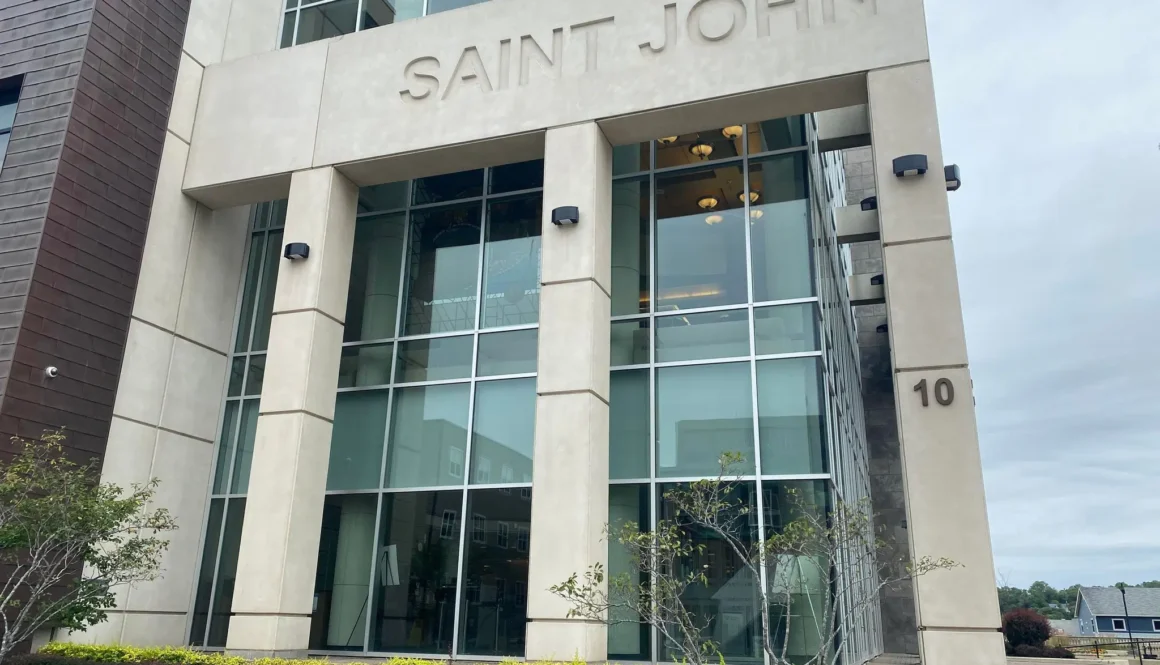
While there are still some details to be worked out, a settlement agreement between victims of Kenneth Estabrooks and the City of Saint John has been completed.
Justice Darrell Stephenson OK’d the agreement during a hearing in Saint John Thursday morning, approving a $16.5-million deal.
“The settlement is fair, reasonable and in the best interest of the class,” Stephenson said.
He said it not only brought some certainty to class members, but eliminated the need for them to testify in what would likely have been a drawn-out trial.
The class-action suit was brought in 2013 by Robert Hayes, one of Estabrooks’ victims.
It claimed Estabrooks used his position as a Saint John police officer to sexually abuse a number of people between 1953 and 1975.
It was also alleged he was transferred to the city’s works department when incidents came to light and that he continued to sexually abuse people there until his retirement in 1983.
Private investigators hired by the city found 263 people, mostly boys, may have been abused.
Estabrooks was convicted of four counts of indecent assault in 1999.
He died in prison in 2005 while serving a six-year sentence.
The exact amount each victim will receive from the settlement is not yet known.
Justice Stephenson asked lawyers for all parties to prepare submissions regarding a $2.3-million payout for a litigation fund as part of the case.
He said that amount, along with other legal fees and expenses to be paid out of the settlement, means only 43.5 per cent of the settlement will actually go to the class members.
“I don’t want this to become some benchmark precedent,” Stephenson said.
Among the settled amounts, Hayes will receive an honorarium of $25,000 for acting as the representative plaintiff.
Justice Stephenson said it was clear Hayes was “perhaps more than entitled” to the amount.
“I salute your tenacity and your courage in seeing this through,” the justice said to Hayes.
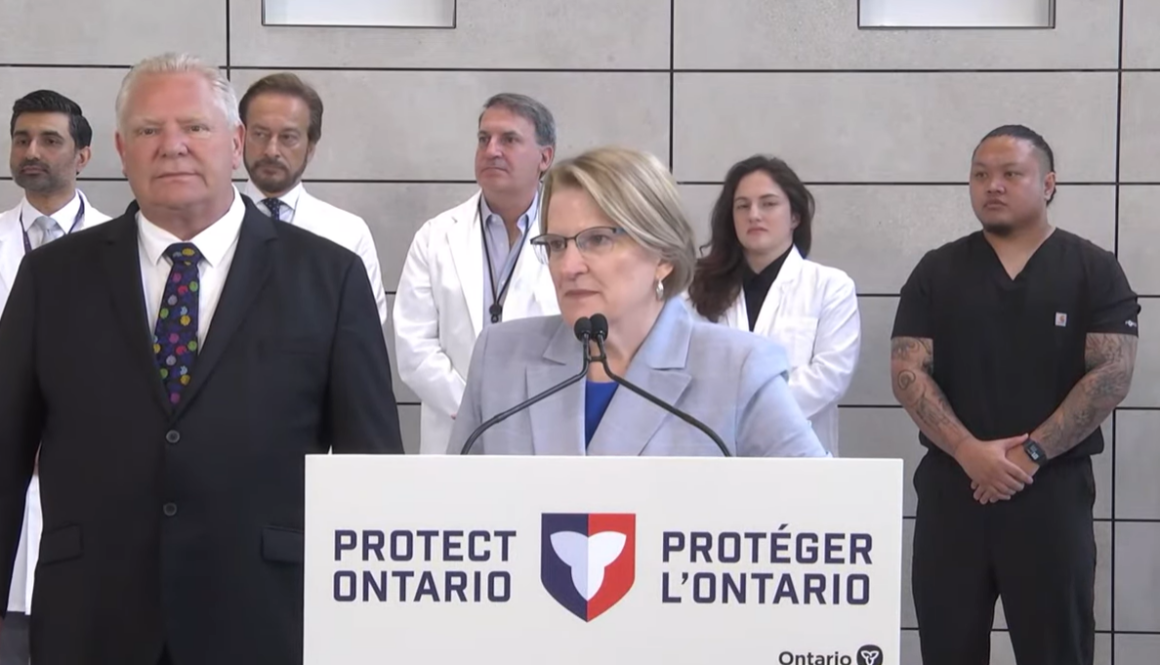
Ads promoting the Ford government’s investments in healthcare could be airing on television, radio and social media sites.
The Premier raves about it as being historic, but admits the province needs to do more to promote the message.
Last spring’s budget committed over $91 billion.
“I hear it from healthcare workers and CEOs of hospitals, ‘get out there and start telling people what we’re doing for healthcare,’ because we’re doing so much,” says Ford.
“We always seem to focus on the economy, which drives everything. I get it. But I think we have to put some information out there, whether it be social media or commercials, whatever it might be, because people deserve to know what we’re doing. People deserve to know how we’re spending their tax dollars.”
Health Minister Sylvia Jones agrees.
She cites an example of HealthCare Connect, and some people not being aware that it can help connect them to a primary care provider.
“I think there really are opportunities for us to communicate that on a more regular basis, that as we change and as we move forward in all of the initiatives that we’ve done, that people need to know where the opportunities are in their own communities,” says Jones.
The Ford government will reveal healthcare spending for the next fiscal year on March 26th when Finance Minister Peter Bethlenfalvy tables the budget.
Another week, another big spike in gas prices for New Brunswickers.
An industry source says the price of regular self-serve gas will jump 7.2 cents a litre Thursday night.
It will bring the maximum price to about $1.63 per litre.
There does appear to be a bit of relief on the way for diesel users.
The same source says the maximum price of diesel is going to drop 3.5 cents, to about $2.17.
The maximum prices in New Brunswick are currently at $1.56 per litre for regular gas and about $2.20 per litre for diesel.
In Nova Scotia, regular self-serve ranges from about $1.62 to $1.66 per litre while diesel is selling for between $2.16 and $2.21 per litre.
On Prince Edward Island, the maximum prices are almost $1.68 a litre for regular self-serve, $2.15 per litre for diesel and $1.68 per litre for home heating oil.
Fort Frances and the District of Rainy River Services Board (DRRSB) are offering their support to the establishing of a rural immigration program within the Kenora-Rainy River region.
Confederation College and the Northwestern Ontario Municipal Association are leading the effort to have a second Rural Community Immigration Pilot (RCIP).
The program is designed to attract skilled workers from outside Canada to rural and remote communities and offer them an opportunity to obtain permanent residency in the country.
A pilot program was permitted for the Thunder Bay area, but it eliminates other communities in northwestern Ontario from participating.
Fort Frances Mayor Andrew Hallikas says it would help many businesses in his community.
“I’m in contact on a regular basis with local businesses such as Canadian Tire, La Place Rendezvous, Dairy Queen, McDonald’s, Boston Pizza and others who desperately need these workers,” says Hallikas.
“If you’ve gone to these establishments, you know how much the workers add to the whole dining experience.
Support is being sought from municipalities, organizations, and others.
In a letter, Charene Gilles, Chief Administrative Officer for the DRRSB, states that an additional RCIP site would help stabilize the region’s workforce.
“We continue to experience an aging population and limited local labour pool,” writes Gilles.
“For DRRSB, it would strengthen our ability to recruit and retain critical employees, particularly in child care, and support continuity of services that are essential to district families, employers, and community sustainability.”
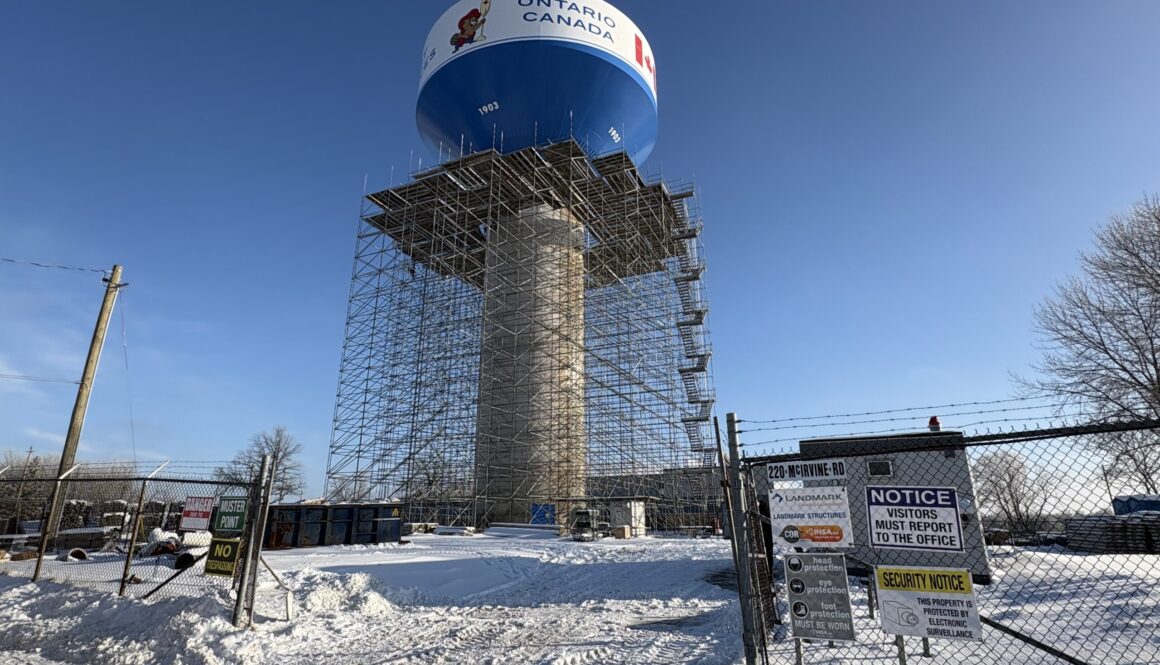
Additional repairs are being made to the water tower in Fort Frances.
Piping used to flow warm water to the top has shown signs of cracking and is being replaced.
Initially, the town has to replace a faulty heat trace line, which caused the water to freeze.
An inspection revealed numerous holes and cracks.
When a new heat trace line was installed, additional cracks were spotted and repaired.
When water was allowed to flow back through the pipe, more leaks were noted.
As scaffolding was still in place from the previous tower upgrades and the high cost to install it afterward, it was decided to replace the piping.
“The risk is very high, given the leaks keep surfacing, that small cracks may be missed until after the tower is completely filled or worse, once the cladding is complete and scaffolding removed,” a report from Administration to council reads.
It will cost the town an additional $106,468.23, above the $175,000 estimated cost to replace the heat trace line.
Operations and Facilities Manager Travis Rob says the new heat trace line has been installed, along with a secondary one, should the initial one fail.
He says there is also a mechanism that will let staff know if the line fails to function.
“On the heat trace controls, there’s actually an indication of a fault. So we have some indication that it’s not working,” says Rob.
“The old heat trace line didn’t have any of that. The only way we found out that there was a problem was (the) signs of a leak.”
The water tower had been shut down for several months last year for crews to make several improvements.
The water was turned back on in early January, around the same time the faulty heat trace line was discovered.