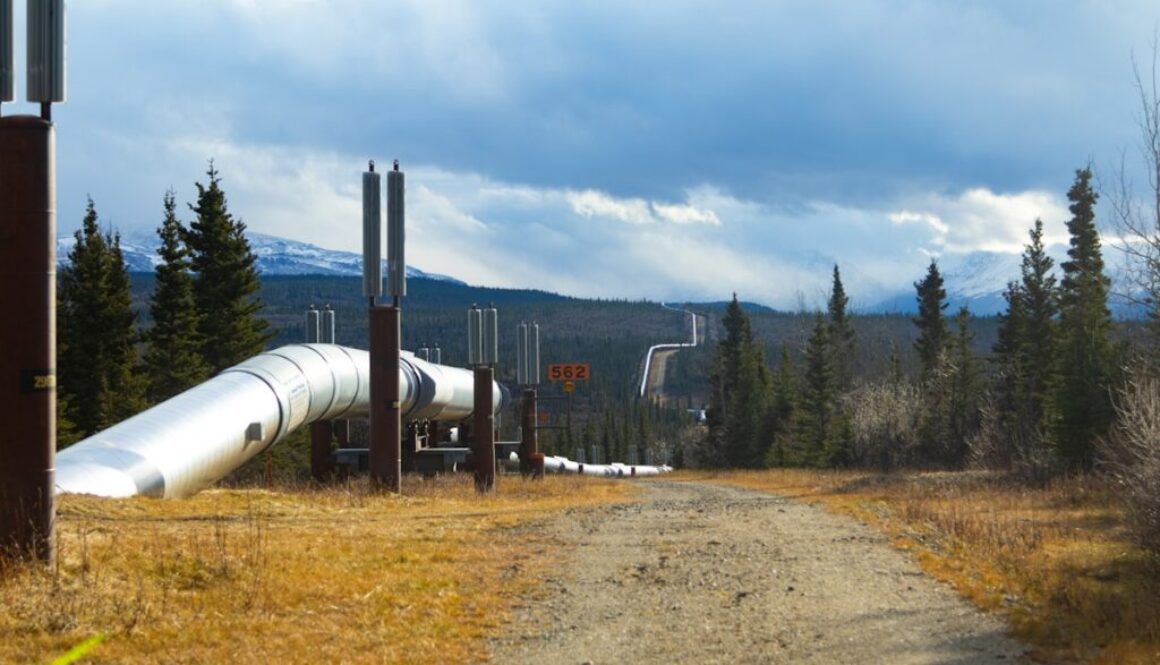
The provincial government has awarded a contract to complete a feasibility study on new oil and gas pipelines.
The proposed pipelines would flow oil and gas from western Canada to refineries in southern Ontario.
The study will also look at the possibility of lines going to new ports on James Bay, Hudson Bay and the Great Lakes.
It will also evaluate other development opportunities, such as all-season roads to the Ring of Fire mining area, mineral exports, hydro transmission grid upgrades and a strategic petroleum reserve.
“This nation-building pipeline and energy corridor will unite our country and help unlock new markets for Canada’s energy resources that will reduce our dependence on the United States, all while creating new jobs and opportunities for Canadian workers from coast to coast to coast,” states Premier Doug Ford in a release.
Ontario, Alberta and Saskatchewan signed agreements this summer to consider the project.
“Access to domestic and international markets is critical for Saskatchewan’s export-oriented economy,” states Saskatchewan Premier Scott Moe.
“An East-West energy corridor is important for our province and for all Canadians, driving economic growth and delivering responsibly produced Canadian energy products to new markets.”
“Alberta, Ontario and Saskatchewan are proving what’s possible when provinces lead and stand together to advance a shared vision of responsible development, economic freedom and common sense,” states Alberta Premier Danielle Smith.
“That means standing up for our energy sector and ensuring our world-class resources reach the markets that need them, so Canadians can prosper from the opportunities we create here at home.”
A final report is expected to be issued sometime next year.
Hospice Northwest’s “Personal Lens on Grief” exhibition will be running for its fourth year this November.
From November 3 to 30, the exhibition will be featured at the Hospice Northwest Office at St. Joseph’s Heritage, at 63 Carrie St.
The exhibition will host photos and stories from 12 photographers, displaying their individual experiences with grief.
“By sharing our grief together as a community, we encourage discussion, collaborate for change, and build a community of support,” says Jessica Bruce, grief coordinator at Hospice Northwest.
The exhibition will be staging an opening event on November 3 at 7 p.m. It will include speakers from the hospice and abroad, all discussing the significance of sharing grief with others.
United Way’s Ultimate Burger Battle, which was previously known as Novemburger is kicking off for the year.
The annual campaign, rebranded this year, and is welcoming more restaurants than ever before.
The initiative invites local restaurants to create a custom burger for the event that will be sold throughout November.
At the end of the month, one of the creations will be selected as Thunder Bay’s Ultimate Burger of the Year, as voted by the Ultimate Burger Battle Ambassadors.
Funds from the campaign are supporting United Way, with $2 from each burger sold going to the not-for-profit.
“Another year of delicious burgers, friendly competition, and community building. What can we say, food brings people together!” said Ultimate Burger Battle Chef de Mission, Erika Mikkola. “When we started this event back in 2019, we brought in 11 restaurants.”
“This year, we have 55 participating restaurants, including six regional restaurants in Kenora, Nipigon, Terrace Bay and Manitouwadge! We’re eternally grateful to the community for helping us grow the campaign over the past seven years.”
On Wednesday night, a tasting party was held at The Outpost at Lakehead University to get a sneak peek of the burgers from several participating restaurants.
A total of over 400 people were in attendance.
There are also a couple of new additions to the event this year, including A&W and George’s Market & Celebrations.
Throughout the campaign, $1 will be donated to United Way of Thunder Bay when you upgrade your burger at A&W to double bacon, double cheese.
At George’s Market, 20 per cent of sales from their turkey feta spinach burger patties will support United Way, adding a new way to enjoy Ultimate Burger Battle by creating your own burger.
The event has also introduced merchandise.
Branded shirts, hoodies, and hats from Ungalli Clothing Co., bath bombs, lip balms, and body butters from Lovely Body Products, and candles from Waxxed Candle Co. are all available for purchase
Throughout the month, community members can rate what they ate by voting online on the campaign’s new website for their favourite Ultimate Burger.
At the end of the month, the three burgers with the most votes will be crowned People’s Choice.
“The Ultimate Burger Battle is about food in more ways than one. Sure, we get to enjoy a month of delicious burgers, but the campaign’s true aim is to provide food security for community members in need through NOURISH the North,” explained United Way of Thunder Bay CEO Albert Brulé.
City Council’s Growth Standing Committee has recommended that a proposed natural gas “peaker” plant come before a full council vote.
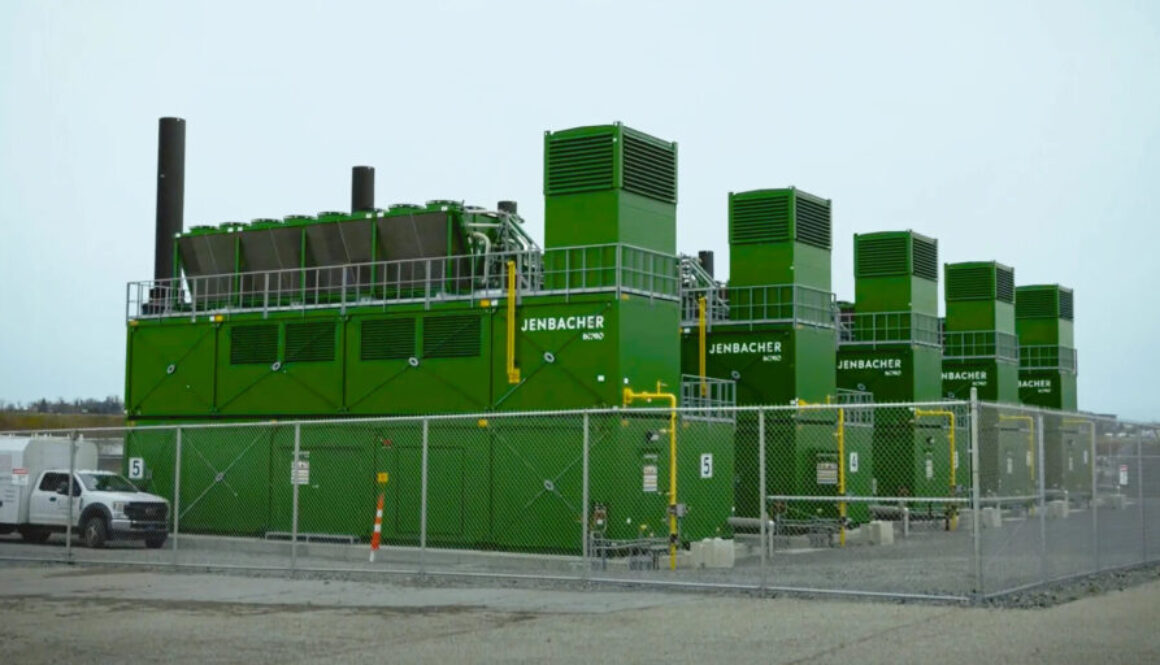
The proposal, put forward by Alberta-based Versorium Energy Ltd., calls for council to approve the construction of a $50-$80 million facility at Maureen Street and Central Avenue.
Should council decide to approve the project, Versorium will still need to bid for a contract with Ontario’s Independent Electricity System Operator (IESO).
At Tuesday’s committee meeting, critics of the proposal had an opportunity to speak out against the plant.
“Pretending that we’ll somehow need to buy dirty energy from the 20th century just totally defies logic,” said Paul Berger at the meeting.
Berger teaches climate change education at Lakehead’s Faculty of Education and is the lead organizer of Citizens United for a Sustainable Planet.
Berger emphasized that Canada, Ontario, and the city of Thunder Bay have all produced their own 2030 climate change targets, and none of them are on track to meet those targets.
“Canada is a climate laggard. That’s radically unfair to those living and dying with our failings,” Berger said. “In this context, it would be madness to build a gas-fired generating station that will emit greenhouse gases, making the problem worse.”
Berger’s presentation focused on the extent of the climate crisis, which worsens by the year and shows no signs of slowing down.
He stressed that the Earth is at a tipping point, which can be understood as a point from which there is no turning back, and from which the planet will be irreversibly changed for the foreseeable future.
Berger pointed to raging wildfires, dying coral reefs, increasingly unstable hurricanes, and the impending collapse of the Antarctic Ice Sheet.
Berger’s presentation was followed by Keira Essex, who is the curriculum coordinator for Indigenous Clean Energy.
Essex told council that Canada’s per capita emissions are among the highest in the world. Though China and India have become leading polluters, individual Canadians emit greenhouse gases at more than double the rate of individuals in China.
Like Berger, Essex reminded council that the city has a net-zero plan and argued that a natural gas plant would violate that commitment.
“Investing in already outdated infrastructure, which opposes our municipal plans and has minimal and vague economic benefits for our community, may not be the wisest approach in governance,” Essex said.
“Creative accounting”
Berger and Essex were not solely focused on the big picture of global climate change: they had criticisms for Versorium Energy as well.
Essex questioned the financials of a natural gas peaker plant.
A peaking plant is not designed to run at all times, but simply at times when an electrical grid’s demand is at its highest. Because a peaker plant’s role is simply to “top up” the grid’s missing capacity, it is not as efficient as other forms of electrical generation.
“They’re the most costly and least efficient natural gas approach,” Essex said. “Gas peaking is also the most expensive form of energy, falling well behind renewables and shortly behind nuclear.”
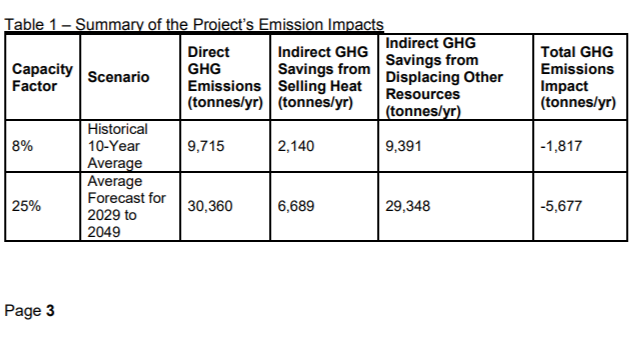
Versorium has claimed its gas plant, though a greenhouse gas emitter, could actually offset more emissions than it produces. Berger aggressively opposed the suggestion.
“That’s an egregious claim. It’s creative accounting,” Berger said.
Versorium Energy Ltd. predicts that by indirect means, its gas plant could reduce Ontario’s greenhouse gas emissions by 5,677 tonnes each year. (Screen capture via the City of Thunder Bay)
Versorium says that about one-fifth of its emissions can be offset through selling excess heat to Canada Malting, which has a facility next to the proposed gas plant site. Canada Malting could use that heat in their boiling process, saving them from producing or acquiring the heat by other means.
Berger questioned the feasibility of the idea, arguing that it would require an expensive retrofit of the malting company’s facility.
Representatives from Versorium responded to inquiries by this reporter, stating that they are in discussions with Canada Malting, and, should the plant be constructed, Versorium will sell the excess heat to their potential partner at a discount, which will offset the capital costs of a retrofit.
In an interview with this reporter, Berger acknowledged that if Canada Malting did go forward with a retrofit, Versorium’s predictions of offsetting greater than 6,600 tonnes of greenhouse gases could be possible.
Berger expressed greater skepticism of Versorium’s other claim: that it could offset more than 29,000 of its 30,000 tonnes of emissions through “displacing other sources.”
“The most appropriate response to this chart is to laugh,” Berger said at the meeting.
Representatives from Versorium explained that their predictions stem from the idea that a peaker plant in Thunder Bay could replace the need to rely on a peaker plant in another part of the province – likely in Southern Ontario, more than 1,000 kilometres away.
They argue that energy losses from transmitting energy across great distances mean a peaker plant in Southern Ontario would essentially have to work harder to provide the same amount of energy to Thunder Bay as a local plant, resulting in greater emissions.
While this is true, Versorium’s predicted numbers demand scrutiny.
Versorium is suggesting that building a plant in Thunder Bay can offset almost 97 percent of its total emissions through this theory.
The IESO estimates transmission losses of about two percent system-wide on the Ontario grid, and for comparison, Alberta’s AESO estimates losses of about four percent. To square Versorium’s numbers, Ontario’s transmission losses would need to be closer to 50 percent, meaning half of the electricity produced would need to be lost in transit.
Meeting Ontario’s capacity needs
The criticisms by Berger and Essex gave some councillors pause at the committee meeting.
Despite this, the city government’s recommendation was that council greenlight the proposal.
City Manager John Collin explained that the city’s recommendation to approve the proposal was in service of the IESO’s needs.
“They have categorically said – and they are the experts, not administration – that Ontario needs 75 percent more power than it already has in the next 25 years,” Collin said, referring to the IESO.
The IESO is currently accepting bids for a wide range of electricity-producing projects, including green energy and nuclear projects for the grid’s base supply, and a broader range of “dirty” producers for filling in the gaps during periods of excess demand.
At the meeting, Councillor At Large Kasey Etreni asked how the proposal aligned with the city’s net-zero strategy.
City administrators answered by explaining that the city “point-blank” needs more power, meaning even dirty energy could serve the city’s overall climate goals.
City councillors went along with the city’s recommendation and approved the proposal. Now that Versorium’s proposal has been approved in a standing committee, it will come before a full City Council discussion and vote in a future meeting.
The heads of two unions representing striking Canada Post workers said solving the Crown corporation’s financial problems can’t be solved with a one-size-fits-all approach.
Dwayne Jones, national president of the Canadian Postmasters and Assistants Association (CPAA), and Jan Simpson, president of the Canadian Union of Postal Workers (CUPW), addressed the parliamentary committee on government operations on Oct. 28.
CPAA represents more than 8,500 Canada Post employees, all working in rural, remote and northern communities.
“Our members operate more than half of the post offices in the country and often serving as the only federal employees in small towns, remote villages, and northern communities,” Jones said. “For thousands of Canadians, the post office is not just a workplace, it’s the heart of local life.”
He described the transformation process Canada Post is moving forward with could eliminate services that sustain rural and northern Canadians.
“Yet no costing, no economic or service impact analysis and no meaningful consultations have been made public,” he said.
Simpson made similar comments about the proposed changes. She said they would gut the post office and eliminate thousands of unionized jobs.
“The announcement directly interfered with collective bargaining and gave management the green light to rewrite our agreements without negotiations and without the union.”
Changes necessary, but must be sensible
Representatives of organizations that greatly depend on Canada Post addressed a parliamentary committee this week, and all three said the postal service must be reformed to survive.
News Media Canada, an organization representing hundreds of publications across the country,
News Media Canada president and CEO Paul Deegan testifying at a parliamentary committee on Oct. 28, 2025. Image: CPAC Video
President and CEO Paul Deegan said Canada Post is an important distribution vehicle for many community newspapers in Canada.
“Especially in rural and remote parts of the country,” Deegan said. “And we deeply appreciate the work that the thousands of postal employees do to get our newspapers to Canadians.”
But Deegan said leadership at both Canada Post and CUPW have shown a disregard for community newspapers.
“They seem to have forgotten that we are customers and good paying ones at that,” he said.
Deegan cited two examples of this disregard.
The first was Canada Post deciding that community newspapers with commercial inserts would no longer be exempt from its Consumer’s Choice program, which allows Canadians to opt out of receiving junk mail.
“Like advertisements on the pages of a newspaper, commercial inserts or flyers pay for the content our journalists produce in those newspapers,” Deegan said. “Let me be clear, community newspapers with a flyer from the local grocery or hardware franchisee are not junk mail.”
Deegan said the decision could cost a publication $120,000 annually in flyer revenue, which is enough to support three jobs.
“Without that revenue, those three jobs are at high risk,” he said. “This arbitrary decision was made with zero stakeholder consultation or economic or social impact analysis.”
The second example was CUPW’s decision in September that postal workers would no longer process or deliver unaddressed flyers called neighbourhood mail.
“Whether intended or not it held our community newspapers hostage and deprived many Canadians of the fact-based, fact-checked information that our journalists produce,” Deegan said. “Again, let me stress, community newspapers are not junk mail.”
The Union of Quebec Municipalities (UQM) represents approximately 85 per cent of the province’s population.
“We understand the need for reform to enable the organization to adapt its business model to the current context,” said Xavier-Antoine Lalande, the mayor of Saint-Colomban, Que. “However, this reform must be guided by the logic of territorial equity and social cohesion.”
Lalande said reform can’t be done at the expense of local communities, especially the most vulnerable individuals.
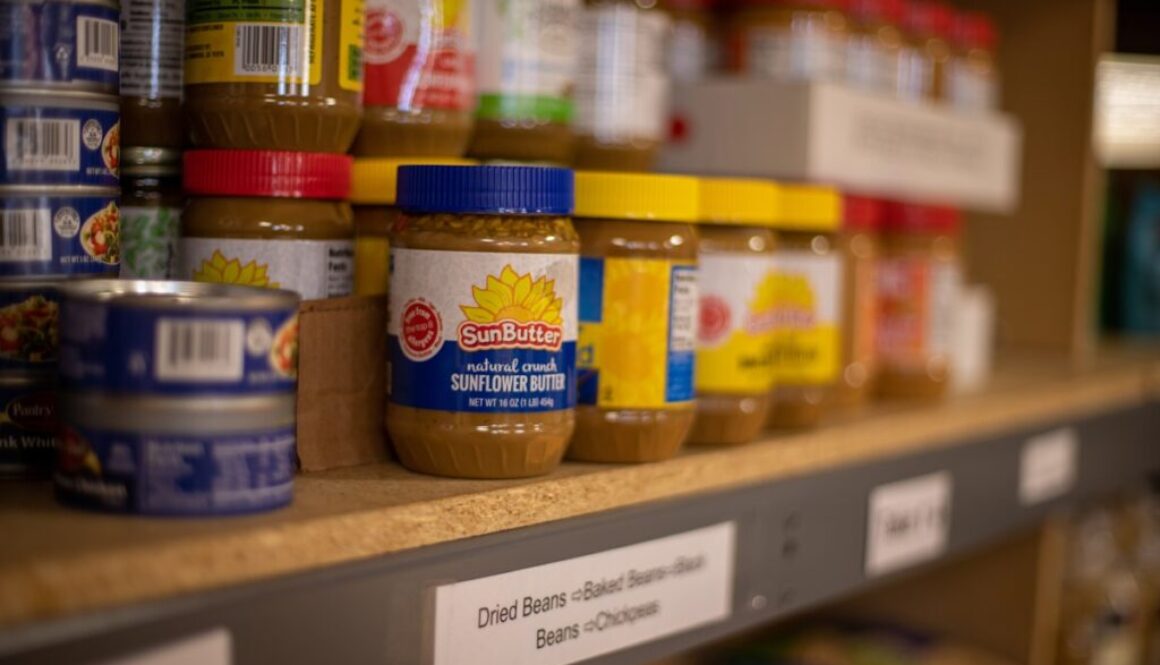
The manager of the Dryden Food Bank says more people are coming their doors than in 2024.
Al Huckabay says around two per cent more people are using the local food bank on a monthly basis than last year.
He says newcomers who have expired work visas and are out of work make up the most noticable jump in clients, followed by families.
“Because of the cost of food,” says Al Huckabay. “They’re just finding it hard to make ends meet, even though some of them are still working.”
He adds the rising cost of housing and heating is also driving many new clients to use the Dryden Food Bank.
Huckabay says the rising cost of food, in particular, isn’t just contributing to more people needing the food bank’s services.
“We rely on donations,” says Huckabay, adding that includes government and public grants. “Sometimes our grants are drying up or getting smaller and yet the price of food continues to go up so we’re not able to utilize the bang for the buck to try and purchase food (so) we’re able to purchase less food but using more money.”
He says that is forcing Dryden Food Bank to limit handouts as they stretch the food on their shelves as far as possible.
Earlier this week, Food Banks Canada announced that monthly visits to food banks were up 5 per cent nationally over 2024.
In a study, the agency found food banks in Canada saw nearly 2.2 million visits in a single month.
That is double the monthly usage recorded just six years ago.
Thunder Bay’s memorial banners are going up around City Hall, Waverly Park, and Memorial Avenue ahead of Remembrance Day.
The program was developed by the city’s former Clean, Green and Beautiful Committee and is being administered by the Royal Canadian Legion Branch 5 (Port Arthur Legion).
“The essence of the banner projects is to acknowledge our soldiers, those who served and gave the ultimate sacrifice, for those who serve and for those who are serving today,” said City Councillor Rajni Agarwal.
“It represents a long commitment to remembering those individuals for the cause for which they fought and living in a way that honours their sacrifice by cherishing our freedoms today.”
Work to install the banners got underway on Monday, and the city says they plan on finishing the installation by the end of the week.
“Please take a moment, enjoy the banners, recognize the faces, they are fathers, brothers, uncles, sisters, aunts, grandmothers to residents of our community and to the Fort William First Nations,” added Agarwal.
“The themes for the banners are lest we forget, and thank you for your service.”
A total of 73 banners are being hung around the city this year, including 27 ‘lest we forget’ banners and 46 ‘thank you for your service’ banners.
The legion is already preparing applications for new banners next year.
“In July of 2026, we will be accepting more applications for the Memorial Banner Project so that the present banners and the new banners can be displayed for Remembrance Day in 2026,” said the 1st Vice-President & Executive Secretary of Branch 5 Legion George Romick.
“The essence of the banner projects is to acknowledge our soldiers, those who served and gave the ultimate sacrifice, for those who serve and for those who are serving today.”
A double dose of good news from the Northwestern Health Unit.
It says not only is the measles outbreak in the province over, but there have been no reported cases here.
The first case of the measles was reported in October of 2024.
Local residents are being credited because they were checking destination risks when traveling, getting vaccinated, and watching for symptoms, kept communities safe.
The Health Unit continues to remind local residents that measles is a serious and highly contagious disease and is still a concern in other parts of the country and across the globe.
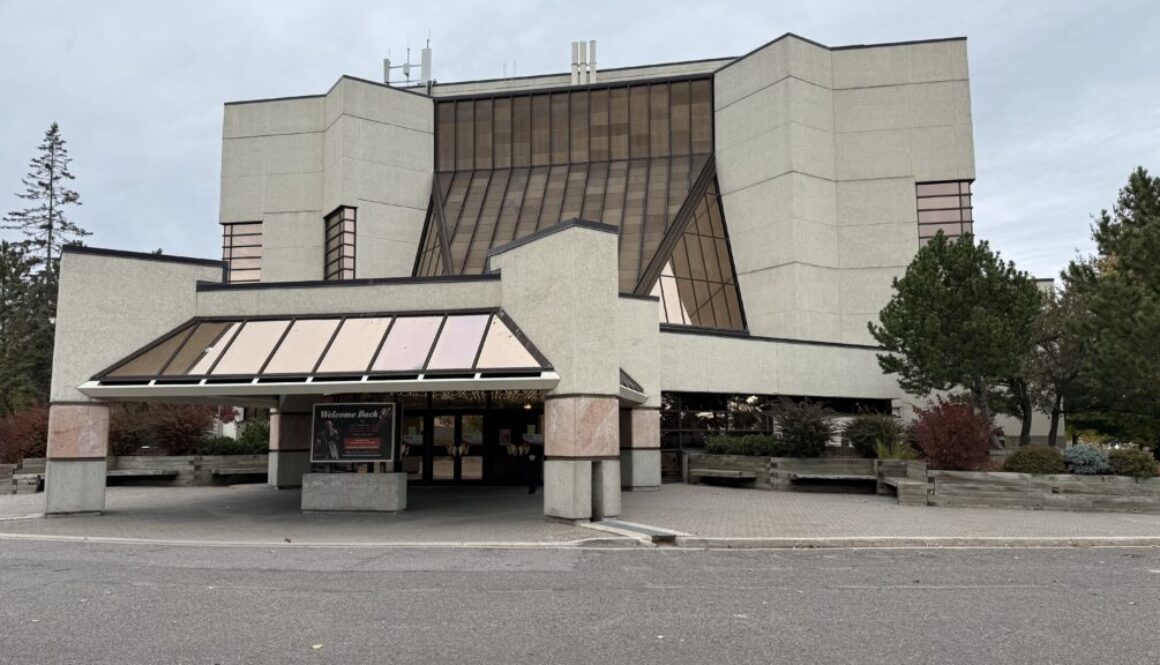
November will be a big month at the Thunder Bay Community Auditorium.
Not only has the renowned arts centre just celebrated its 40th anniversary but the venue will be hosting several hit artists on its stage to round out the year.
Among the attractions coming to the auditorium in November are 90’s alternative pop act Smash Mouth (Walkin’ on the Sun, All Star) and top-selling Canadian country stars Paul Brandt and Terri Clark, who are reuniting for their highly-anticipated Homecoming 2.0 tour.
However, before those topline artists grace the stage, classic rockers Foreigner will be entertaining local audiences on Sunday.
“This is a legendary band that’s playing arenas on this tour and they’ve downscaled their show specifically to play the Thunder Bay Community Auditorium so it means a lot,” says Thunder Bay Community Auditorium acting general manager, Andrew Edwards about the American hitmakers behind radio staples like Juke Box Hero and Cold As Ice.
“I think it’s amazing that our facility in Thunder Bay is a desired landing spot for international touring acts so a lot of booking agents and artists do earmark to perform at the Thunder Bay Community Auditorium when doing a Canadian tour.”
He says there are still tickets available for the Foreigner show, adding that Canada’s own Geordie Brown will appear as guest vocalist during their set.
In addition to hosting the aforementioned musical stars, Thunder Bay Community Auditorium will also feature two performances from the Thunder Bay Symphony Orchestra, including a night of music from the James Bond movie franchise on November 8.
December will also be notably busy at the Thunder Bay Community Auditorium with such acts scheduled as country stars Aaron Pritchett and George Canyon, Toronto punk band PUP, tribute show Abbamania and rising star Aysanabee from Sandy Lake First Nation.
There will also be holiday-themed shows from Johnny Reid, The Tenors as well as the family-friendly SpongeBob Musical coming to the arts centre ahead of Christmas.
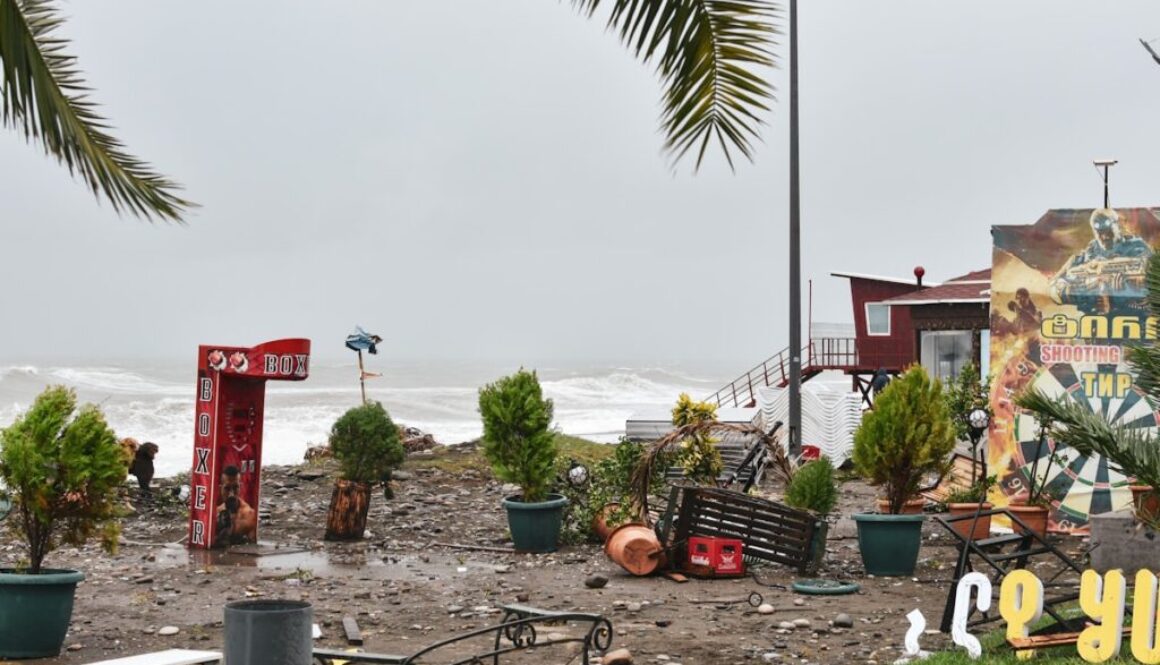
Hurricane Melissa has left a trail of destruction across the Caribbean, with at least 52 confirmed deaths and thousands displaced in Jamaica, Haiti, and the Dominican Republic.
The storm, which peaked as a Category 5 hurricane with sustained winds of 295 kilometres per hour (kph), is now weakening as it moves toward Bermuda, but its impact continues to unfold.
Melissa made landfall in Jamaica on Tuesday, becoming the strongest hurricane to ever hit the island in over 170 years.
The southwestern region, particularly St. Elizabeth Parish, was devastated. Authorities have confirmed four deaths in Jamaica, with widespread flooding, collapsed buildings, and more than 530,000 residents left without power.
Prime Minister Andrew Holness declared the country a disaster zone, and over 25,000 people remain in emergency shelters.
In Haiti, the storm triggered catastrophic flooding, especially in the southern town of Petit-Goâve, where a river burst its banks.
Officials report 25 deaths, including 10 children, and say dozens of homes were destroyed. More than 11,000 people are sheltering across the country, and aid agencies warn that food and medical support are urgently needed.
The Dominican Republic has reported one fatality, while Cuba, though heavily damaged, has not confirmed any deaths. More than 735,000 people were evacuated in Cuba, and over 240 communities remain isolated due to blocked roads and communication outages.
Melissa has now weakened to a Category 2 storm, with sustained winds of 144 kph, but continues to bring heavy rain and strong winds to the Bahamas.
Nearly 1,500 residents were evacuated in one of the country’s largest pre-landfall operations.
Bermuda is expected to feel the storm’s effects late Thursday into Friday.
International aid is beginning to arrive, with disaster response teams from the U.S., Canada, and Europe deploying to affected areas.
UNICEF estimates that 1.6 million children are at risk due to the storm’s aftermath, and relief organizations are working to deliver food, water, and hygiene kits.
As recovery begins, officials warn that the full extent of the damage may not be known for days.