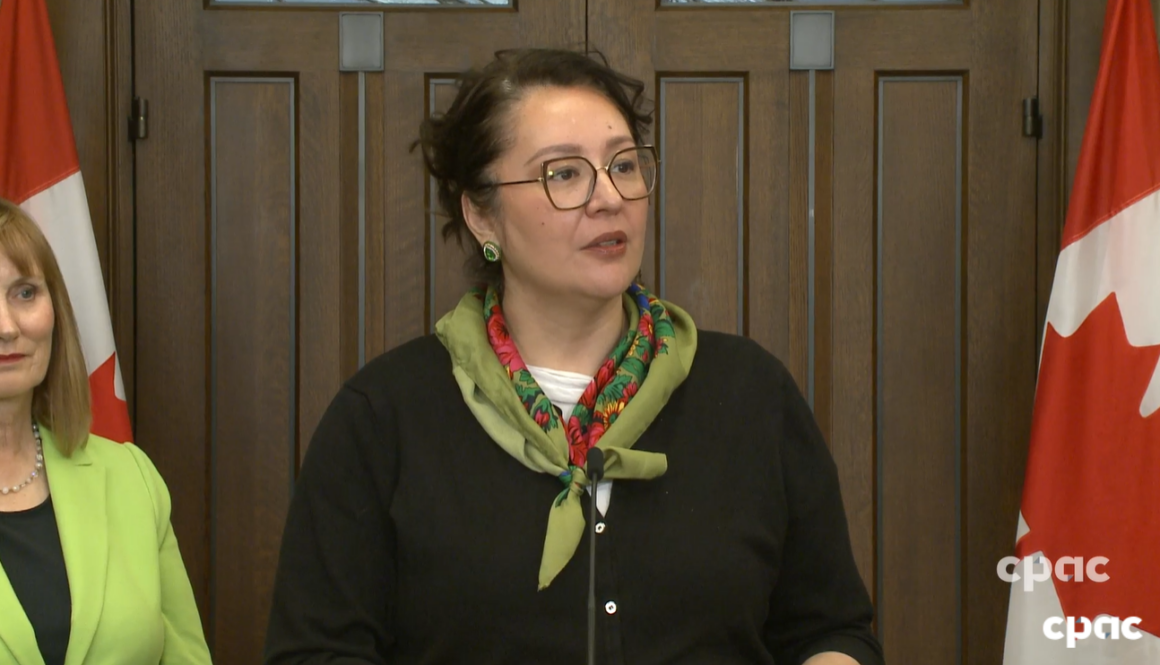
The federal Indigenous Services Minister is confirming that funding will flow to Ontario First Nations as planned under a child and family services agreement.
Mandy Gull-Masty has asked for a judicial review of a decision to exclude two First Nations from that agreement.
She says it will not impact the federal government’s plans to move forward with the agreement for those it impacts.
“The Ontario Final Agreement is a powerful example of what is possible when agreements reflect regional realities and support solutions created by and for communities,” says Gull-Masty.
“It is supported by 131 of the 133 First Nations communities in Ontario, and it truly shines a light on a path forward.”
She says funding will begin to be distributed on May 29th.
In its acceptance of the agreement, the Canadian Human Rights Tribunal also honoured the wishes of two First Nations who wanted to be excluded.
Gull-Masty says she is supportive of working with those communities but sought a review to get further information to ensure the discussions lead to what the communities are seeking.
“So we are in a place of trying to just access more information to be sure that we’re supporting communities with the outcomes that they’re seeking to achieve,” says Gull-Masty.
Under the Ontario agreement, Canada is committing 8.5 billion starting in 2027 for seven years, with an annual allotment of $4.4 billion each year after that.
Gull-Masty would not disclose how that money would be rolled out, noting a ceremony on May 29th would unveil more.
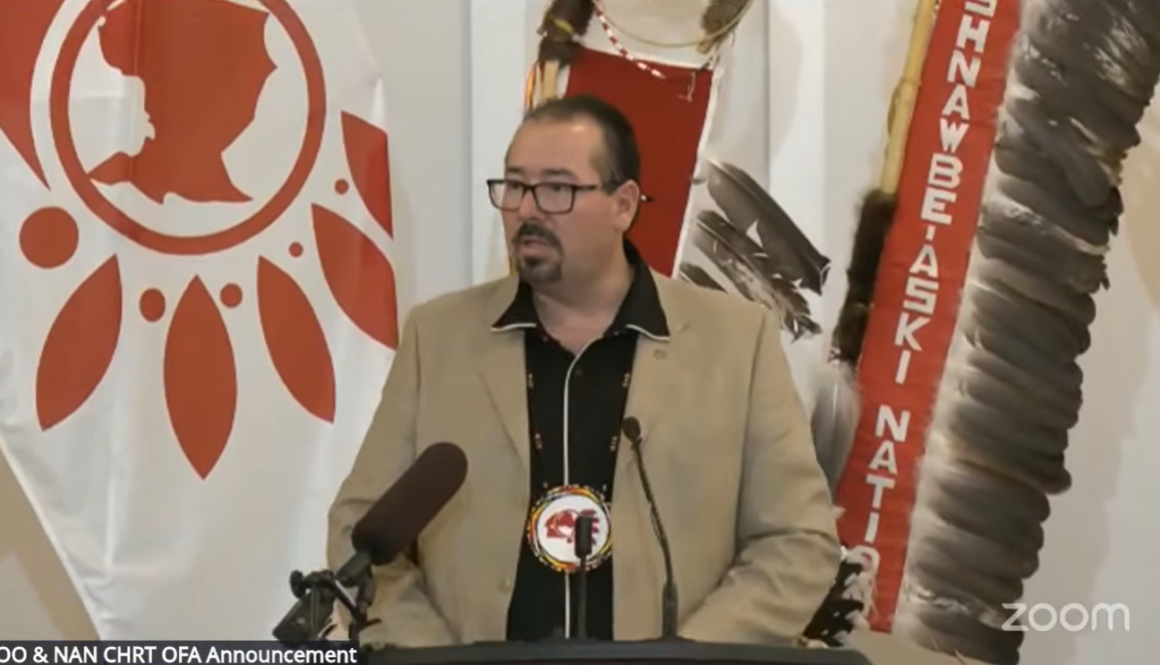
Ontario First Nation leaders are applauding a ruling by the Canadian Human Rights Tribunal.
It is approving an agreement they reached with the federal government regarding child welfare reform.
First Nations leader says the Tribunal’s decision confirms that the Ontario Final Agreement is sufficient to achieve the objectives of its previous orders to address and eliminate systemic racial discrimination in First Nations Child and Family Services in Ontario.
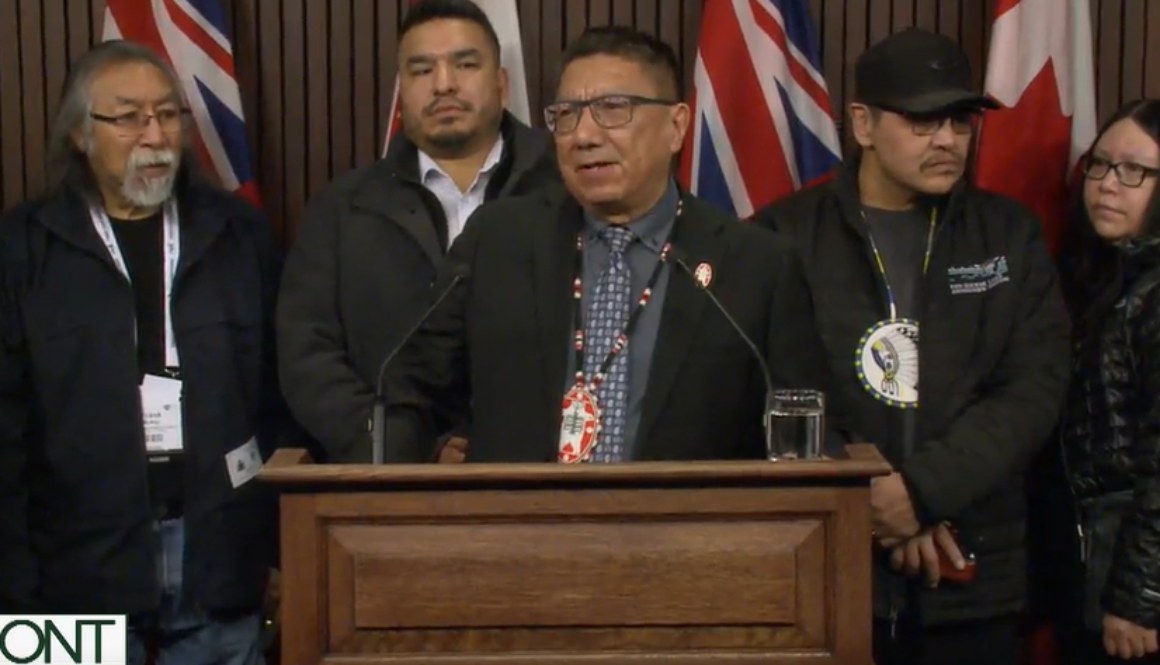
Ontario Regional Chief Abram Benedict says the ruling affirms the inherent right of First Nations to care for their own children.
“Moving forward with today’s decisions will result in no further delay for our families and our children to receive the justice that they deserve,” says Benedict.
“Our communities in this region are ready. They have chosen to exercise, you have chosen to exercise your self-determination, and this agreement reaffirms that.”
The agreement commits the federal government to $8.5 billion in funding.
Ontario’s First Nations opened negotiations with the feds after a national agreement failed to pass twice at the Assembly of First Nations gatherings.
Nishnawbe Aski Nation’s Grand Chief Alvin Fiddler says their leadership saw value in it.
“Because they acknowledged and they recognized that the current child welfare system that’s being currently designed and administered to our communities and especially to our children is very harmful,” says Fiddler.
“That is why they managed to give us that mandate just a little over a year ago, a year and four months ago, to go out and negotiate with Canada. And that’s the agreement that our Chiefs from NAN and from Chiefs of Ontario approved and ratified a year ago, February.”
Grand Council Treaty #3 also welcomes the Tribunal’s decision.
It says it is a key step towards implementing long-term reform of childcare services in Ontario.
“People from across Treaty #3 and all across Ontario have dedicated enormous amounts of time and energy to bring their skills to a discussion of how best to reform the system of child care in Ontario so that all of our children can lead happy and fulfilling lives in our communities,” states Ogichidaa Francis Kavanaugh in a release.
“I could not be more proud of everyone involved and hope we can all take time to reflect on what we have accomplished.”
The First Nation leaders say their work has always been for the children, but acknowledge it is not finished.
Benedict says this includes sitting down with federal officials to discuss how the funding will flow and working at the community level on implementation.
“That is building the capacity in communities, embracing community laws, ensuring that all of the elements that are in this agreement are mobilized and operationalized so that our children, our families will receive the benefits,” says Benedict.
Some communities have already started some of that work.
North Caribou Lake recently opened a new child and family services facility, while Deer Lake has a new office in Thunder Bay to support children and families living in the city.
Some First Nations are prepared to take a legal route to keep mining companies out of their traditional territories.
They say some are conducting exploration activities near communities without proper consent.
They are worried about the environmental risks.
Sachigo Lake Councillor Eugene Tait cites one firm working near his community.
“There are several concerns, reports that there are hundreds of barrels of fuel that are lying around. There’s contamination to the land,” says Tait.
“There are also concerns with the labour force there. For this exploration company to operate, they were given a permit by the province of Ontario. The province did not seek our consent to work in our territory.”
Nishnawbe Aski Nation Grand Chief Alvin Fiddler echoes the sentiments of TAit.
He says First Nations are not against development, but senior levels of government are obligated to follow Treaty and constitutional requirements that ensure proper consultations.
“They want Ontario and Canada and industry to respect the relationship that they have with the Crown,” says Fiddler.
“They’re here to offer solutions to industry, Ontario, to Canada, solutions that will lead to predictability and stability in the north.”
Tait says if the exploration company near his community refuses to leave, they will do what they can to have them removed, including taking a legal route.
Fiddler notes several First Nations have already gone to court over Bill 5, the legislation that helps fast-track developments such as mines.
Indigenous ownership in Atlantic Canada’s energy system is expanding. A new federal loan will help First Nations in Nova Scotia and New Brunswick buy into a major transmission project.
The Canada Infrastructure Bank (CIB) is providing $54 million in equity loans to support Indigenous ownership in the Wasoqonatl intertie, a 160‑kilometre, 345‑kilovolt transmission line running parallel to the existing connection between Onslow, Nova Scotia, and Salisbury, New Brunswick.
CIB said the new financing brings its total commitment to the project to $285 million.
Under the plan, $36 million will go to Wskijinu’k Mtmo’taqnuow Agency Limited, allowing Nova Scotia’s 13 Mi’kmaw First Nations to acquire an equity stake.
Another $18 million will support MUIN Transmission Limited Partnership, giving New Brunswick Mi’gmaq First Nations their first ownership position in a large‑scale clean‑energy project.
The loans are being delivered through the bank’s Indigenous Equity Initiative, which is intended to help Indigenous communities access affordable capital for major infrastructure projects.
CIBC, the project’s lead arranger, is contributing an additional $264.3 million in Indigenous equity loans and project construction financing.
The CIB noted that its investment includes measures designed to preserve about $200 million in savings for Nova Scotia electricity customers.
The Nova Scotia Energy Board has approved the project, and Nova Scotia Power reported that construction is underway, with completion targeted for 2028.
CIB added that the intertie will improve electricity trade between provinces, strengthen grid resilience and energy security, and support long‑term affordability.
Ownership of the project will be held through a regulated utility corporation that includes Nova Scotia Power, the Canada Infrastructure Bank, MUIN Transmission Limited Partnership and Wskijinu’k Mtmo’taqnuow Agency Limited as limited partners.
Construction is expected to support about 587 direct and indirect jobs and generate $105 million in GDP.
The bank noted it has now committed more than $2.2 billion to 12 projects in Atlantic Canada, including wind farms, energy storage, broadband expansions and industrial energy upgrades.
Natural Resources Canada outlined additional federal support, including $4.38 million for pre‑development work under the Electricity Predevelopment Program and $20.1 million under the Strategic Interties Predevelopment Program.
The department also provided $220,210 to Wskijinu’k Mtmo’taqnuow Agency Limited through the Smart Renewables and Electrification Pathways Program.
Federal ministers, provincial officials, First Nations leaders and regional utilities described the project as a significant step forward in Indigenous participation in clean‑energy development and long‑term regional collaboration.
The provincial government is providing a First Nation community north of Fort Frances with more than $4 million.
The money is helping Mitaanjigamiing upgrade its water treatment plant.
Kenora-Rainy River MPP Greg Rickford says it will ensure the safety and reliability of water services to the community.
“This expanded funding for critical water infrastructure will contribute to strengthening the safety and reliability of water services in Mitaanjigamiing First Nation,” states Rickford in a release.
“The Health and Safety Water Stream is ensuring the safety, functionality and longevity of the water of the treatment plants that communities rely on, today and into the future.”
The release goes on to state that the MHIP-HSWS funding will be used to enhance drinking water quality, treatment plant resilience, protect public health and enhance long-term community development.
Grand Council Treaty 3 is the latest to issue an advisory to Indigenous people travelling or living in the United States.
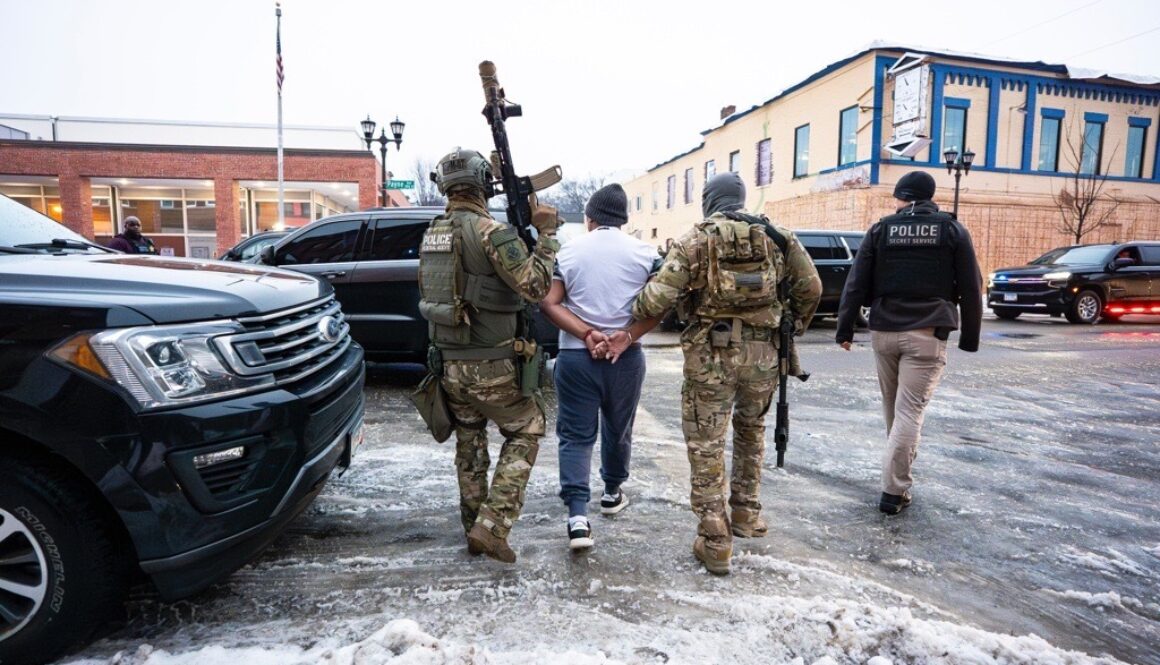
The advisory is in response to the continued presence of Immigration and Customs Enforcement, or ICE, officers in Minnesota.
There have also been reports of some First Nation residents facing scrutiny and questioning from ICE agents.
In the advisory, Treaty 3 reminds them to carry valid identification, including a Status Card and/or a Canadian passport, which may help reduce the risk of unnecessary delays or detention.
“The Treaty #3 Anishinaabe Nation holds inherent and treaty-protected rights supporting cross-border mobility, rooted in longstanding treaty relationships that predate the international border. Grand Council Treaty #3 continues to affirm that these rights must be respected,” reads the advisory.
It says those needing new, renewed, or replacement Status Cards can contact their home First Nation membership office or their regional tribal council for assistance.
They can also contact Indigenous Services Canada (ISC).
Regional tribal councils within Treaty #3 include Bimose Tribal Council (Kenora), Anishinaabeg of Kabapikotawangag Resource Council (Sioux Narrows), and Pwi-Di-Goo-Zing Ne-Yaa-Zhing Advisory Services (Fort Frances).
Rainy River and Seine River First Nations issued similar advisories last week.
The provincial government is spending some money to support workforce development in Mishkeegogamang Ojibway Nation.
A total of $894,305 is being sent to the community through the Northern Ontario Heritage Fund Corporation.
The funding is being used to build a modular training centre in the community.
“On behalf of Mishkeegogamang Ojibway Nation, we are grateful for the opportunity to have a dedicated training facility for our community,” said Chief Merle Loon.
“This facility brings a sense of progressive independence that will ultimately contribute to our nation’s growth. The Leadership of Mishkeegogamang Ojibway Nation shares its sentiments with the Northern Ontario Heritage Fund Corporation announcement with respect and appreciation.”
The centre will make it easier for Indigenous job seekers to gain relevant skills and for Indigenous workers to enhance their knowledge and adapt to industry trends.
The new building will have seven multi-purpose rooms to enable training, workshops, events and meetings, and includes a kitchen, washrooms and storage spaces.
The province hopes that the centre will help reduce labour shortages by offering programs, such as youth and elder traditional outdoor learning, adult work training programs and advanced project management classes.
Mishkeegogamang is located about 500 km northwest of Thunder Bay, and about 30 km south of Pickle Lake.
Highway 599 passes through the community, making it accessible all year-round.
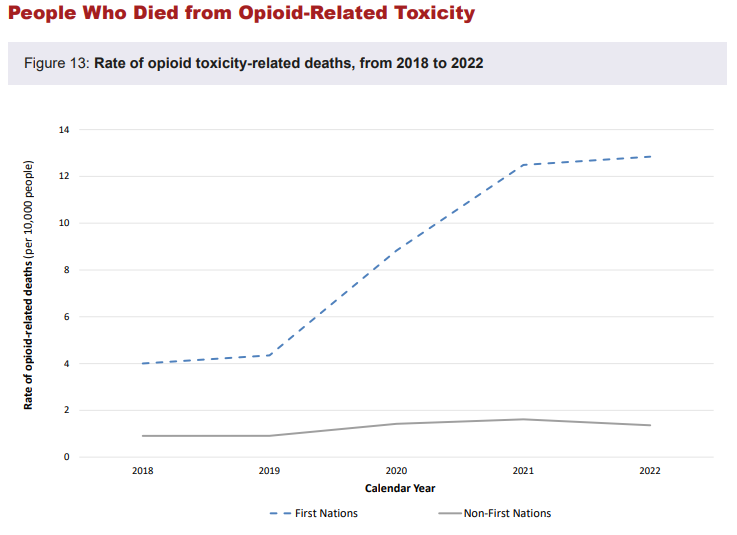
A report released on Monday morning has found that in 2022, First Nations people in Ontario were killed by opioids at nine times the rate of non-First Nations people. In First Nations, opioids caused 12.8 deaths per 10,000 people, while the rate for non-First Nations was 1.4 per 10,000.
The report also found that First Nations people living outside of their communities suffered higher rates of opioid use. First Nations individuals living outside their communities are also twice as likely to be hospitalized for opiate-related issues as those living within their communities.
Abram Benedict is the Regional Chief for the Chiefs of Ontario. He says individuals from northern First Nation communities experience a shock when coming into larger city centres for health and education, and find greater access to substances once in those larger cities.
The Chiefs of Ontario report determined that the rate of opioid use for First Nations people in Ontario tripled between 2019 and 2022. But in 2023, the death rate stabilized, and the hospitalization rate decreased.
Data gathered by the Chiefs of Ontario finds a tripling in the rate of opioid deaths for Ontario First Nations. (Via screen capture from Monday’s report released by the Chiefs of Ontario. October 6, 2025.)
Benedict feels that the COVID-19 pandemic played a significant role in the rising rate of opioid use. He believes the stabilization of the opioid rates for 2023 comes from a few factors: “Following COVID, there have been some more investments made, there has been more awareness around addictions, more supports have become available… but considering all of that, it’s still high numbers. Still very alarming.”
The report calls for an end to a war-on-drugs approach to the drug crisis, and instead advocates for culturally-based healing programs.
Benedict acknowledges that policing is effective at shutting down large drug operations and disrupting organized crime. “But that’s only one element of it,” he says.
On the policing front, Benedict also argues for the self-policing of First Nations – he wants to see First Nation policing legislated as an essential service rather than a program.
“When it comes to enforcement surveillance, stopping organized crime, stopping the exploitation of our First Nation members and our women and children, our police have to be at the forefront of that,” Benedict says. “We know that bringing non-Indigenous agencies in the community is not as effective as First Nation policing.”
Policing can prevent the supply of illegal substances to prevent new users, but it does not cure those already at the mercy of an addiction, nor does it address the root causes that lead vulnerable people to become addicted to begin with.
To address those already suffering from opiate addictions, Benedict supports land-based healing. The practice involves helping a person reconnect with the land, with nature, and with traditional cultural practices and ceremonies.
But when it comes to root causes, Benedict points out that mental health issues and rising homelessness aren’t self-contained problems. A solution to the opioid crisis requires addressing the other social determinants that contribute to substance abuse.
“It really is about ensuring that part of bringing persons back to rehabilitative states and being back in balance,” Benedict states. “This really is about ensuring those other factors that have impacted them to get to that point where they are in their life are also addressed as well.”
Benedict says publicly-funded programs to handle the opioid crisis are insufficient. “Ontario and the federal government have a really long way to go to address this issue.”
More First Nations libraries in Ontario will soon be able to provide free internet access to the public.
The Ontario government announced it is making a $78,000 increase to the Internet Connectivity Grant program, which helps reimburse rural, northern and First Nations Public Libraries for their connectivity costs.
The province says that additional amount of funds will allow 30 public libraries in Ontario the ability to join the program.
“Accessible and reliable internet elevates education, economic opportunities, and community connection,” said Greg Rickford, Minister of Indigenous Affairs and First Nations Economic Reconciliation in a news release.
“In expanding the Internet Connectivity Grant, we are ensuring that all First Nation public libraries can continue providing this critical service at no cost to their communities.”
Since 2018, the Internet Connectivity Grant program has provided the province’s public libraries with more than $4.3 million to ensure communities have reliable internet access.
According to a recent report, nearly one in three northern Ontarians without home internet rely on public libraries for online access to remote education, job searches and other services.