Dieppe joins list of monarch‑friendly cities
The City of Dieppe is continuing its monarch butterfly conservation efforts with a new certification.
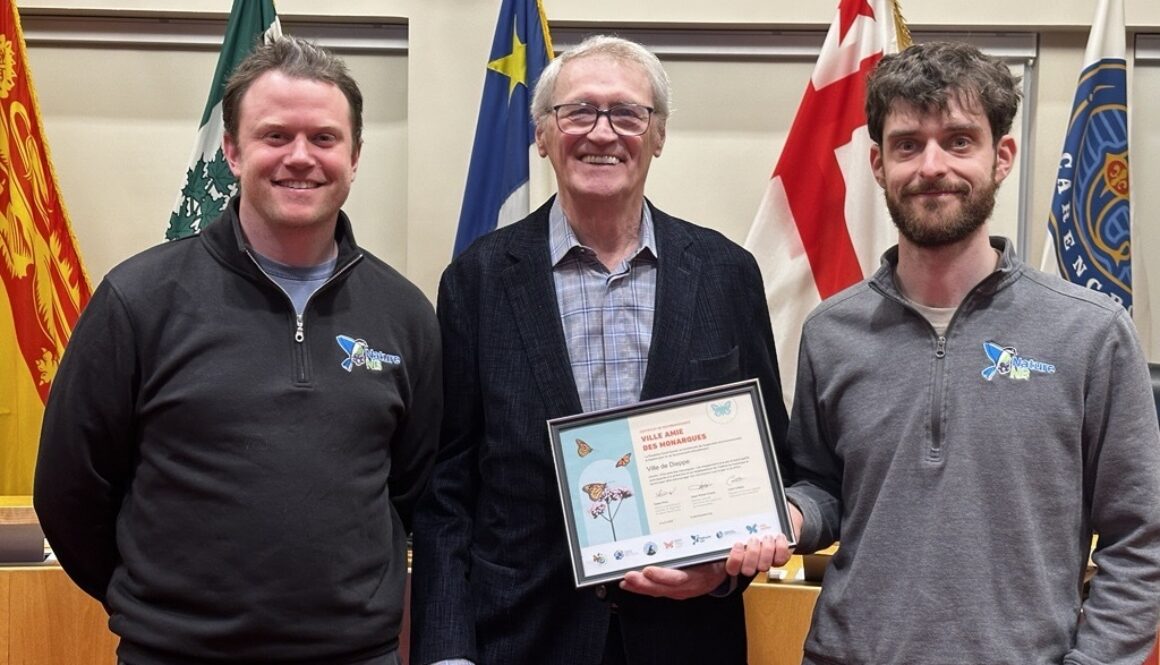
During Monday’s council meeting, the city received Monarch‑friendly city certification from Nature NB, in partnership with the David Suzuki Foundation.
Over the past three years, the city has been working on initiatives to help preserve the monarch butterfly, a migratory species that pollinates plants and serves as a food source for birds, insects and other invertebrates.
The butterfly is considered a species at risk due to habitat loss, pesticide use and climate change, according to Nature NB’s website.
Some of Dieppe’s initiatives include an interpretive garden with milkweed plants — the monarch butterfly’s only host plant — and a butterfly statue with information panels near the city’s aquatic centre.
Alexandre Truchon‑Savard, Dieppe’s director of environmental management, said receiving the certification reflects the city’s work to protect pollinators and represents a pledge to pursue further initiatives.
“By focusing on the monarch butterfly, you can sort of direct the message to make it more attractive to the general public,” he said. “But while you are doing that, you’re also supporting the full spectrum of biodiversity that uses those plants and habitats.”
Truchon‑Savard said the certification is based on the David Suzuki Foundation’s Mayor’s Monarch Pledge program, which encourages municipalities to complete at least three actions from the National Wildlife Federation’s list of 24 actions to support monarch conservation.
According to Truchon‑Savard, Dieppe has completed 16 actions on the list, including issuing a proclamation to raise awareness about the decline of the monarch butterfly and engaging gardening leaders and community partners, among others.
He said the city pursued the certification to engage both the current and future councils in seeking better environmental management and continuing the city’s work to protect biodiversity, particularly pollinators.
Looking ahead, Truchon‑Savard said the city is considering additional initiatives from the list, particularly larger projects such as looking at the use of pesticides and herbicides.
“Those bigger projects need careful consideration and lot of work to make them work, so these are kind of ideas that might be brought to council for support,” he said.