Our guest this week on the Insights Podcast is Elisa Obermann, the Executive Director of Marine Renewables Canada (MRC), an industry association headquartered in Halifax with more than 200 members.
In this podcast, Elisa talks about the various forms of marine renewable energy, including energy from rivers, waves, tides, and offshore wind.
The focus of her association is advocacy and the development of a robust supply chain for renewables in Canada. Interestingly, MRC’s recent conference attracted more than 700 attendees, underscoring the growing interest in this sector.
The biggest opportunity is clearly offshore wind, where MRC has set a goal of 30 GW by 2050. For perspective, Nova Scotia currently uses about 2.3 GWs of electricity annually.
Tidal, by contrast, is expected to generate only about 1 GW of electricity over the same time period. It is interesting to note that one offshore turbine will provide electricity to about 15,000 households, while one onshore turbine will provide electricity to between two and 3000 households.
Obermann discusses what is needed to realize offshore wind’s potential, including investment tax credits and transmission infrastructure.
It is an excellent overview for those following Premier Houston’s Wind West project.
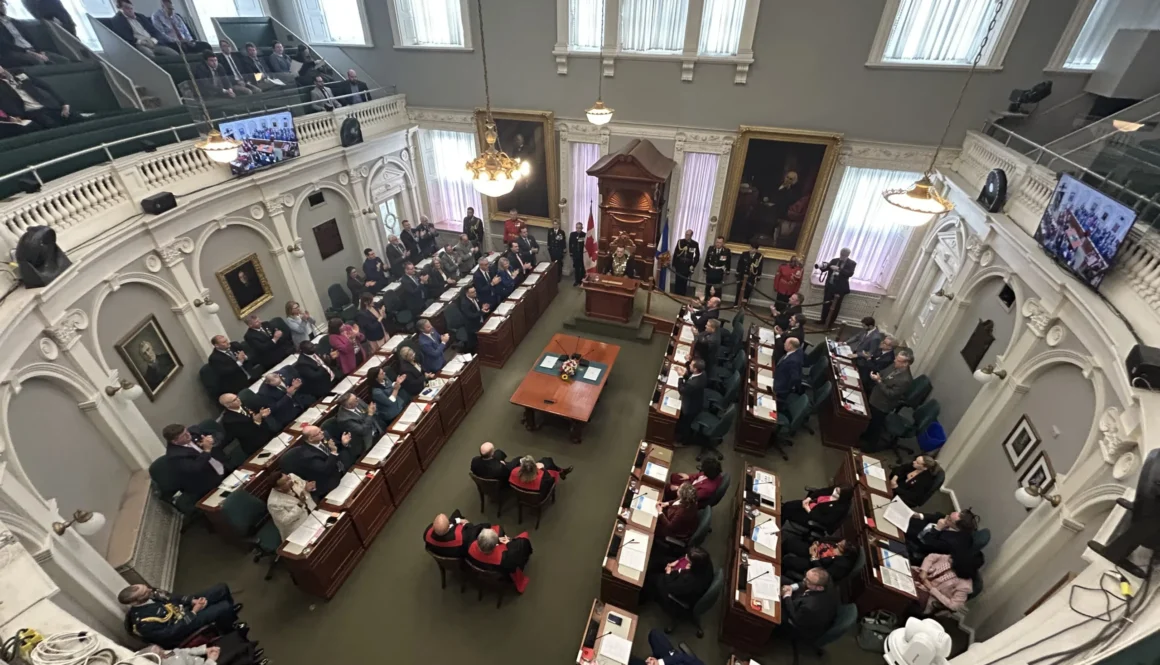
The spring sitting of the Nova Scotia Legislature has wrapped.
The session ended Thursday afternoon after 27 days, it was the longest under Premier Tim Houston.
A controversial budget with millions in cuts to arts and culture programs caused protests outside and inside the House, leading to restrictions on public access.
Finance minister John Lohr says every budget contains difficult decisions.
“We are well aware that we’re nearly $1.3 billion in debt, and we still need to borrow money. We’re doing a massive infrastructure build of things that were deferred maintenance, and continuing to invest in affordability, healthcare and housing,” said Lohr.
Lohr says he doesn’t know what next year’s budget will look like.
He says the world is changing, and they’re meeting needs where they can.
Opposition say trust in Premier is low
Meanwhile, NDP leader Claudia Chender said trust in government is at an all-time low.
She criticized cuts and out of budget spending, and Premier Tim Houston for missing time in the House due to meetings in Texas and Alberta.
“By our calculations, he’s missed over 40 percent of this session. We’ve heard from Nova Scotians across this province that question what the Premier’s job is, and demanding that he come back and stand up for the decisions that he’s made,” said Chender.
Houston is currently in Calgary attending meetings on natural gas with Alberta Premier Danielle Smith.
Liberal MLA Derek Mombourquette says the public engagement during the session was encouraging to see.
He says it likely helped the cause on government walking back some of the planned cuts earlier in the session.
The province says the door is open for discussions with First Nations leaders on cannabis.
Last Thursday, April 2, members of First Nations communities blocked key highways for several hours.
The protests were over RCMP raids of cannabis storefronts on First Nations.
Tensions are high, First Nations say it’s their Treaty right to sell cannabis on their lands.
Justice minister Scott Armstrong says they’re always open to meeting, but there are policies in place.
“We have a policy where First Nations can actively participate in cannabis sales at NSLC locations, with proceeds going back to the bands. We’re willing to have discussions on that, and other policies,” said Armstrong.
Armstrong says the province strongly supports the RCMP and their actions on illegal cannabis.
“The Cannabis Control Act is the law of the land in Nova Scotia. The Cannabis Act is the law of the land across Canada. Health Canada produced cannabis products are the only legal ones across the country.”
Armstrong was asked what it will take to resolve tensions.
“We’ll have to work on that together. I think the onus is on all leadership to work together to try and find a solution to all of these issues. The issue of public health and safety for young people is a priority.”
Premier Houston issued a lengthy statement over Easter weekend, saying blocking a highway or road is never acceptable.
He said they are ready to work together to address the drug crisis, but they are not prepared to accept the status quo.
Several RCMP cars are parked outside of a cannabis store along Highway 4 in Potlotek First Nation on Thursday. PHOTO: ACADIA BROADCASTING
3 arrested after RCMP vehicles damaged
Meanwhile, RCMP say two men, aged 33 and 30 from Potlotek and a 19-year-old man from River Bourgeois were arrested in relation to mischief Thursday.
This was after several police vehicles were damaged during the protests in Potlotek, RCMP say seven vehicles had damage of some kind, including broken windows and flat tires.
Police say no charges have been laid.
Potlotek First Nation released a statement condemning the vandalism, and asked anyone with information to come forward.
The First Nation said the raid Thursday caused fear, and what followed was a powerful demonstration of unity and solidarity across the community.
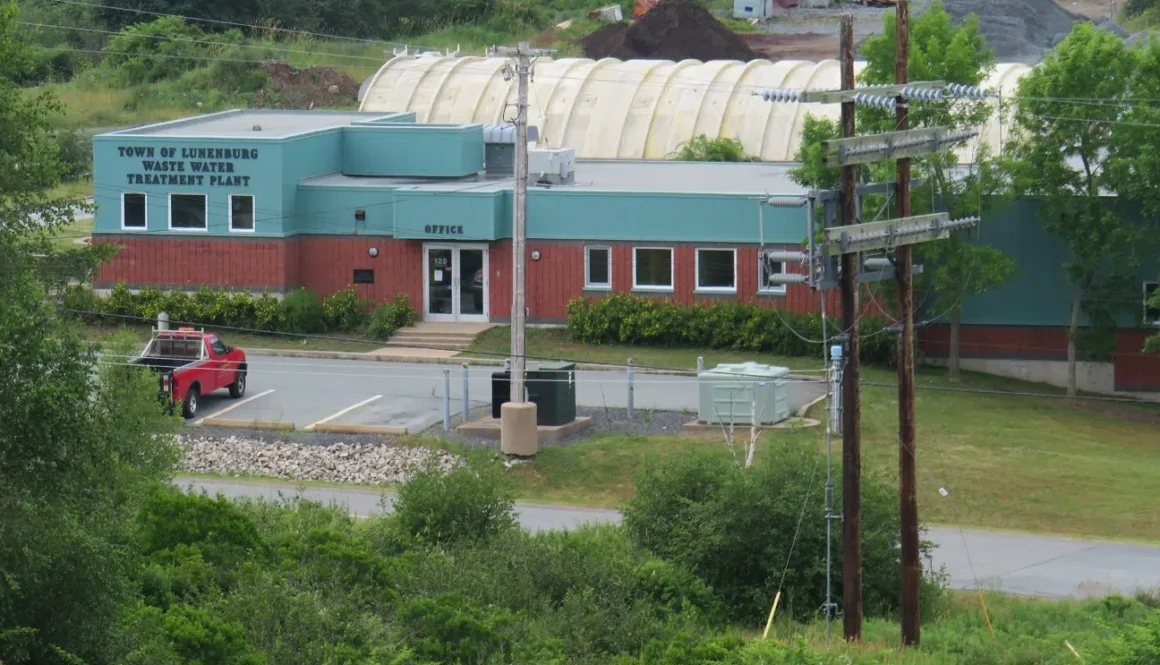
A public hearing has been scheduled as the Town of Lunenburg looks to increase water rates for residents and businesses.
The town has submitted an application to the Nova Scotia Regulatory and Appeals Board, which will hold a hearing on May 27 to review the request.
Under the proposal, residential customers would see their flat rate increase by about $14 per quarter, bringing the total bill from roughly $170 to $185.
Commercial customers would see increases ranging from about 9 to 12 percent, depending on the type of service.
The proposed changes must be approved by the board before they can take effect, with July identified as a potential start date.
The board is responsible for reviewing utility rates across the province to ensure they are fair and reasonable.
Residents will have an opportunity to take part in the process. Anyone interested can sign up to speak at the hearing to share their views before a decision is made.
The town notes that residential customers will remain on a flat rate for now, as it continues to collect data through its ongoing water meter installation program.
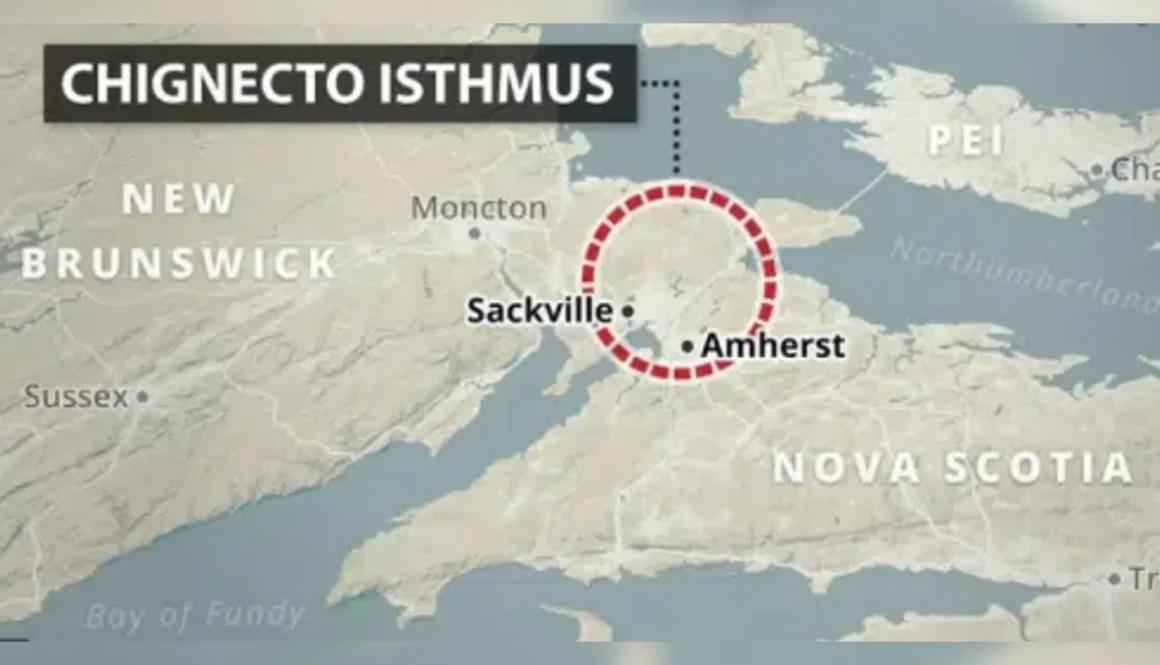
When will construction on the Chignecto Isthmus begin?
An agreement was struck last year for climate change improvements to the trade route between Nova Scotia and New Brunswick.
Cumberland North independent MLA Elizabeth Smith-McCrossin says the Houston government talked about a ten-year timeline in 2021, and work still hasn’t begun.
During Question Period Tuesday, she asked Public Works minister Fred Tilley for a clear completion date, and says we can’t afford any more delays.
“The storms are coming, high tides are coming, and it will cost a lot more to try and do the repair work after the damage is done,” said Smith-McCrossin.
Tilley says they recognize the importance of the Isthmus, as $94 billion in goods cross it each year.
But it’s not known what will be uncovered when work starts.
“To put a firm date on a project that could potentially change, it’s not prudent to do that, because we don’t know what we’re going to face,” said Tilley.
He pointed to a recent example of the Avon River Aboiteau, which got the federal green light last week, six years after the initial application.
Tilley says they’re continuing work with New Brunswick and Ottawa on planning and collecting data, and they will get it done.
Nova Scotia has $1 million in the budget this year for the project.
Province House is back open to the public, but there are new rules in place.
Speaker Danielle Barkhouse restricted visitor access after singing protestors in the gallery disrupted a vote on the budget on March 24.
Those who were in the gallery that night are still banned.
Visitors are now not allowed to use cellphones, or read, write, sketch or speak during debates.
Reflecting on her decision to close the House, Barkhouse said some staff and MLAs told her they felt unsafe.
“We didn’t want to do this, but as we all know, it was more than just singing. It was personal. It was attacks, and then it became something outside. It was also weeks leading up to that,” said Barkhouse.
“I have to think of everybody in here, and everyone in the gallery, so it was a hard decision.”
The singing interrupted a midnight vote on the ‘Appropriations Act.’
Barkhouse said there were incidents, including an MLA being ‘blocked’ from leaving that night, and objects being thrown at windows.
The act passed third reading the next day while protestors demonstrated outside the legislature.
When asked if it was people voicing frustration, Barkhouse said the protestors took it too far.
“They can be frustrated, and that’s normal. But that’s meant for emails and phone calls, there are longstanding rules, and I’m a guardian of those rules. I’m trying my hardest to keep those in place.”
Barkhouse said the new rules are in place ‘for now,’ and a committee will be formed to study how other galleries in the country operate.
Opposition leader pleased with decision
NDP leader Claudia Chender says she’s glad Province House is open once again for the people.
But she didn’t agree with the closure in the first place.
“A shooting on Parliament Hill didn’t result in this kind of closure. Why was it closed? Because government rushed through a deeply unpopular budget close to midnight while Premier Tim Houston was in Texas,” Chender told reporters.
She says people should be able to travel freely once they are scanned through security.
“It’s the people’s house, and they need to be here to see business being done.”
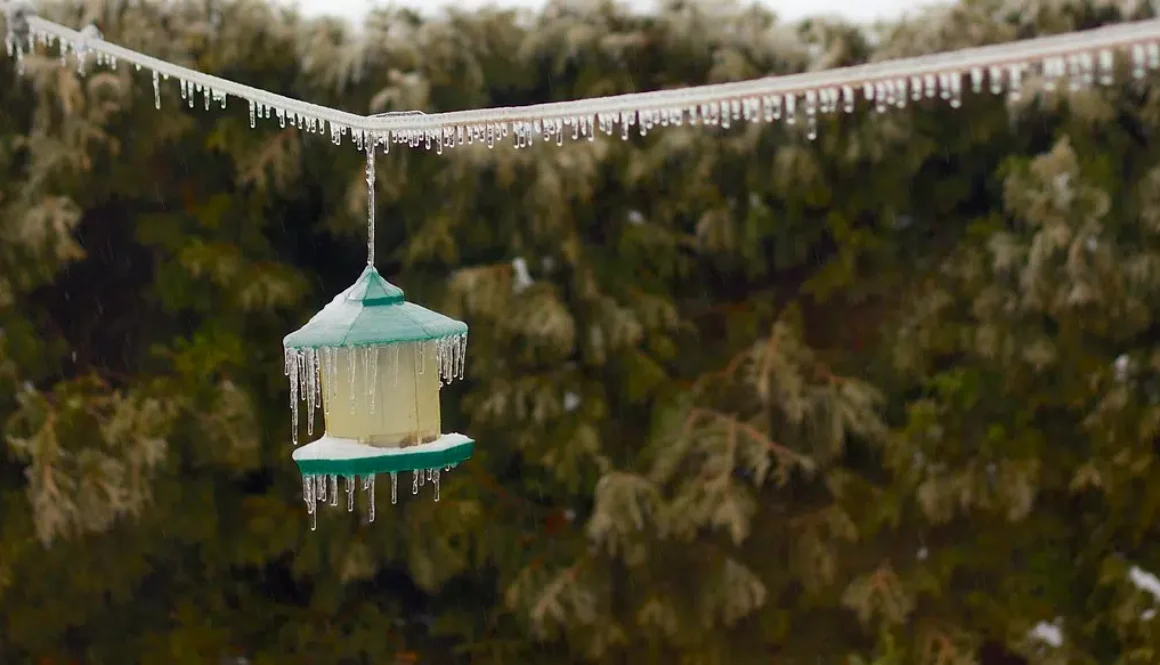
A spring weather system is set to bring freezing rain and a mix of other precipitation across Nova Scotia on Friday, creating messy conditions in parts of the province.
Environment Canada has special weather statements in effect provincewide, warning of rain, snow, ice pellets and freezing rain throughout the day.
Meteorologist Ian Hubbard says the system will move in around midday, starting in western and southern areas before spreading northeast.
“We’ve got another little warm front that’s going to be pushing through… bringing a little bit of a mixed bag of precipitation,” Hubbard said.
Southern areas, including Yarmouth and Bridgewater, are expected to see mostly rain. In central parts of the province, including Halifax and Truro, precipitation is expected to begin as ice pellets before changing to rain.
Northern and eastern regions could see snow or ice pellets for several hours, followed by a period of freezing rain before transitioning to rain later in the day.
Hubbard says the greatest risk for longer periods of freezing rain is in northeastern mainland areas and into Cape Breton.
“The most likely areas… to receive the longest period of freezing rain are east of Truro… through Pictou, Antigonish, Guysborough and into Cape Breton,” he said.
There is still a chance some areas could be upgraded to freezing rain warnings as the system develops.
The system is expected to taper off overnight Friday, with cooler air and some clearing into Saturday. Another weaker system could bring showers or flurries on Sunday.
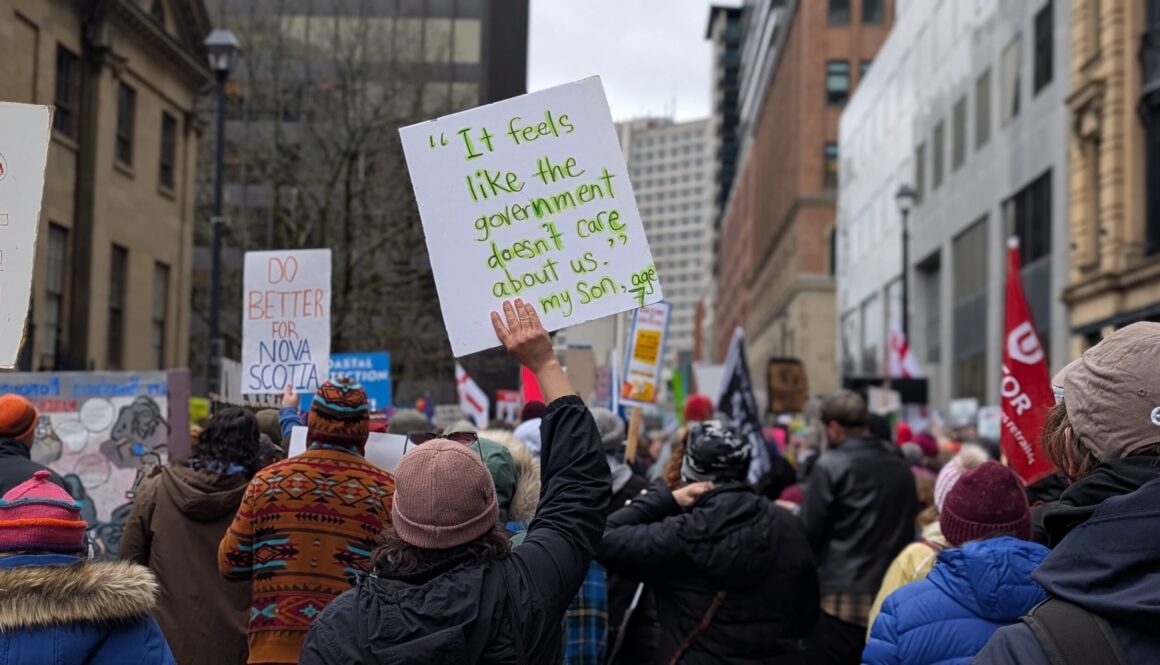
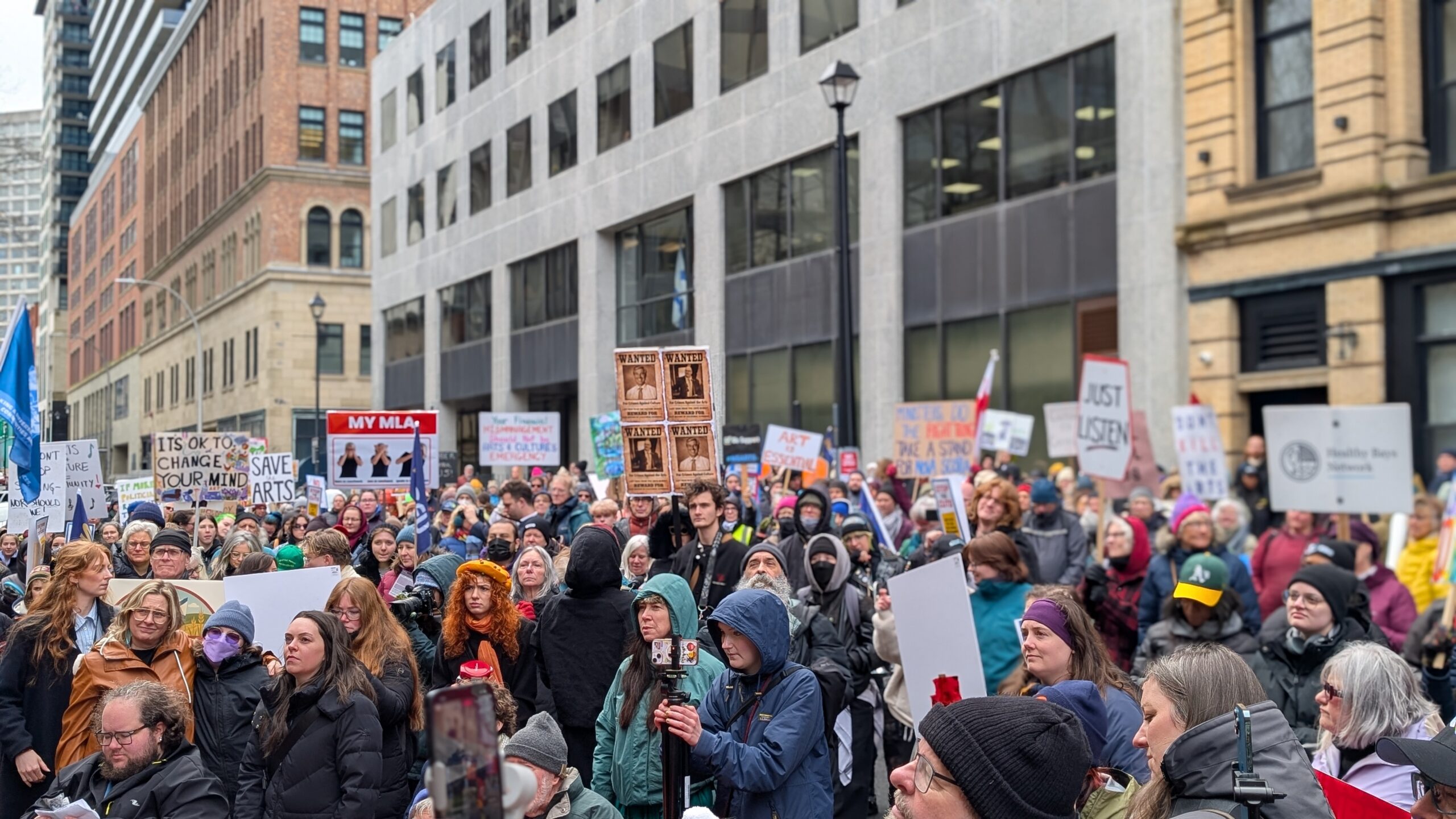
Another huge crowd gathered at a rally in Halifax on Friday afternoon.
It is in response to the spring budget that was tabled one month ago with $300 million worth of cuts to sectors such as arts and culture, tourism and disabilities.
There was singing, chanting and a slew of speakers including writer and activist Angela Bowden who said we need to stick together.
“We have so much work to do and we will do it together because the people united will never be divided,” said Bowden as the crowd started to chant with her.
Writer and activist Angela Bowden speaks to a crowd in Halifax. PHOTO: NATALIE CHAISSON/ACADIA BROADCASTING
The spring budget originally had $300 million worth of cuts.
Chris O’Neil with the Nova Scotia Arts Coalition said although they had wind of the cuts a few days before, when the budget got tabled, it was really shocking.
“It literally took all of us about a week to really go through everything and figure out all of the impacts,” said O’Neil.
She said she met with Finance Minister John Lohr a few days later on the matter.
“We said, ‘John, what were you thinking? And he couldn’t really give us an answer. Which is what we’ve seen over and over again with all of the MLA’s,'” explained O’Neil.
Protestors gathered outside Province House in Halifax. PHOTO: NATALIE CHAISSON/ACADIA BROADCASTING
However, O’Neil said there are still issues that affect the Mi’kmaw and African Nova Scotian communities.
“It’s an unprecedented number of people who have actually spoken. Not just people who actually live and work this stuff all the time, but ordinary Nova Scotians who come from all walks of life,” added O’Neil.
It was Tuesday evening when MLA’s were finishing the debate when the public observing, broke out into song to urge the government to change its mind. This caused legislature to be delayed until the next day and banned the public from the House.
O’Neil said this created a bizarre narrative.
“I mean literally people were singing, ‘it’s okay to change your mind’, and part of the reason they did that is because the politicians are not meeting with us,” says O’Neil. “At a certain point, we exhaust our options.”
She says there is a big difference between safety and comfort, and she feels the singing just made them uncomfortable.
“[It] was not threatening at all. It was super joyful.”
O’Neil said they are tired though.
“We are exhausted. We have been fighting this using every tool we can possibly find,” explains O’Neil. “There’s such a profound lack of interest in the government right now to hear our voices. So, our voices have to get a little louder. And we’re going to just keep going.”