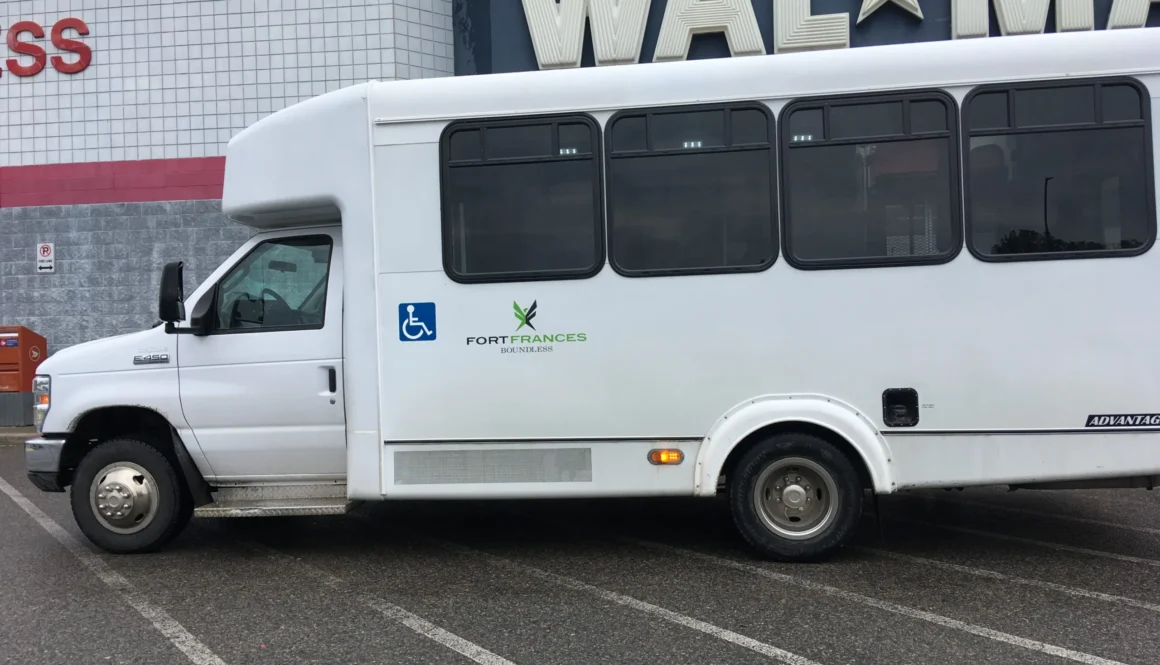
Codiac Transpo is in the midst of a busy recruitment year, hiring more than 25 employees so far in 2026 while continuing to fill positions across the organization.
During a budget presentation to Riverview Town Council, Public Transit Director Angela Allain said the transit service is actively recruiting for a wide range of roles, including drivers, mechanics, supervisors, clerical staff and service personnel.
“Transit’s been very busy,” Allain said. “We’ve hired over 25 people so far this year. We have openings in all classifications if you know of people that are interested in working for us.”
Allain said the hiring campaign has attracted significant interest from job seekers.
“Recruitment is going quite well. We have a lot of applicants,” she told council.
The growing workforce is helping support an expanding transit system that is also facing infrastructure challenges.
Codiac Transpo is planning a future expansion of its garage facility, which Allain said has outgrown its original design. The current garage was built to accommodate 40 buses but is now serving a fleet of 52 vehicles.
The transit service is also preparing for continued growth in Riverview. Two new buses ordered in December 2025 are expected to arrive in 2027, doubling the municipality’s fleet from two buses to four.
Allain’s presentation highlighted several recent transit improvements in Riverview, including upgrades to bus stops through the installation of concrete pads and benches.
Council also heard that, pending budget approval, transit fares are expected to increase in January 2027. The proposed change would raise the cash fare by 25 cents, from $3 to $3.25, while monthly passes would increase by $1.
The Town of Yarmouth is getting an upgrade to its public transit system.
Four new bus shelters have been installed across town, with a fifth coming soon.
According to a press release from the town, the project was awarded to Daytech Limited for $92,596.50 last fall, and work began in May of 2026.
The project was funded through the Government of Canada’s Rural Transit Solutions Fund, as well as contributions from the province of Nova Scotia and the Town of Yarmouth.
The shelters were installed with the purpose of improving accessibility and safety for residents, including people with physical and visual impairments.
Three of the shelters are located along Main Street, near Freshmart, RBC and Coronation Park.
The fourth shelter is located near the Korean War Memorial on Pleasant Street.
A fifth stop is planned near Yarmouth Regional Hospital, but has been delayed due to construction in the area. It is expected to be installed at a later date.
“The addition of these five new bus shelters is a meaningful investment in the comfort, safety, and accessibility of public transit,” said MP for Acadia-Annapolis Chris d’Entremont. “These shelters will provide protection from the elements while making the transit experience more welcoming and reliable for transit riders in the Town of Yarmouth.”
The new shelters will feature solar lighting and display space for transit and community information.
Yarmouth Mayor Pam Mood said in a press release that she’s proud of the free transit service offered in Yarmouth, and excited to see the increase in ridership over the last two years.
“Adding these fully accessible shelters improves the service and makes everyday travel safer and easier for people of all ages and abilities,” said Mood.
Dieppe residents will soon see a dramatically expanded public transit network as the city prepares to launch the first phase of a major transit growth plan that has been years in the making.
The new network, scheduled to begin operating Aug. 23, will double the number of transit routes in the city from three to six and increase the number of bus stops from 102 to 188.
“This is essentially a complete redesign of the network,” said Jerémie Aubé, Dieppe’s director of urban mobility. “It’s been the result of a few years of work.”
The project began with the creation of Dieppe’s Transit Growth Plan in 2023. Public consultations followed in the fall of 2024, allowing residents and transit users to share what they wanted from an improved system. City staff then spent much of 2025 redesigning the network in collaboration with Codiac Transpo and other partners.
According to Aubé, the changes represent far more than a simple route adjustment.
“We essentially redesigned the entire network that we have in Dieppe,” he said. “We’re adding routes, adding stops and bringing service into areas that didn’t previously have transit access.”
While the network is changing significantly, riders can expect the service itself to function much the same way it does today. Buses will continue on fixed routes with designated stops, but those routes will operate over an expanded service area, including areas not previously covered.
The city has also invested in additional vehicles to support the expanded service. Five new buses were purchased last year as part of the growth plan and are already part of the operating fleet.
The buses, however, are not electric.
While fleet electrification remains on the city’s radar, Aubé said transitioning to electric transit involves much more than simply purchasing new vehicles.
“You need the charging infrastructure and the supporting network as well,” he said. “It’s a much bigger project than just replacing the buses.”
Residents looking to familiarize themselves with the changes can visit dieppe.ca/autobus, where route maps and transit information are available. The city has also partnered with the Citymapper app, allowing users to preview how trips will look under the new network before it officially launches.
The upcoming changes represent only the first phase of Dieppe’s long-term vision for transit.
Aubé said the city is already examining future phases that could include new routes, higher service frequencies and expanded coverage in developing areas.
With Dieppe continuing to experience strong population growth and increased residential density, city officials see transit as a critical component of the community’s future transportation network.
“Transit is really the backbone of those mobility options,” Aubé said. “We want to provide people with choices for how they move around the city.”
Calling the Aug. 23 launch a “transformative change” for Dieppe, Aubé said staff will closely monitor the rollout and make adjustments where necessary.
“We’re really excited to see it going,” he said. “And we’re excited for what’s coming in future phases as well.”
Fundy Regional Service Commission transportation director says their region-wide transit plan will look different from past efforts.
Scott Borden said the RCS will develop the plan in collaboration with mayors across the region.
He believes that would set it apart from initiatives like the Comex Service, a Saint John Transit service that aimed to connect Saint John with suburban areas such as Rothesay, Quispamsis, Hampton, and Grand Bay-Westfield.
But that was discontinued by Grand Bay-Westfield and Hampton in 2015 and 2020, respectively, due to low ridership and increased costs.
“I think it’s a different model, compared to what it used to be, where we are saying if we do this all together and come up with this long-term plan and really stick to it, I think that makes it a more feasible service,” he said.
Comex or Route 51 was introduced in 2007 and continues to operate in Rothesay and Quispamsis, providing two morning and two evening rides to Saint John.
Borden explained that before communities negotiated individually with Saint John transit for the service.
However, with their proposed transit plan, municipalities will find the best transit option for their communities together, he said.
Borden clarified that the RSC goal is not to replace existing services, but to strengthen them to better connect communities in the region.
“We do acknowledge that the Comex exists, and so maybe we’ll look at how to strengthen that or how it fits in the broader system,” Borden said. “But for us is really looking at what existing services we have, where we can provide services in areas that may not have them, and how to integrate those.”
The commission’s service area includes:
The Fundy Rural District.
Grand Bay-Westfield.
Saint John.
Rothesay.
Quispamsis.
Hampton.
Fundy-St. Martins.
According to Borden, the plan comes from a provincial government mandate to create a regional transportation system, which, in the case of the Fundy RSC, will focus on areas outside of the Saint John transit area.
The plan is still in its early stages and is being developed using feedback gathered through an RSC survey conducted over the past few months, public engagement sessions, and a University of New Brunswick study titled Transportation Needs in the Fundy Region.
The RSC already held some pop-up events during the week of June 8 to 10 to introduce the project to residents in different communities and to get feedback on the early conceptions of the plan.
Borden said they mostly received positive feedback, and residents seem to be most interested in on-demand transit, among the options the RSC discussed during the events, which also include fixed routes and shuttle services.
However, no decisions have been made, Borden said. He emphasized that the commission plans to hold more in-depth public engagement sessions and continue working with municipalities to develop a plan collaboratively.
The commission hopes to finish the project in August or September.
However, Borden foresees that securing long-term operational funding might become a challenge, as the RSC doesn’t intend to find a one-size-fits-all solution for the municipalities.
“I think we need to be adaptable in terms of what these solutions look like,” he said. “I think for us too, it’s how this is operated long term. I think we need to be strategic about sort of it’s ramp up.”
He believes regions need to join forces to present a good case for more transit funding to the province.
Borden added that the commission will tackle this challenge as they move forward with the project.
Project will need federal and provincial support, mayor says
Grand Bay-Westfield Mayor Brittany Merrifield, who is also the chair of the RCS regional transit committee, said this project will be supported by the three levels of government.
Merrifield said the federal government has already stepped forward with public transit funding, both capital and operational.
In April, the federal government announced it was investing $100,000 to fund two planning and design projects to help develop better rural transit options in Southern New Brunswick.
Fundy RSC received $50,000 to complete a comprehensive public strategy and incorporate these findings into the transit planning process.
While, the Southeast RSC also received $50,000 to undertake comprehensive public transportation research.
Brittany Merrifield is the mayor of Grand Bay-Westfield and president of the Union of Municipalities of New Brunswick. Image: Submitted/Town of Grand Bay-Westfield
While the province mandated RSCs create regional transportation, it hasn’t promised any funding to support this project.
Merrifield said the province should also provide support, as she believes better connectivity between municipalities can contribute to New Brunswick’s economy.
“It’s an economic development issue,” she said. “Anything that can contribute to the provincial GDP is something that I think is important for the provincial order of government to help support.”
She added that federal and provincial funding is also required because residential taxpayers “can’t pay for everything.”
“When you put a transit system is never going to be self-funding; it’s always going to need to be subsidized, and so it’s important for everyone to be on board,” Merrifield said.
The official opposition is calling on Premier Tim Houston to sign a deal with the federal government to make Halifax more affordable.
In a news release, leader of the NDP, Claudia Chender urges Houston to use federal funds to invest in programs that keep affordable apartments and to expand rapid transit and ferry service.
“Rents in Halifax continue to rise while they drop across Canada. People are spending hours in their cars and hundreds of dollars in gas each week just trying to get to work or drop their kids at school,” says Chender.
Chender adds, Ottawa has put $366 million dollars on the table for Nova Scotians through the Building Communities Strong Fund. It can be for housing and post-secondary education infrastructure.
In addition, she says, the Canada Public Transit Fund includes $25 billion over 10 years for public transit infrastructure. Deals have already been signed with Ontario and Quebec.
“We can build functional, affordable cities when we make different choices,” says Chender. “We can make sure renters don’t get hit with price hike year after year. We can make sure commuters Bedford, Sackville, Hants County and Lunenburg don’t have to pay an arm and a leg for gas and parking every day.”
A new way to cross Halifax Harbour is on the way, as FlyteBoat prepares to launch the city’s first fully electric water taxi service.
The boats will connect key waterfront areas, including Halifax Harbour, downtown Dartmouth, the Islands, and the Northwest Arm. The company says trips can be booked online, with on-demand and scheduled options depending on the time of day, plus pet-friendly service and multiple pick-up points.
Each boat will carry 8 to 12 passengers and will be fully heated and weather protected. Service options include commuter and tourist routes for efficient peak-time service or scenic loops around cultural destinations, while private charters are available for groups and special events.
Inside FlyteBoat’s water taxi. PHOTO: FLYTEBOAT
Topher Kingsley-Williams of FlyteBoat says the service “will offer people a simple way to skip traffic, get across the water faster, and actually enjoy the trip at the same time.” He adds, “if we can take even a small number of cars off the road, that’s a win.”
According to the company, the service will save roughly 285 tonnes of CO2 compared with conventional gas-powered boats, which they say is equivalent to taking about 62 cars off the road for an entire year. Since the fleet is fully electric, the boats won’t emit toxic fumes and will be quieter, reducing riders’ carbon footprint and noise pollution.
FlyteBoat says it will start with three vessels in May 2026, with plans to expand as it works to reduce traffic and emissions across the region.
The City of Kenora is celebrating a major milestone as its on‑demand transit service, The Wave, has now completed more than 60,000 rides since launching in October 2024.
The Wave was created to replace the City’s fixed‑route bus service with a more flexible, efficient model.
The system allows riders to book trips through a mobile app or by calling 1‑866‑515‑6664. Passengers are directed to nearby virtual stops, where vehicles pick up and drop off riders travelling in similar directions.
Since its launch, the service has seen strong adoption. More than 14,000 rider accounts have been created, representing over 90 percent of Kenora’s population, and monthly ridership is now triple the levels seen under the former fixed‑route bus system.
“The decision to launch Kenora’s own on‑demand microtransit system is working,” said Deputy CAO Heather Pihulak, noting that the service is making transit more convenient and affordable for residents and visitors.
The Wave has also significantly expanded access to public transportation across the city. According to the City, 24 percent more residents can now easily reach transit than before the program began, helping more people connect to jobs, services, healthcare, and daily essentials.
Rider feedback highlights that impact. A recent survey found 77 percent of respondents do not have access to a personal vehicle, and 35 percent say they now travel more often or spend less time travelling because of The Wave.
More information, including booking details and app download links, is available through the City’s transit website.
Specialized transit services are being enhanced in parts of northwestern Ontario.
The federal government is doling out $1.5 million to five projects.
The bulk of the money is going to Lac Seul First Nation.
It will use more than $870,000 to purchase vehicles, bus shelters and other infrastructure to support a local transit service.
Naicatchewenin First Nation, north of Fort Frances, will use $153,883 to purchase a vehicle for community elders to access.
Gizhewaadiziwin Health Access Centre is getting $120,000 for a vehicle that supports the Gizhewaadiziwin Indigenous and Metis Transit Service.
The accessible van will service the towns and Indigenous communities in the Rainy River District.
The Health Access Centre is contributing another $41,000 toward the purchase.
The Indian Youth Friendship Society is receiving $160,000 to purchase an accessible vehicle to be offered to Indigenous peoples living in Thunder Bay and surrounding rural areas.
Netmizaaggamig Nishnaabeg First Nation (Pic Mobert First Nation) is also purchasing an accessible vehicle with its federal grant of $183,993 as it establishes an on-demand transit system for the community east of White River.
The funding is provided through the Rural Transit Solutions Fund, which supports initiatives that enhance access to public transit in rural, remote, Indigenous and northern communities.