The work on a phosphorus management plan for the Rainy-Lake of the Woods watershed continues.
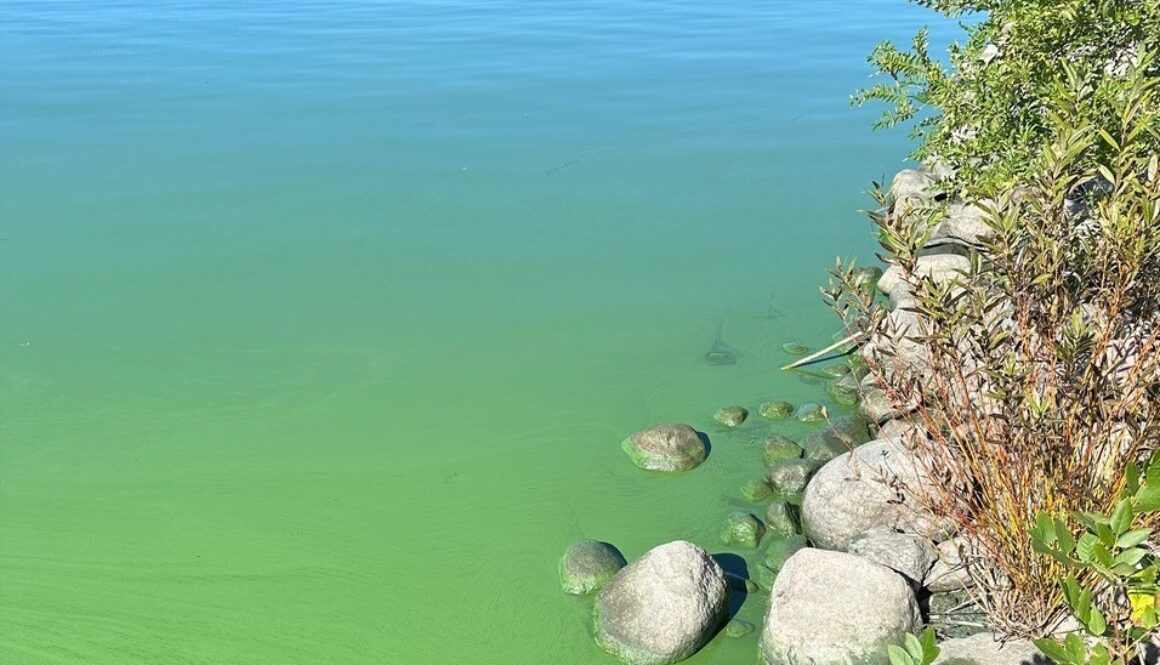
The Lake of the Woods Water Sustainability Foundation is heading the work, driven by the increased presence of algae blooms on Lake of the Woods.
Providing an update on the project at the recent Rainy-Lake of the Woods Watershed Forum, International Watershed Coordinator Megan Mills says algae blooms, especially around the Kenora area, are becoming longer and remaining well into the fall.
“When blooms become large, they can have real impacts across the watershed,” says Mills.
“They affect drinking water treatment, recreation, tourism, fisheries, and overall ecosystem health.”
Mills says they can also produce toxins that pose risks to pets, people, and wildlife.
Phosphorus is identified as the key nutrient for the algae blooms.
Much of it has come from historic industrial wastewater discharges into the Rainy River.
Mills says while water quality in the river has improved since the 1960s, the phosphorus has settled at the bottom of Lake of the Woods, notably in the southern part.
Researchers are now working to identify the sources of the phosphorus and make recommendations to reduce the amount entering the water system.
Mills says part of their work has included visits to wastewater treatment facilities and lagoon systems to understand how phosphorus is managed.
“We have been encouraged by the overall excellent work of these facilities and the drive to ensure phosphorus loading is reduced through best management practices,” says Mills.
The group has also attended agriculture events and conducted farm tours to better understand the role agriculture plays in the movement of phosphorus through the watershed.
“A trend we’re seeing is the expansion of row crop production, including soybeans, canola, and winter wheat, along with increased use of tile drainage,” says Mills.
“These systems influence how nutrients and sediments move across the landscape and eventually reach waterways.”
Mills says the group intends to start crafting a draft plan later this year and will finalize its work next year.
The plan will be shared with governments and other agencies to act upon.