Saint John council has approved cemetery-owned land for commercial use.
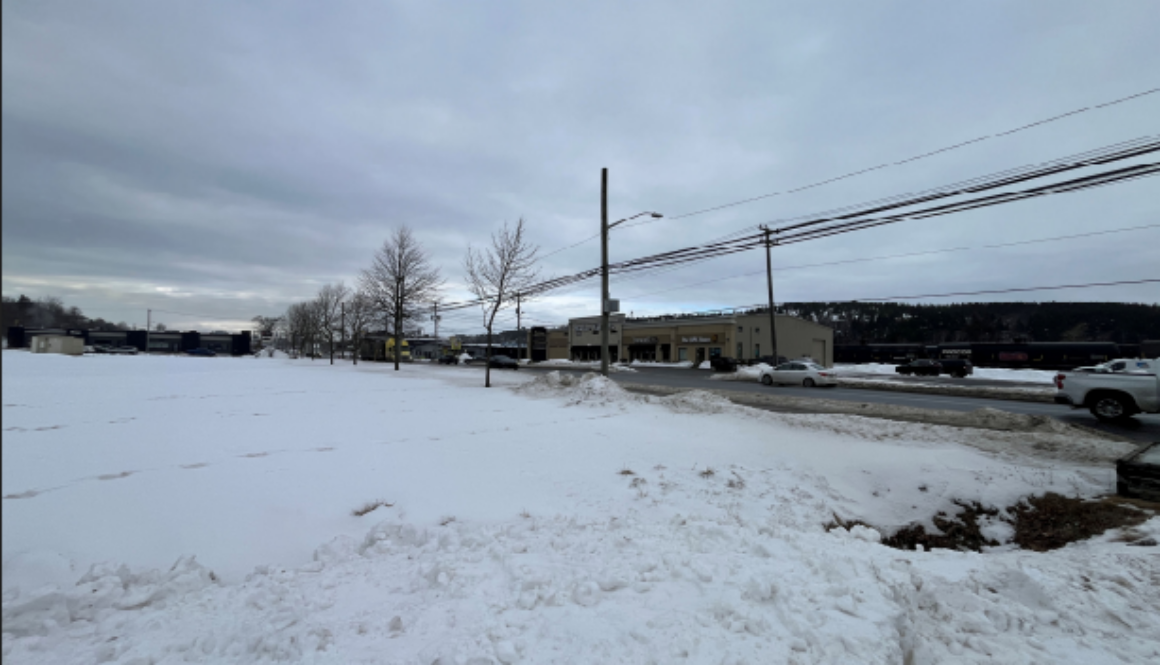
A piece of underutilized land, owned by the Fernhill Cemetery, was approved by the council to be rezoned from park and natural areas to employment and commercial corridor on Monday’s meeting.
According to the cemetery’s representative and developer Rick Turner, Fernhill will not develop the property at 358 ½ Rothesay Avenue.
Instead, once it’s rezoned, it plans to sell it to a developer looking to build a commercial property.
Turner said Fernhill plans to put the sale proceeds toward upcoming capital projects.
“It’s a great application for the city and applicant because you got a street there with utilities, everything is there just begging for a building,” said Turner during the public meeting.
However, councilor Brent Harris questioned why the cemetery didn’t consider the land for housing, or mixed zoning, given the housing needs in the community.
Harris argued that the city has several vacant commercial buildings, while it still needs more residential developments.
Turner said that because the surrounding area is commercial, the cemetery felt rezoning for commercial use was the “natural way to go about it”.
City staff added that a standalone residential development wasn’t recommended because the area lacks components needed for a housing project to thrive.
However, staff said the commercial designation doesn’t prevent a future buyer from adding a residential component if they choose.
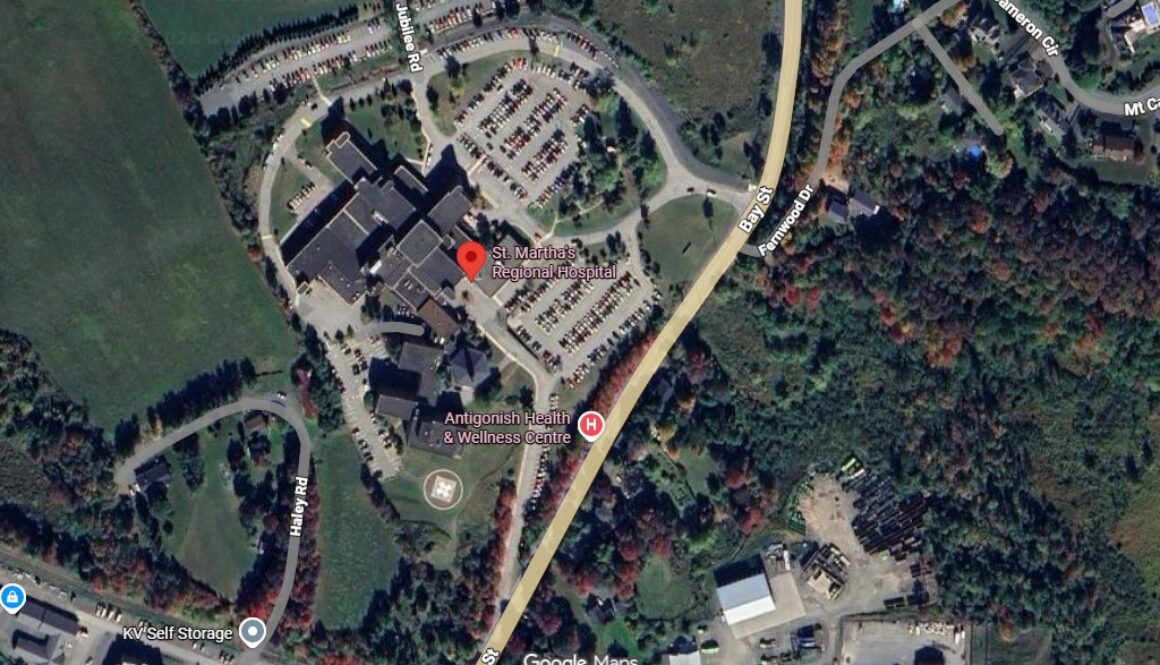
The congregation leader for the Sisters of St. Martha says after 30 years of sponsoring the only Catholic hospital in the province, it was time to walk away.
It was announced just days ago that the congregation would no longer sponsor St. Martha Regional Hospital in Antigonish ending their mission agreement that has been in place since 1996.
Sister Brendalee tells us they were at the point to really look at their life.
“What is the ministry that’s calling us today? What are the signs of the future? What are the cries we’re hearing for gospel hospitality,” explained the Sister.
She says, they felt that it is time for someone, people in the world of health care, to bring “new thinking” and “new energy”, such as Catholic Health International.
“They work on this area of mission and keeping mission in Catholic hospitals alive. So, we felt really good about them,” says the Sister.
However, the province decided to not go with a new sponsor but instead have St. Martha’s services and policies be in line with every other hospital in Nova Scotia.
As a faith-based hospital, St. Martha’s does not offer things like abortion or Medical Assistance in Dying (MAID).
Sister Brendalee says she understands that these policies are unique, but it’s disappointing that the province is going in a different direction.
“Why not be different? What’s wrong with different? It’s the only [Catholic hospital] in the whole of Nova Scotia,” adds the Sister.
Sister Brendalee says she has had a lot of people reach out over the news, many who call St. Marth’s a blessing.
“Found that what it offers is so unique and is good, they are expressing their disappointment,” says Sister Brendalee.
She says the government has to own that they’re choosing to have everything the same.
“That’s a value, that’s their value. But I want the truth out there that we do have somebody in readiness that could do this well, but the government are not going that route.”
But she thinks the mission will live on.
“I truly feel that presence of that care and dignity of person is going to be in the walls and in the people that work there for years to come, no matter who is at the head of the hospital.”
The City of Kenora is looking at some more improvements to Norman Park.
Director of Engineering and Infrastructure Greg Breen says $85,000 has been earmarked for design plans for the north parking area.
“We’re looking at paving the parking lot…adding some line striping, to create defined parking spaces,” Breen told council this week at the Committee of the Whole meeting.
“Adding some pedestrian walkways and linkages up to the existing walking path network and the adjacent Dairy Queen.”
Breen says they are also looking at extensive repairs to the Norman Community Club.
“Looking at what improvements we can make in terms of the building exterior…doors and window improvements, energy efficiency, and accessibility improvements entering into that building.”
Breen adds they want to get the plans ready for any funding opportunity that might come along in the future.
It looks like the City of Kenora will finish with a surplus in 2025.
City treasurer Ryan Marsh gave a financial update to city council this week.
“Tax supported departments we’re forecasting a surplus of $559,000,” Marsh reported to council at the Committee of the Whole meeting.
“The Water and Wastewater (department) we have a small deficit of $42,000. The Solid Waste forecast is a surplus of $109,000.”
Marsh says it a real turnaround from the middle of last year, when it looked like the city was going to post a deficit.
“This report is a bit of a good news story in terms of where we were forecasting on the tax supported side in the previous quarters. The main things that are driving this change…we had some continued labour savings, you know, some delays in hiring that continued to happen and delays in start dates.”
For the first three quarters of 2025, the city had been looking at a deficit of $283,047 and over $380,000 through two quarters.
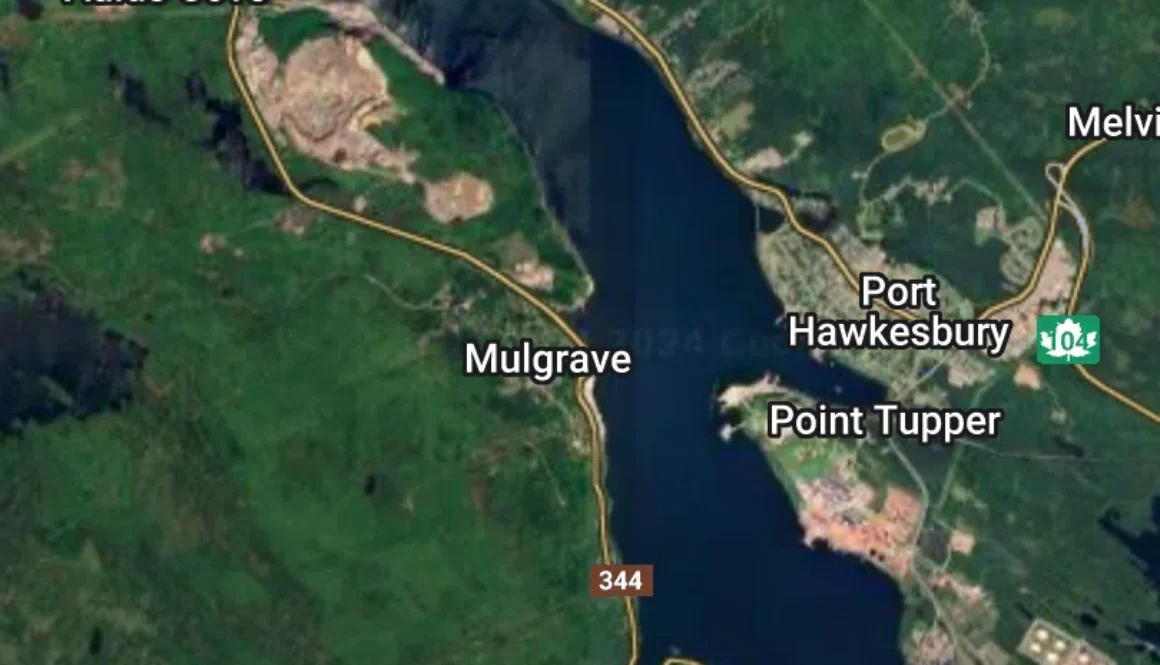
Clearwater Seafoods has pleaded guilty to two charges under the health and safety act in relation to a workplace death on one of their vessels in 2024.
The province’s prosecution service (PPS) says the plea was made in Port Hawkesbury Provincial Court, March 10, on failing to comply with a code of practice.
It was in February, two years ago, when a crew member died on the Anne Risley that was undergoing maintenance in Mulgrave.
Details on the incident, still remain few.
According to PPS, information sworn before the court says Clearwater failed to ensure that an industrial space heater was installed, used, stored, maintained and repaired properly.
In addition, the company failed to take “every precaution that is reasonable in the circumstances” for proper instruction and training for health and safety.
This plea comes just days after Irving Shipbuilding pleaded guilty in relation to a workplace death that also happened in February 2024 and in the very same week.
A 43-year-old man was hit by a piece of equipment during snow clearing operations.
Both companies are scheduled for court again in April for sentencing.
In Nova Scotia, regular self-serve ranges from about $1.62 to $1.66 per litre while diesel is selling for between $2.11 and $2.15 per litre.
On Prince Edward Island, the maximum prices are almost $1.69 a litre for regular self-serve, $2.19 per litre for diesel and $1.67 per litre for home heating oil.
Fuel prices in the province have been climbing up and plunging back down, like a roller coaster, since the latest conflicts in the Middle East began.
Mount Allison University Political Science Professor Dr. James Devine told our newsroom that the Canadian economy is being impacted.
“The area where the fighting is in the Persian Gulf. There’s a narrow area of the Persian Gulf called the Strait of Hormuz through which about 20 per cent of the world’s oil supply goes, “Dr. Devine said.
“On top of that, a large amount of liquid natural gas also comes from that region. The country of Qatar is one of the biggest producers of liquid natural gas, and it shut down its facilities because of the conflict. All of these things are going to start having an impact on the global economy, in part on oil prices, which we’ve seen already.”
He added different parts of the country have felt the impacts in different ways.
“The price of gasoline is going to go up. The price of consumer products will also go up because transportation costs are going to increase. In part because of the price of gasoline, but also because of insurance. The insurance that’s required for the transportation of oil from the region will go up as well, and it will cost more to ship it to North American markets,” Dr. Devine stated.
The Housing, Mobility, and Engagement Research Lab (HOME-RL) at the University of New Brunswick is conducting a survey to understand people’s experiences with housing displacement, damage, evacuation, or loss in natural disasters or extreme weather in Atlantic Canada.
Dr. Julia Woodhall-Melnik, Associate Professor and Canada Research Chair in Resilient Communities, leads the study.
“We are looking to speak with folks who have experienced some kind of housing damage or evacuation, housing loss, or evacuation with no damage related to extreme weather events or climate change.”
She says the goal is to ensure that disaster response policies are shaped by those who have lived through such events.
Individuals at or above the age of majority are eligible for participation if they have experienced housing damage or loss, were evacuated or displaced due to a natural disaster or extreme weather event, experienced said event(s) in Atlantic Canada, and were affected between 2015 and 2026.
Those interested may participate by calling (506) 648-5522 or by emailing homerl@unb.ca, where someone will get back to you.
The online survey is also accessible by clicking here.
Fredericton city councillors have chosen to continue negotiations to keep the University of New Brunswick’s Sir Max Aitken Pool open instead of rejecting their proposal.
But the city council says they weren’t provided sufficient data to support the university’s $12.9 million aid request.
The request came from UNB president Paul Mazerolle several weeks ago, who informed the council that the building’s HVAC systems were about to fail. The one-page letter requested a $6 million investment to keep the HVAC system running. A project included in the request was an increase in the city’s annual contributions to the Sir Max Aitken pool building from $290,000 to $1.29 million for the next 10 years.
Councillor Greg Ericson (Submitted: Greg Ericson)
Greg Ericson, Fredericton councillor for Ward 8, says the request did not include any specifics, such as an engineering report.
“It was just a one-page letter request. It also said that UNB was not going to make the city whole if, for other reasons, the building closed for other unforeseen mechanical or technical problems,” said Ericson.
He also pointed out the city’s approach when it comes to needed repairs for its own indoor pool, located on the city’s north side.
“We see regular reports on the structural integrity of the pool and the infrastructure’s maintenance requirements, what is deferred, and costs associated,” said the Ward 8 councillor. “Council and senior staff are in a continuous habit of making sure this information is available when we are spending taxpayer dollars on infrastructure and services. We need to know what kind of value we are getting for our spend.”
According to Ericson, another piece of information that would have been useful to city councillors would be information on user groups of the UNB pool. He referenced pool usage statistics last provided by the University of New Brunswick on their website in 2018, which claim that UNB has a strong desire to keep a pool on the Fredericton campus, even though ‘more than 80 per cent of current pool users are Fredericton community members.’
“UNB continually claims that 86% of the pool user group is not related to the university, but I’m pretty sure they are only counting varsity athletes, not their own staff, faculty, and their families that use the pool. I would argue that they are part of the UNB community too,” said Ericson. “[UNB] differentiating that athletes are only using this much of [the facility] is actually inserting a new policy criteria that the city is not familiar with, and we were kind of surprised by it.”
In a Greater Fredericton Region Aquatics Facility Feasibility Study done by the Regional Services Commission 11 in 2020, UNB is cited as having stated that 40 per cent of the use of the Sir Max Aitken pool is university use and 60 per cent is very broadly defined community use. “It is important to distinguish these user types, as the university defines community use as including adult lap swim, and that is predominantly for university faculty, staff, students, and the UNB Masters swim team, which is a mix of UNB and community members. This definition of community use is inconsistent with the needs of the municipalities and local service districts.”
Ericson said the university has never shared their user data with the council. He added that the council also would have liked to know of the university’s spending habits.
“We want to know how [third parties] have performed as financial stewards of their assets and of their responsibilities. One of the things that council would have loved to know is, has UNB been spending appropriately in a preventative way on the maintenance issues of the pool in order to keep costs down and extend the lifetime, or have those expenditures been cut from budgets because of austerity and other understandable reasons,” said Ericson. “That does threaten the longevity of the pool and its ability to stay open for the interest of its users.”
Ericson says the initial agreement of the city’s $140,000 annual contribution to the university’s pool came in 2018. It resulted from a joint effort to keep the facility open for three more years.
“It has snowballed over the years to now $290,000 a year, but that is in the range of what the city was comfortable with for our understanding of the shared pool,” said Ericson.
The new request for a seven-figure increase to $1.29 million annually, according to Ericson, is a big ask with no insurance.
The provincial government and the New Brunswick Medical Society have signed a four-year physician services agreement.
It focuses on improving primary care access and supporting physicians across the province.
The 2025-29 agreement represents an estimated $270 million investment and will cover all physicians working in the public healthcare system.
“New Brunswickers want timely access to care closer to home,” said Dornan in a government release on March 12. “This agreement bolsters collaborative care teams to attract new physicians, enabling us to roster more patients, expand after-hours services, and align compensation with patient attachment and continuity of care.”
Premier Susan Holt says the agreement is a turning point for primary care in the province.
“We are catching up and positioning ourselves to keep up. This contract strengthens access for patients, supports physicians and ensures New Brunswick is competitive nationally,” said Holt.
New compensation models will reward patient attachment, timely appointments and participation in collaborative care clinics. Monthly reporting will ensure transparency and accountability, according to the statement.
In addition to its already established focuses, the agreement supports specialty clinics in rural areas, which aim to reduce travel burden for patients. It also introduces a structured parental leave program and establishes a physician wellness program.
The agreement includes a commitment to review gender pay equity, nursing home coverage, clinical teaching supports, and obstetrics services payment gaps in efforts to modernize physician compensation.
“We are happy to have collectively seized this opportunity to transform our system through new, innovative and accountable payment models developed for family physicians, as well as targeted investments in their clinics and teams that will allow them to take on more patients, more quickly,” said the New Brunswick Medical Society President, Dr. Lise Babin.