The provincial NDP is ready to give a grade to the Ford government’s budget.
MPPs return to Queen’s Park on Monday with Finance Minister Peter Bethlenfalvy prepared to bring down a new budget on March 26th.
The NDP want it to address several key areas, including affordability, healthcare, education and jobs.
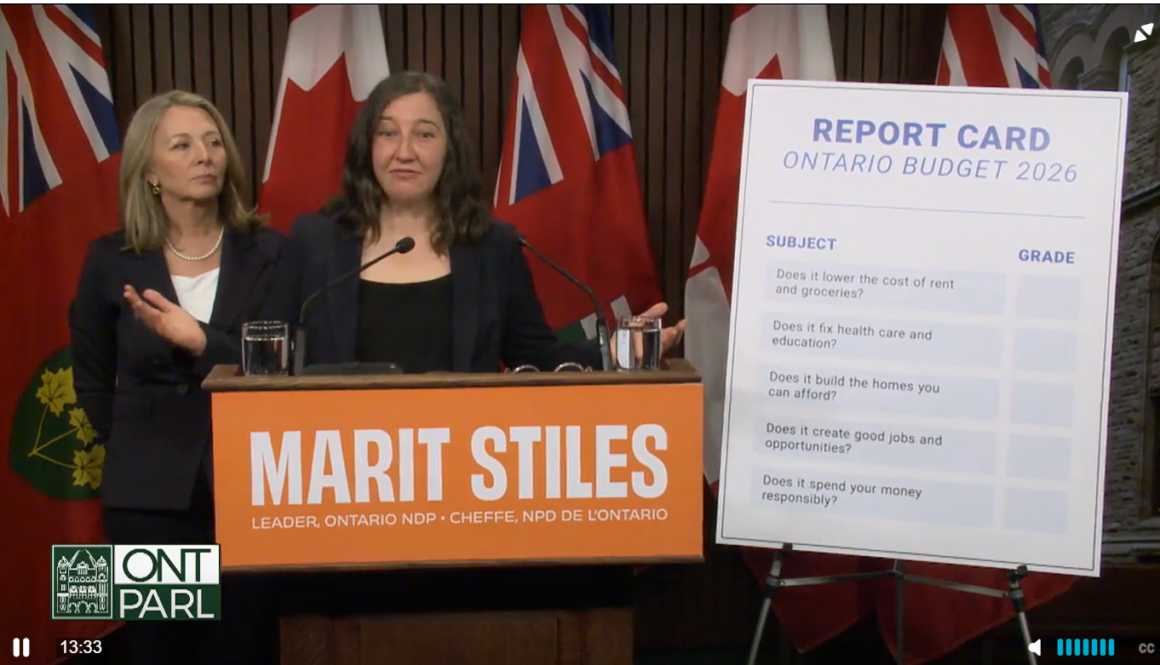
The party’s Finance Critic Jessica Bell says it is why they have decided to launch a budget report card to test the government’s priorities.
“We’re going to be grading Doug Ford’s budget, and we have released a pre-budget report card with five tests we are going to use to grade his budget to determine if this budget helps or hurts Ontarians,” says Bell.
“Our report card looks at whether the Ford government’s latest budget makes life more affordable, whether they’re investing in health care and education, and whether they actually stop wasting people’s hard-earned tax dollars,” says NDP leader Marit Stiles.
The NDP wants to see stronger rent control measures, measures that lead to more affordable and non-profit housing, and initiatives that address unemployment, especially among youth.
“We understand that we have a Trump tariff war and global economic uncertainty, but we do know that there are more practical steps the Conservative government can take to protect jobs and stabilize the economy,” says Bell.
Port Hawkesbury residents may need to prepare for a hike on their water bill.
Councillor Iaian Langley says he believes it may go up 10 to 20 per cent for the first time in six years and that their rates are set on a cost recovery basis.
He says changes could come later this year after the Nova Scotia Regulatory and Appeals Board’s review in April.
This follows EverWind’s request to Landrie Lake Water Utility for possibly 10 million litres per day to supply their proposed green hydrogen project.
“When you consider the available safe yield, meaning how much can that body of water produce and replenish itself on a daily basis, it’s well within its capacity to do that,” states Langley.
“We know that from the science that we understand, and is approximately round figures, approximately one third of the useable safe yield per day.”
He assures residential customers they are of paramount concern to the utility and other industrial users, which is well laid out in their agreements without any dispute.
Langley says Landrie Lake Water Utility is co-managed by the Town of Port Hawkesbury and the Municipality of the County of Richmond.
“We’ve actually had more studies conducted by hydrologists and engineering firms than has been done prior. including, but not limited to, the bathymetry work, which determines the whole bottom shape of the lake to get acrid volumes,” he shares.
“Things are dynamic, not static. Evaporation rates change, and we’ve made adjustments to evaporation rates change. We’ve updated precipitation amounts, and how the reservoir is refilled.”
He says lake levels were monitored when experienced a summer drought last summer through engineering and hydrological studies to know what affects the average capacity of Landrie Lake.
“No user subsidizes another user. There is no rate increase because of any other single users,” explains Langley.
The Town is planning to hold a public hearing in May.
Baffling, that’s how a local farmer describes the provincial government’s decision to discontinue provincial field veterinary services.
That announcement came as part of the budget delivered by the Holt government on Tuesday. It revealed that those services will be handed off to the private sector, along with provincial veterinary lab and foreign animal disease lab services. These will be phased out over the next three fiscal years.
Mitchell Boyle of Boyle Farm in Lutes Mountain, New Brunswick, asks, ” Where are they supposed to go now?”
“I think the whole thing is disgusting, to be truthful. How can they sit in a room and make these decisions?” Boyle questioned.
He says right now, there are some places they can go to provide care for horses and some other small animals. Cattle, on the other hand, Boyle stated that the only one to help there is the provincial vet.
“Last December, we were trying to artificially inseminate our cows, and we needed a bottle of Estromate, which is something that causes them to come into heat, and we had a really difficult time. If the only place to go right now is the provincial vet for your cattle, then where do we go if they’re not there anymore? And if somebody wants to rebut, there’ll be a whole bunch of private clinics that open up offering that service. I say hocus pocus, because if that was the case, there would be a whole bunch of private clinics that are offering that service now,” Boyle expressed.
Veterinary services are a big industry across the country, especially in Atlantic Canada. Boyle wonders what the plan will be for small farmers with just 25 to 50 cows and under.
“Are you just supposed to put an animal down if it’s sick, if a cow needs a C-section? That’s not something that you can do yourself, even if you’ve been farming for 40 years. There are some things that farmers can do themselves 100 per cent, but there are a lot of things that we need assistance with. It’s just baffling that a provincial vet is no longer going to help farmers,” Boyle conveyed.
He insisted it’s a resource that just shouldn’t be taken away.
In an effort to convince the government to reconsider, a petition has been launched. Less than 24 hours after it was posted, it already had 12,500 signatures on Wednesday afternoon.
The City of Dryden is still committed to building new pickleball courts.
The city is in the second phase of an application process with with the Northern Ontario Heritage Fund.
Acting manager of Community Services Joel Allen says the city’s costs for the project would be offset by any fundraising the Dryden Pickleball Club does.
“Should those fundraising efforts bear fruit to any new funding, that will help offset our costs,” Allen updated Dryden council recently.
“Moving into Phase 2 of the application process, council is now required to acknowledge and agree to cover the city portion, should the project move forward.”
The total project would cost about $650,000 with the city responsible for just over $162,000.
The Dryden Pickleball Club made a deputation to Dryden city council this summer, saying there is a need for new pickleball courts in the city.
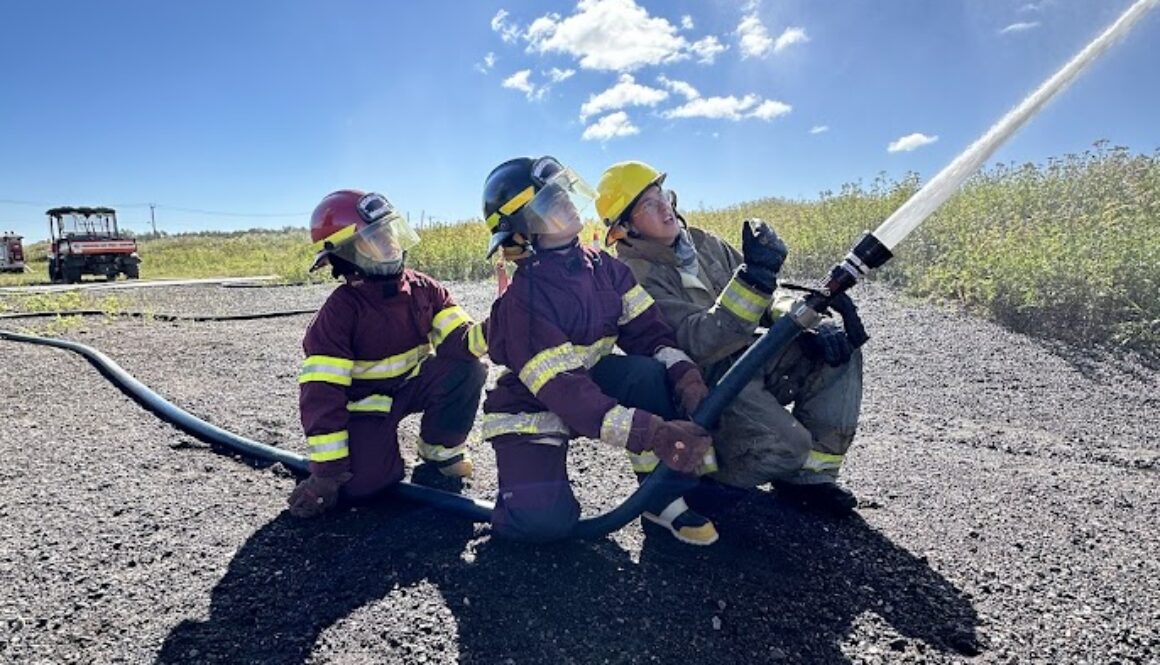
The next generation of firefighters starts now—female and non-binary youth aged 15-18 are invited to a free, four-day summer firefighting camp in Thunder Bay this summer.
The camp showcases firefighting as a rewarding career by providing training in fire suppression, auto extrication and firefighter survival.
“We are thrilled to return to Thunder Bay,” said Paula Andreychuk, Camp Molly Treasurer and Thunder Bay Lead. “We’re looking forward to an incredible camp experience that will empower and challenge campers while helping them see themselves in a new and positive light.”
Camp Molly is named after Molly Williams, the first known female firefighter and first known Black firefighter in the United States.
According to the NY Daily news, when an influenza outbreak ravaged the men of a Lower Manhattan fire crew over 200 years ago, Molly Williams answered the call of duty. In the NYC Blizzard of 1818, Williams, a former slave, went out in a calico dress and checkered apron and took her place with the men on the front lines of a fire. She helped pull a pumper to the fire through the deep snow and tackle the blaze. Williams’ story is immortalized in Dianne Ochiltree’s children’s book “Molly, By Golly!“
Camp Molly aims to carry on her legacy by inspiring other firewomen.
“Hosting Camp Molly for the second time is an opportunity for students to gain hands-on experience, build teamwork, and develop practical skills, while being exposed to a career in the fire service and other emergency services,” said Dave Tarini, Acting Fire Chief. “Events like this do not happen without collaboration, and I want to recognize the many personnel from several divisions across the City of Thunder Bay, whose hard work and planning make this experience possible for the next generation.”
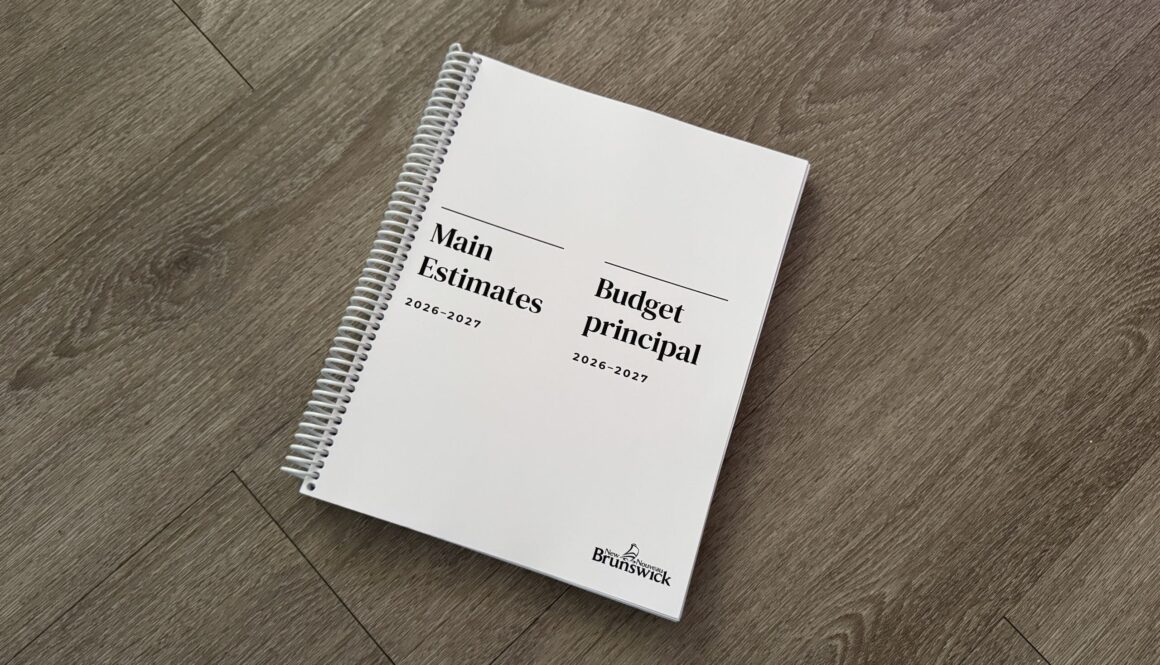
New Brunswick’s 2026-27 budget forecasted the $1.39 billion deficit as a result of a gap in revenue to expenses.
The projected expenses amount to $15.6 billion, while revenues are only projected to be $14.2 billion. This increases the province’s debt-to-gross domestic product (GDP) ratio.
Finance Minister René Legacy says the budget reflects a changing economic reality and uncertainty in the global economy. He says the challenge of making significant investments in what is important to New Brunswickers and bolstering the economy while working to reduce the province’s debt remains.
Concern surrounding province’s debt
Devin Drover, Atlantic Director and General Counsel of the Canadian Taxpayers Federation, says New Brunswickers’ biggest concern should be that the government is redirecting tax dollars to service government debt.
Devin Drover, Atlantic Director and General Counsel of the Canadian Taxpayers Federation (Image: Wilfred Fraser)
“Right now, about $1000 that a New Brunswicker pays in taxes just goes towards servicing existing government debt as a result of this budget; we’re seeing a lot of borrowing,” said Drover. “As a result of that, a lot of money is being siphoned away servicing government debt rather than money that can be used towards healthcare or other investments or money that could be used to return to taxpayers in the form of tax cuts.”
Legacy referenced during the tabling of the budget that the province’s net debt-to-GDP ratio remains one of the best in the country.
Drover says that if the government continues to increase spending, New Brunswickers will see increased expenses in the form of interest debt charges going up annually, which will result in a worse debt-to-GDP ratio.
“I think the province is certainly heading in the wrong direction when it comes to government debt,” said Drover.
Green Party Leader David Coon says the deficit is manageable in the short term.
Green Party Leader David Coon (Image: Wilfred Fraser)
“This deficit is not something anyone should light their hair on fire for. Given our fiscal situation, we can manage,” said Coon, “but when you look at the trajectory that they are proposing, that’s a concern.”
The province’s current net debt-to-GDP ratio sits at 27.9 percent following the revised 2025-26 budget that was initially tabled last year.
The projected net-to-GDP ratio for 2026-27 is 30.8 percent as a result of the continued deficit. The trajectory that Coon mentioned points to the years to follow, that would see 2027-28 and 2028-29 plans reaching net-to-GDP ratios of 33.6 percent and 36 percent, respectively.
“Right now, given our needs in healthcare, long-term care, social services and education, as we have been saying all along, this budget and New Brunswickers could not sustain significant cuts.”
This goal of debt reduction was initially expected to have assistance from spending cuts. Premier Susan Holt wanted all government departments to look for savings of 10 to 15 percent, but the budget tabled only sees a reduction in spending from three departments, and none of them reach close to 10 percent.
What happened to the cuts?
Legacy says they are choosing to invest in health care, education, social programs, and economic opportunities as opposed to making cuts. He says the province’s strategic position means they do not have to act rashly.
“We could have chosen to respond to the pressure by slashing programs and services across government to reduce the deficit faster, but New Brunswickers told us clearly that is not what they want, and we agree.”
Don Monahan, the Progressive Conservative finance critic, says there were not major difficult decisions made despite the talk around it.
“$1.39 billion is definitely a big number. They were talking about a lot of difficult decisions and what it’s going to mean for New Brunswickers, and at the end of the day there’s a lot of fear around that,” said Monahan. “In the end, there weren’t difficult decisions made.”
Monahan mentioned cuts identified by the Office of the New Brunswick Advocate when it released a review of the 2025-26 budget, in which a $47.1 million cut to child welfare services in the Department of Social Development was identified. There was also an identified budget redirection that resulted in librarian layoffs in 2025, according to Monahan.
Alex White, N.B. New Democratic Party leader, says the budget tabled is a backtrack from massive cuts that were proposed in the pre-budget consultation.
New Democratic Party Leader Alex White (Image: Wilfred Fraser)
“Now they’re coming out and saying it’ll be $100 million in cuts over three years. That’s not what we will get out of this … I am waiting for the other shoe to drop.”
The $100 million in cuts White referenced relates to the government’s announcement that they will be reducing the size of Part 1 of the civil service by 12 percent through attrition, or the gradual reduction of a workforce by voluntary departure.
As of Dec. 31, 2024, 11,801 employees made up Part 1 and represented 22 percent of GNB’s workforce. According to the math, the Holt government would be cutting roughly 1400 positions, which represent only a small fraction of the total GNB workforce: just above 2.5 percent.
White suspects there will be more changes announced in the next six months.
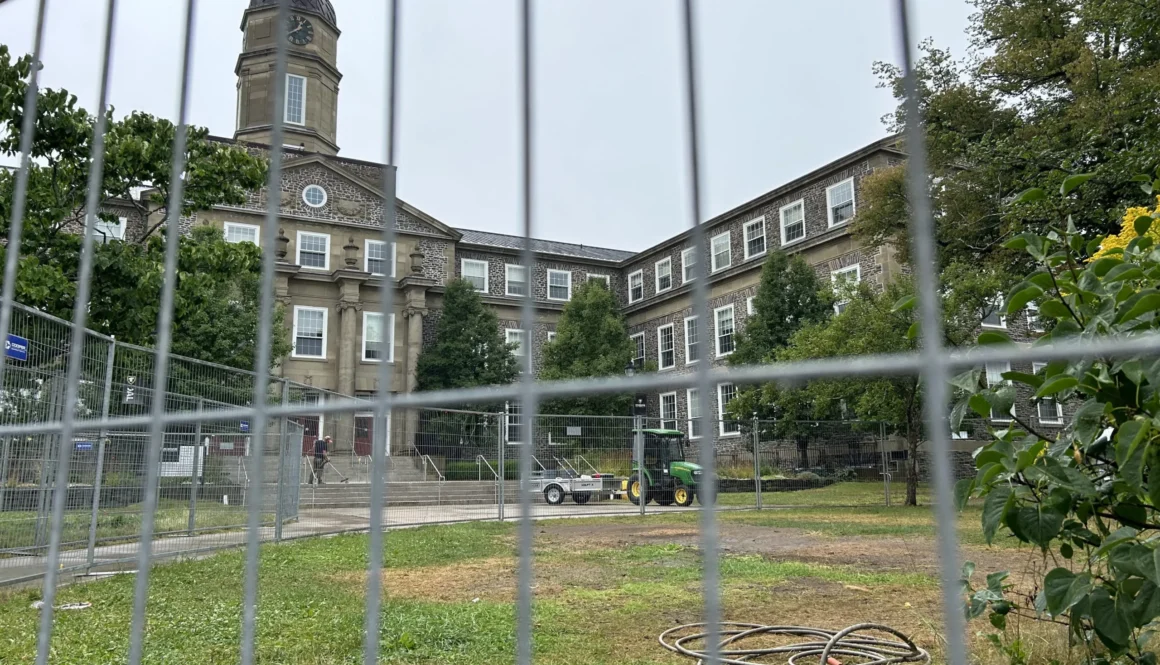
University and college students are planning to rally at Dalhousie University Wednesday afternoon over tuition fees, the province’s recent budget cuts, and to call on schools to divest from weapons and fossil fuel companies.
Four student unions recently voted to go on strike by skipping assignments and class from March 15th to 21st.
Our newsroom spoke to Q Pritchett, who said they planned to participate.
“I found it very frustrating that in the beginning of the last semester, the teachers were locked out, and for a few weeks, we couldn’t even go to classes, but we were still paying for it, and a lot of our classes, as a result, were really cramped in terms of content,” says Pritchett.
Pritchett also says they were disappointed to see the province’s budget cuts for universities and students.
A group of students, called Nova Scotia Student Strike, put together the petition for the strike, which had more than the required 1 per cent of students sign it, according to the Dalhousie Student Union. That prompted them to call a Special General Meeting, they say, where the union then voted in favour of strike action.
Students are calling for affordable tuition and for the university to move its investments away from fossil fuel and weapons companies.
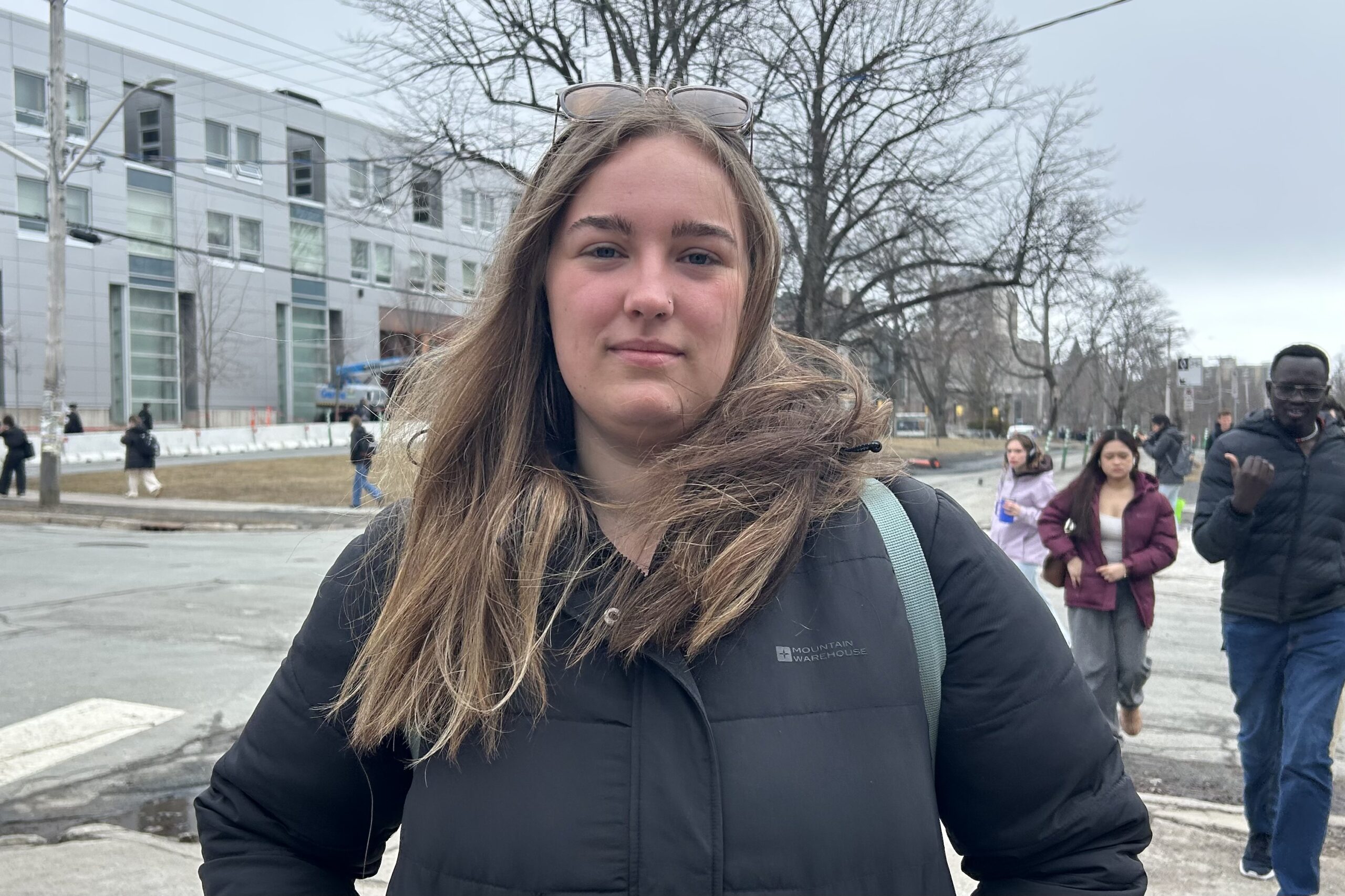
Laura Earl is a fourth-year neuroscience and entrepreneurship student. She says tuition is already high enough.
“So I would love to see that come back down, and especially [because], moving into residence and across country is already a bit of a charge,” says Earl.
She says she is also frustrated that tuition was not reduced after the weeks-long teacher strike in the fall.
Laura Earl, fourth-year student at Dalhousie University, says tuition is high enough already. Pictured March 16, 2026. PHOTO BY JACOB MOORE/ACADIA BROADCASTING
The Dalhousie Students Union says they do not have a way to mandate that students walk out of class, according to a statement.
And it is hard to gage how many people are participating, according to DSU President Maren Mealey, especially because she has not been to any classes to see the attendance.
But from what she has seen outside of classes, more people are striking than she initially anticipated, and the food provider at the university also said enough students were staying home that their sales are down.
“It shows that there is a lot of unity across the province that the status quo is unacceptable,” says Mealey.
The work on a phosphorus management plan for the Rainy-Lake of the Woods watershed continues.
The Lake of the Woods Water Sustainability Foundation is heading the work, driven by the increased presence of algae blooms on Lake of the Woods.
Providing an update on the project at the recent Rainy-Lake of the Woods Watershed Forum, International Watershed Coordinator Megan Mills says algae blooms, especially around the Kenora area, are becoming longer and remaining well into the fall.
“When blooms become large, they can have real impacts across the watershed,” says Mills.
“They affect drinking water treatment, recreation, tourism, fisheries, and overall ecosystem health.”
Mills says they can also produce toxins that pose risks to pets, people, and wildlife.
Phosphorus is identified as the key nutrient for the algae blooms.
Much of it has come from historic industrial wastewater discharges into the Rainy River.
Mills says while water quality in the river has improved since the 1960s, the phosphorus has settled at the bottom of Lake of the Woods, notably in the southern part.
Researchers are now working to identify the sources of the phosphorus and make recommendations to reduce the amount entering the water system.
Mills says part of their work has included visits to wastewater treatment facilities and lagoon systems to understand how phosphorus is managed.
“We have been encouraged by the overall excellent work of these facilities and the drive to ensure phosphorus loading is reduced through best management practices,” says Mills.
The group has also attended agriculture events and conducted farm tours to better understand the role agriculture plays in the movement of phosphorus through the watershed.
“A trend we’re seeing is the expansion of row crop production, including soybeans, canola, and winter wheat, along with increased use of tile drainage,” says Mills.
“These systems influence how nutrients and sediments move across the landscape and eventually reach waterways.”
Mills says the group intends to start crafting a draft plan later this year and will finalize its work next year.
The plan will be shared with governments and other agencies to act upon.
One of country music’s hottest trios is coming to Halifax Music Fest this summer.
The festival says, for the first time in 20 years, multi-award winning, The Chicks will be back in town to headline night one, June 26 on the Garrison Grounds.
Formerly known as The Dixie Chicks, the trio had major international success with hits such as ‘Wide-Open Spaces’, ‘Ready to Run’ and ‘Not Ready to Make Nice’.
Artists lined up for Halifax Music Fest include Shaboozy, Blue Rodeo and The Barr Brothers
Tickets for The Chicks go on sale Friday at 10 a.m.
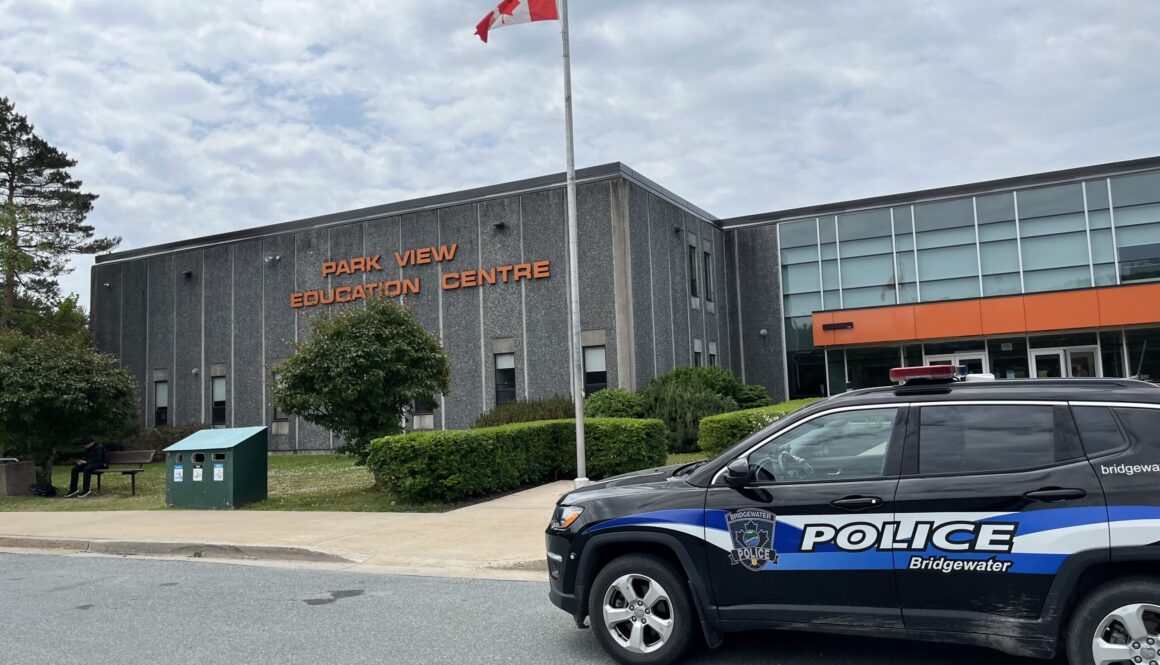
A 15-year-old from Bridgewater is facing serious criminal charges after police say they disrupted an alleged plan to carry out a violent attack at Park View Education Centre.
Bridgewater Police Service says the investigation began earlier this month after INTERPOL and the FBI flagged concerning online conversations involving the Bridgewater teen and another youth in Manitoba.
Police allege the two had been communicating since late February about the possibility of coordinated attacks at their local schools.
While investigators say the threat was not believed to be imminent, police determined the conversations showed signs of planning and intent, prompting further investigation.
On March 17, officers with Bridgewater Police Service arrested the youth and executed a search warrant at a residence in the community.
Police say the search uncovered handwritten plans, imitation weapons, a crudely constructed imitation pipe bomb, an imitation assault-style rifle, electronic devices, and clothing displaying hate symbols along with other concerning material.
Bridgewater Police Deputy Chief Danny MacPhee said investigators also located several imitation weapons during the search, including replica knives and guns.
“Our investigators located some replica or imitation weapons — imitation knives, imitation guns, and a crudely made imitation pipe bomb and an assault rifle,” MacPhee said, noting the pipe bomb replica was particularly concerning based on its appearance.
MacPhee said the investigation moved quickly once police were alerted to the situation.
“We only got the notification on the tip Friday evening,” he said. “For us to be able to identify who was sending the messages, obtain a warrant, and execute a safe arrest plan that quickly is an uncommon response.”
Police also seized multiple electronic devices that will now be analyzed as the investigation continues.
“This investigation is really just starting,” MacPhee said, adding officers will now examine the devices to determine possible motives, intent, and whether anyone else may have been involved.
MacPhee said based on the information police currently have, investigators believe there is no ongoing risk to the community.
“From what we have at this stage of the investigation, no other person locally or provincially was involved, and we know of no current risk to the community,” he said.
The youth appeared in Bridgewater Youth Court on March 18 and remains in custody. Under the Youth Criminal Justice Act, the accused cannot be identified.
In a message to families, Park View Education Centre principal Vicki Crozier acknowledged that the incident has raised concerns among students and parents.
“Our focus, as always, is on the safety and well-being of our students and staff,” Crozier said.
Crozier said the arrest has left some students feeling uneasy and the school will be making additional supports available when classes resume after March Break.
In addition to school staff and counsellors, specialized staff from the South Shore Regional Centre for Education will be at the school to support any students who may need help.
The school’s safety resource officer will also be present when students return.
Families with questions are encouraged to contact the school or the South Shore Regional Centre for Education.
Police say the investigation remains ongoing and additional charges, including possible hate-related offences, are still being considered.