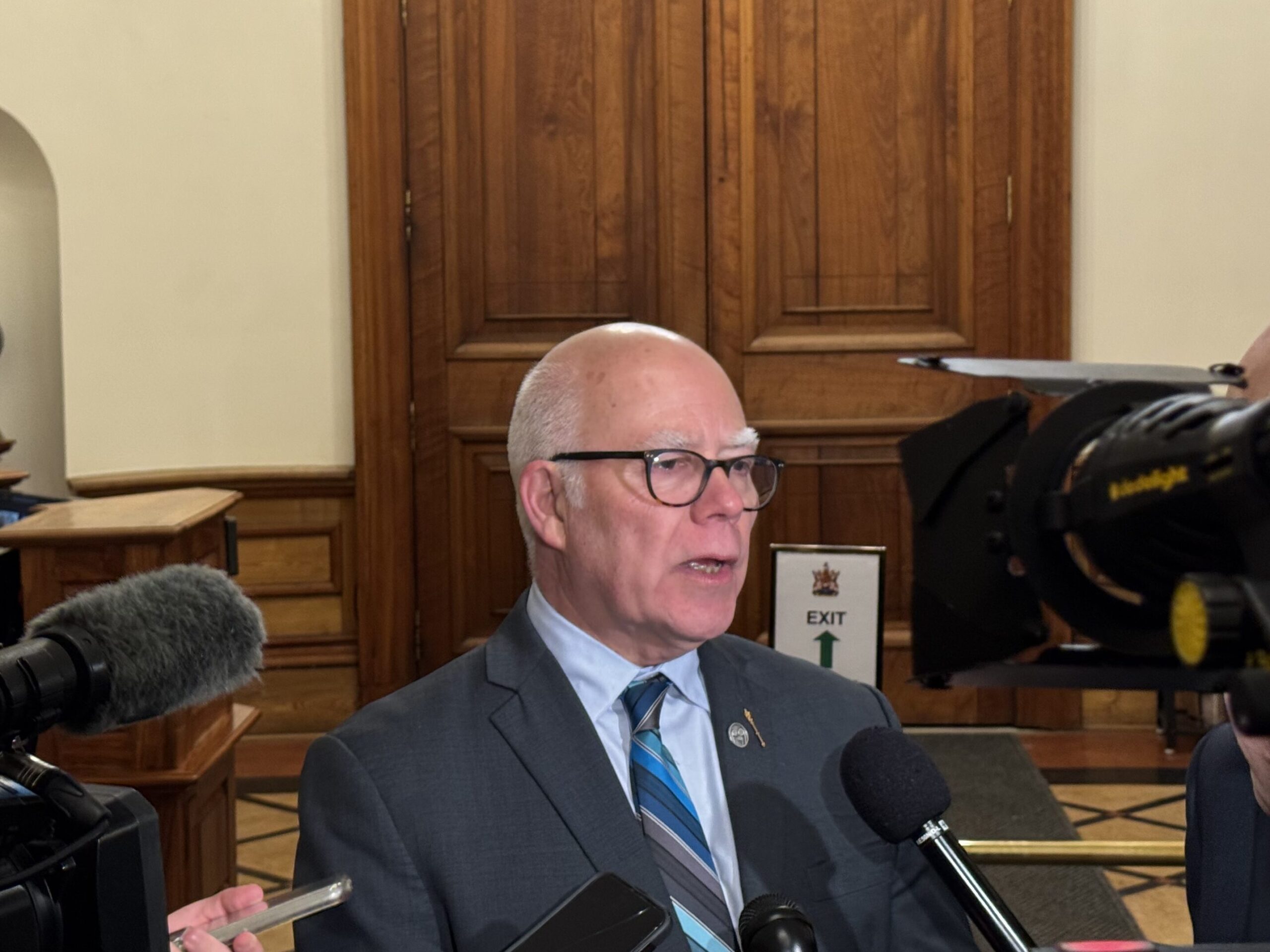
The NDP’s Labour and Advanced Education Critic is voicing deep concern over the job cuts at NSCC.
It was last week when the college announced that 91 positions would be cut, including 45 layoffs but no faculty positions.
In about half of those cases, the employee either left voluntarily, their term ended, or the position was already vacant.
In a statement, Paul Wozney says this is upsetting and devastating for those who lost their jobs, the students they support and the communities these schools serve.
“These cuts are happening because this government makes decisions without doing the work to understand the impact they’ll have,” says Wozney. “There is clearly no plan and it’s our schools, our students, and our communities who are paying the price.”
Meantime, Minister Nolan young says it is a difficult time, but they are still investing in the skills Nova Scotians need to grow.
The school’s funding was cut in the provincial spring budget.
The provincial government says they are confident NSCC can still deliver quality classes despite recent cuts.
In the college’s latest budget, they revealed 91 jobs were cut, including about 45 layoffs, but no faculty jobs were hit.
Speaking to reporters Thursday, Minister Nolan Young said it is a difficult time.
“Anytime there’s difficult staffing decisions, it’s a difficult time. My thoughts are with the employees. But when you look at the overall picture and stuff, there was zero reductions in the frontline delivery. We’re still investing in the things that we need. We’re still investing in the skills that Nova Scotia needs to continue to grow,” said Young.
The school’s funding was cut in the province’s recent budget.
When asked if the school would get hit with another funding cut next year, Young said he would not speculate.
Our newsroom has reached out to the college for specifics on what jobs are affected. So far, they said about 45 positions in management were laid off, most of those in the central Dartmouth location.
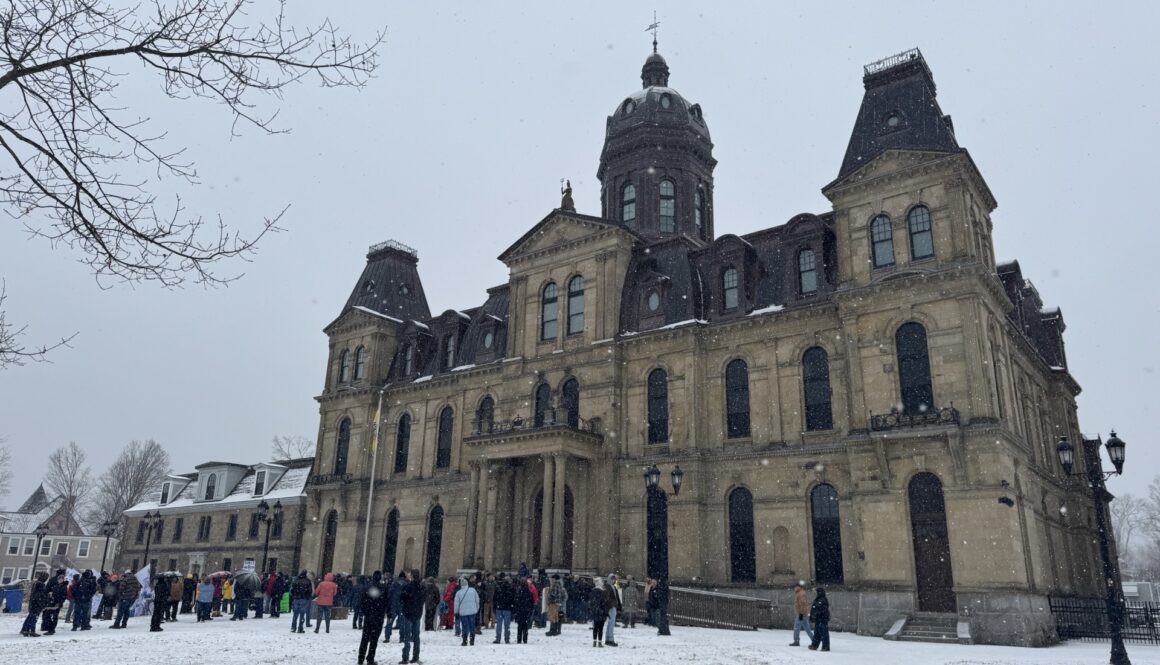
Farmers, ranchers and livestock owners gathered in front of the Legislative Assembly to protest cuts to provincial field vet services.
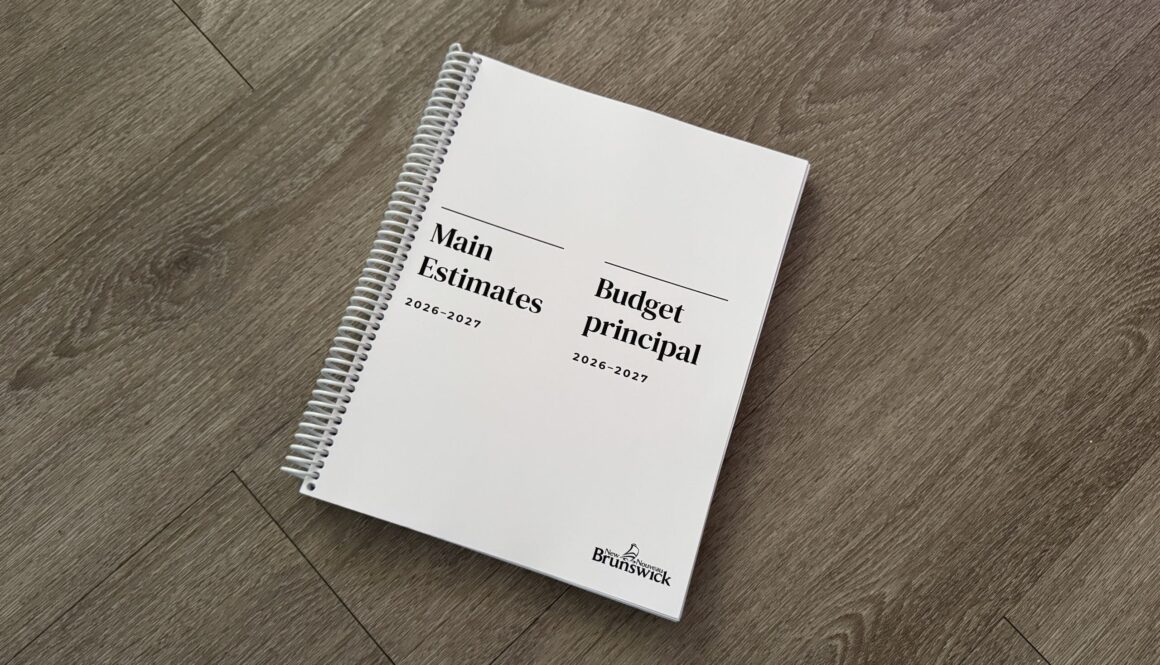
Cuts to these services were announced when the Holt government tabled its 2026-27 budget.
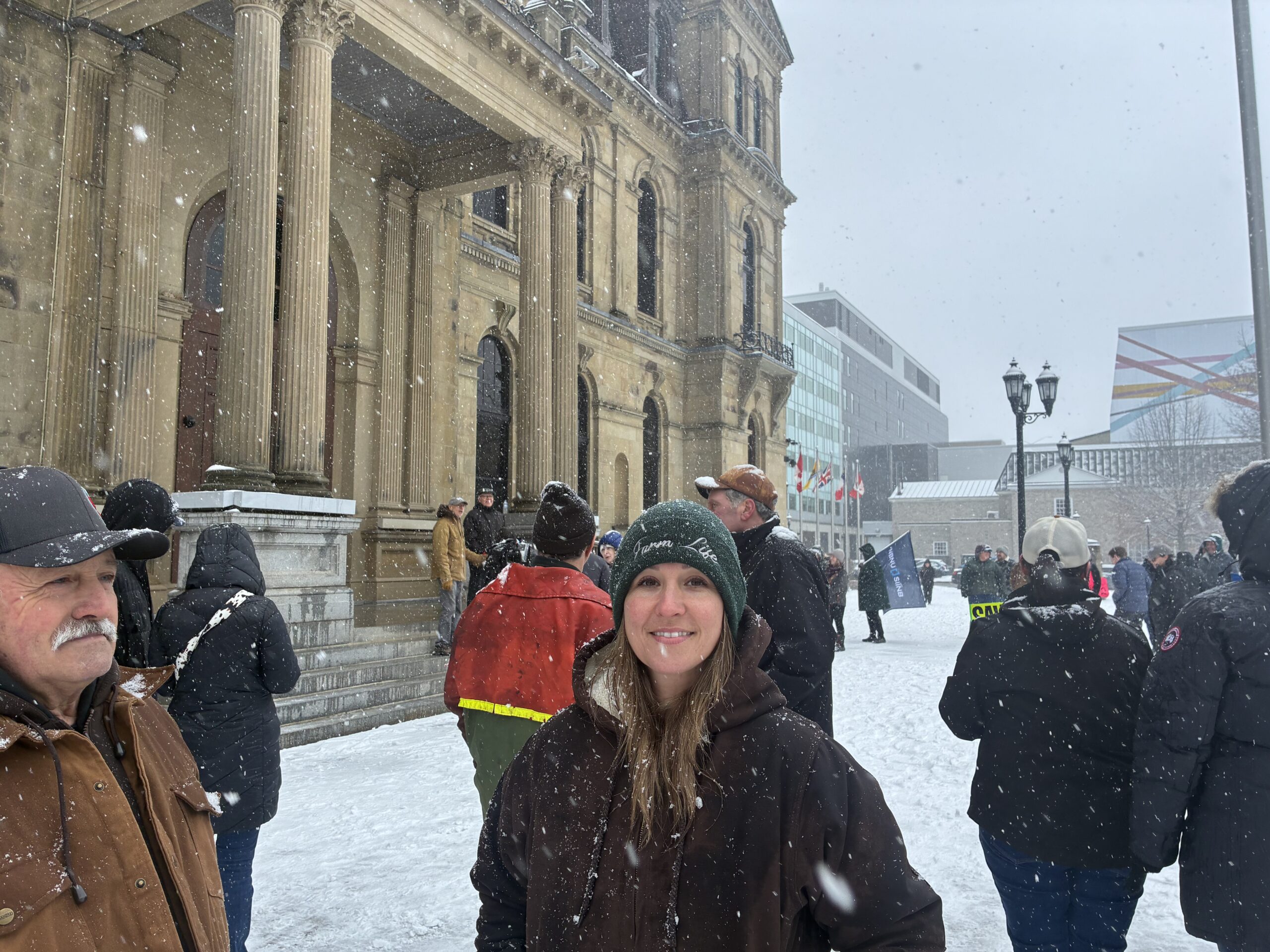
Malcolm Gilbert, a beef farmer from Burton, was one of the farmers protesting cuts in Fredericton this week. He says the government needs to take a step back and change their plans.
“I’m a farmer, so I want to see those services maintained. I am here to protest to make sure they maintain the vet services and lab services for the farmers of this province,” said Gilbert.
The Burton local says people might not realize that farmers pay for these services. He says he would pay more to keep it around.
“This government is looking at a very small amount of money to keep this vet service compared to what else is being spent in the 1.3-billion-dollar budget,” Gilbert stated.
In the last month, Gilbert has had vet services out to his farm several times.
“I had vet services out for a plain calf and a C-section on a cow. I would have lost both of those if it weren’t for these services … whether it’s three o’clock in the afternoon or three in the morning, the vets respond, and they come,” he said.
Gilbert says if these services are privatized, he does not believe that readiness to respond will be there.
“We also need the lab for testing and the medications that the vets bring with them. [Holt] needs to talk to us about what we can do to maintain this service,” he said.
The province plans to phase services out over the next three years by discontinuing provincial vet field services by the end of March 2027, with services for horses concluding three months prior.
Lab functions would then transfer to the private sector, which currently has 72 qualified vet clinics across New Brunswick. The Holt government says this transition would create opportunities for those private clinics to expand their business and serve more clients.
The final phase would provide ongoing support for underserved areas, according to a pamphlet supplied to the media.
Jennifer Gordon of Off Grid Acres / Image: Wilfred Fraser
Jennifer Gordon runs Off Grid Acres, a small hobby farm in Carleton County, New Brunswick. She says that everyone north of Fredericton will be left without vet services.
“Well, the amount of private vets there are is limited, so logistically, as it is right now, it’s not even possible [to privatize vet services],” said Gordon.
Gordon says provincial vet services are essential to how farms like hers operate. “They are keeping our herds healthy. [Vets] are screening and preventing diseases from spreading to the herd, but also for public safety. Without our vets, we will have no farms, period.”
New Brunswick is currently one of two provinces that still provide veterinary services as a public service.
A petition put together by those opposed to the changes now has over 31,000 signatures.
New Brunswick’s 2026-27 budget forecasted the $1.39 billion deficit as a result of a gap in revenue to expenses.
The projected expenses amount to $15.6 billion, while revenues are only projected to be $14.2 billion. This increases the province’s debt-to-gross domestic product (GDP) ratio.
Finance Minister René Legacy says the budget reflects a changing economic reality and uncertainty in the global economy. He says the challenge of making significant investments in what is important to New Brunswickers and bolstering the economy while working to reduce the province’s debt remains.
Concern surrounding province’s debt
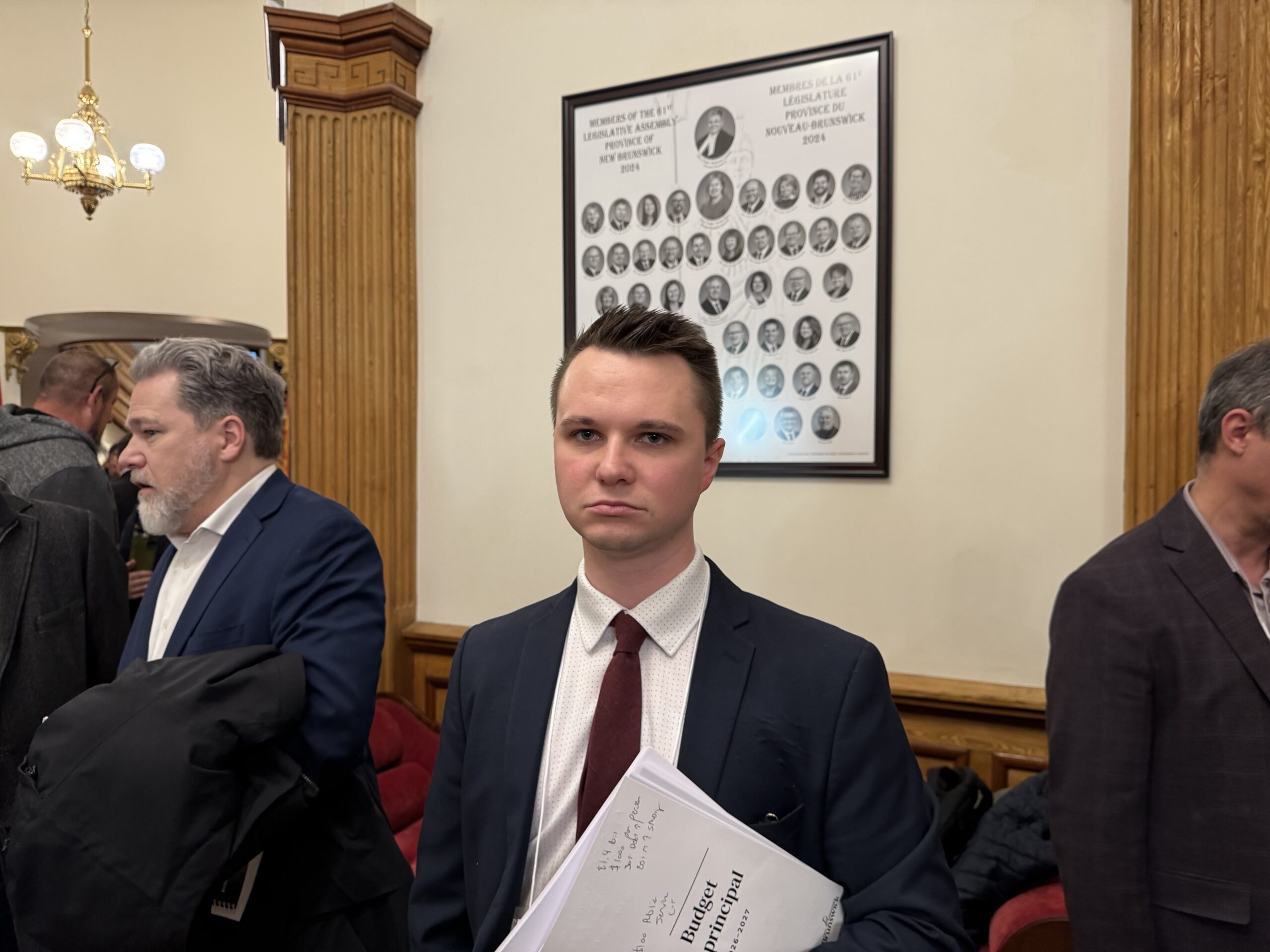
Devin Drover, Atlantic Director and General Counsel of the Canadian Taxpayers Federation, says New Brunswickers’ biggest concern should be that the government is redirecting tax dollars to service government debt.
Devin Drover, Atlantic Director and General Counsel of the Canadian Taxpayers Federation (Image: Wilfred Fraser)
“Right now, about $1000 that a New Brunswicker pays in taxes just goes towards servicing existing government debt as a result of this budget; we’re seeing a lot of borrowing,” said Drover. “As a result of that, a lot of money is being siphoned away servicing government debt rather than money that can be used towards healthcare or other investments or money that could be used to return to taxpayers in the form of tax cuts.”
Legacy referenced during the tabling of the budget that the province’s net debt-to-GDP ratio remains one of the best in the country.
Drover says that if the government continues to increase spending, New Brunswickers will see increased expenses in the form of interest debt charges going up annually, which will result in a worse debt-to-GDP ratio.
“I think the province is certainly heading in the wrong direction when it comes to government debt,” said Drover.
Green Party Leader David Coon says the deficit is manageable in the short term.
Green Party Leader David Coon (Image: Wilfred Fraser)
“This deficit is not something anyone should light their hair on fire for. Given our fiscal situation, we can manage,” said Coon, “but when you look at the trajectory that they are proposing, that’s a concern.”
The province’s current net debt-to-GDP ratio sits at 27.9 percent following the revised 2025-26 budget that was initially tabled last year.
The projected net-to-GDP ratio for 2026-27 is 30.8 percent as a result of the continued deficit. The trajectory that Coon mentioned points to the years to follow, that would see 2027-28 and 2028-29 plans reaching net-to-GDP ratios of 33.6 percent and 36 percent, respectively.
“Right now, given our needs in healthcare, long-term care, social services and education, as we have been saying all along, this budget and New Brunswickers could not sustain significant cuts.”
This goal of debt reduction was initially expected to have assistance from spending cuts. Premier Susan Holt wanted all government departments to look for savings of 10 to 15 percent, but the budget tabled only sees a reduction in spending from three departments, and none of them reach close to 10 percent.
What happened to the cuts?
Legacy says they are choosing to invest in health care, education, social programs, and economic opportunities as opposed to making cuts. He says the province’s strategic position means they do not have to act rashly.
“We could have chosen to respond to the pressure by slashing programs and services across government to reduce the deficit faster, but New Brunswickers told us clearly that is not what they want, and we agree.”
Don Monahan, the Progressive Conservative finance critic, says there were not major difficult decisions made despite the talk around it.
“$1.39 billion is definitely a big number. They were talking about a lot of difficult decisions and what it’s going to mean for New Brunswickers, and at the end of the day there’s a lot of fear around that,” said Monahan. “In the end, there weren’t difficult decisions made.”
Monahan mentioned cuts identified by the Office of the New Brunswick Advocate when it released a review of the 2025-26 budget, in which a $47.1 million cut to child welfare services in the Department of Social Development was identified. There was also an identified budget redirection that resulted in librarian layoffs in 2025, according to Monahan.
Alex White, N.B. New Democratic Party leader, says the budget tabled is a backtrack from massive cuts that were proposed in the pre-budget consultation.
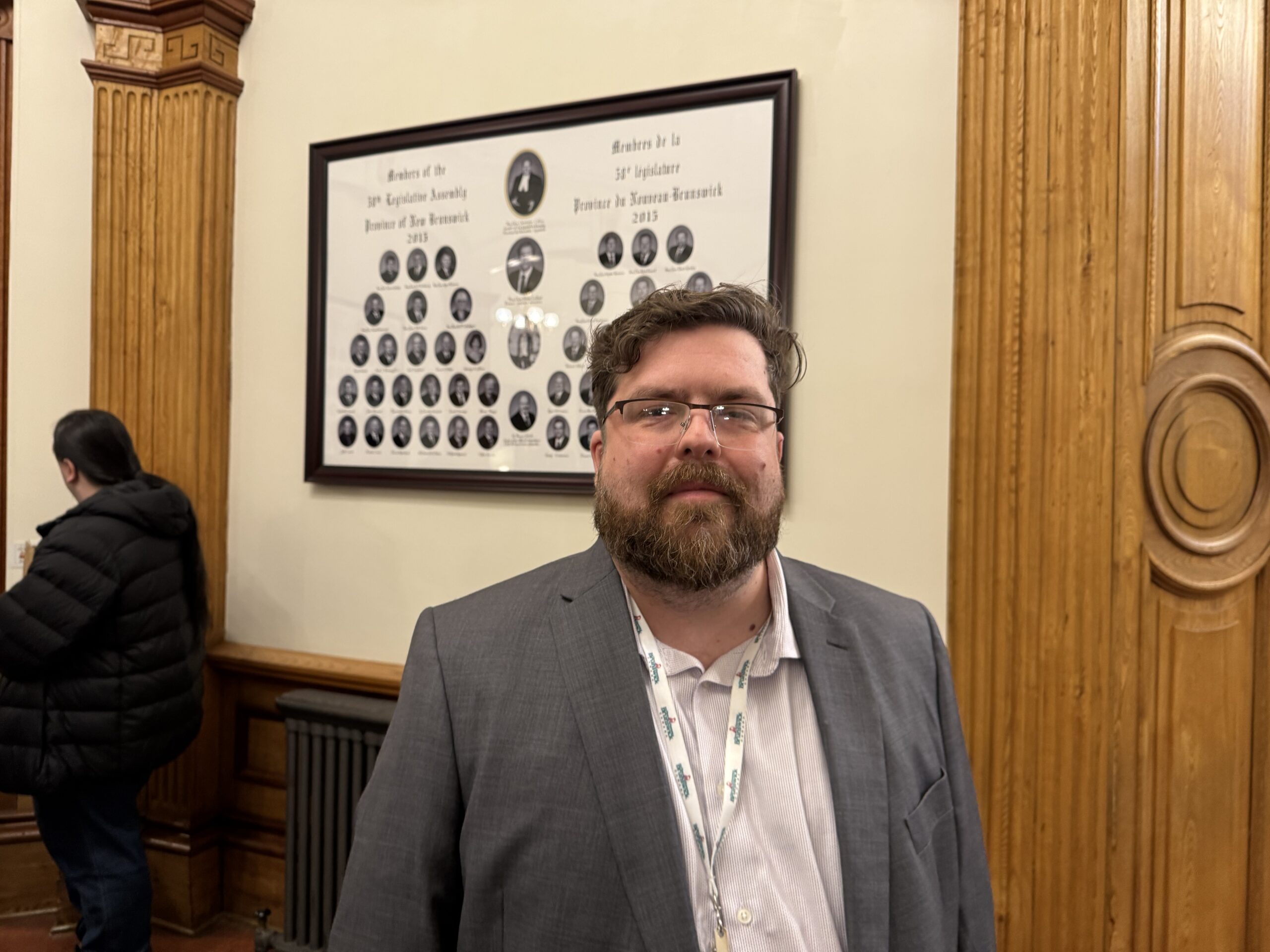
New Democratic Party Leader Alex White (Image: Wilfred Fraser)
“Now they’re coming out and saying it’ll be $100 million in cuts over three years. That’s not what we will get out of this … I am waiting for the other shoe to drop.”
The $100 million in cuts White referenced relates to the government’s announcement that they will be reducing the size of Part 1 of the civil service by 12 percent through attrition, or the gradual reduction of a workforce by voluntary departure.
As of Dec. 31, 2024, 11,801 employees made up Part 1 and represented 22 percent of GNB’s workforce. According to the math, the Holt government would be cutting roughly 1400 positions, which represent only a small fraction of the total GNB workforce: just above 2.5 percent.
White suspects there will be more changes announced in the next six months.