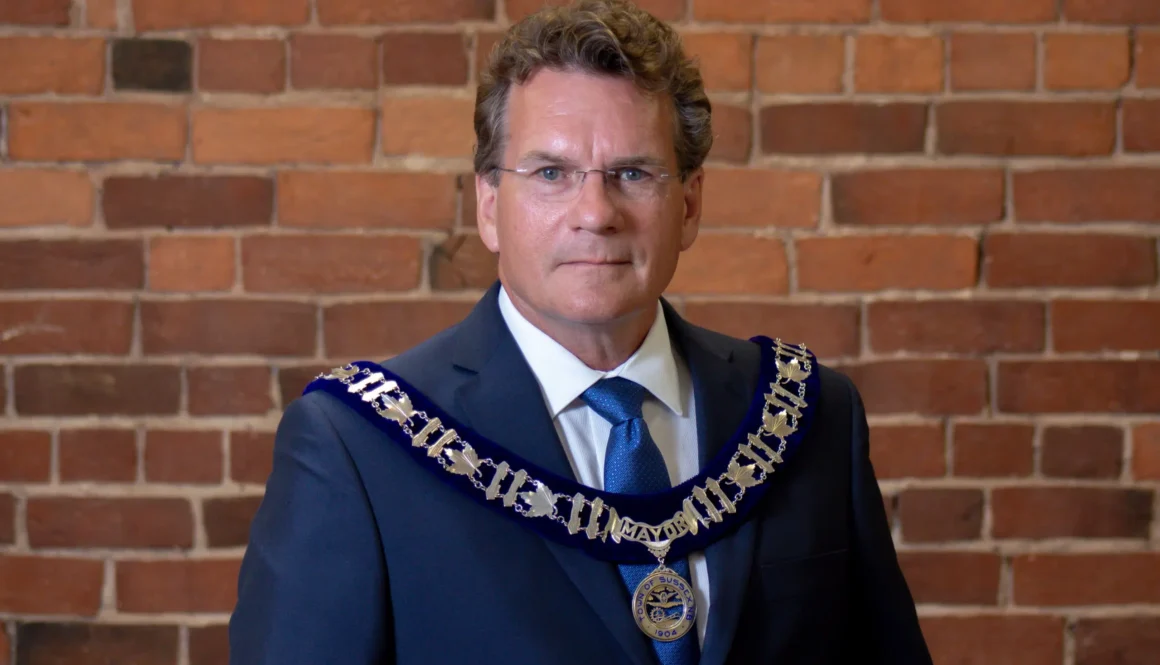
The town of Sussex has revealed its new 2026-2030 strategic plan.
The twelve-page document will set the council’s priorities for the next four years.
The strategy follows three pillars, including improving town infrastructure, making municipal services more sustainable, and supporting responsible development in the town.
Within those pillars, the town hopes to advance work for its flood mitigation program — which the town said it would remain one of their top priorities — advance long-term infrastructure planning and improve how Sussex manages and monitors infrastructure and municipal assets.
Other goals include modernizing systems, enhancing community communication, taking a more proactive and coordinated approach to grants and partnerships, modernizing development standards, and supporting proposed development initiatives in the town.
To provide updates to the community, the town said it will publish annual reports summarizing each year’s accomplishments, work in progress, deferred initiatives, and next steps.
Staff will also provide council with quarterly progress updates on strategic plan administration, highlighting key milestones, emerging priorities, and project-specific progress as work advances.
Council voted on the 2026-2030 strategy at Monday’s council meeting and made the document available online on Wednesday.
A Sussex recreation center is opening its doors again, after a week of uncertainty surrounding the facility’s future.
Executive Director Stephanie McFarlane confirmed in a social media update on Thursday morning that the Nutrien Civic Centre will resume operations on Aug.14.
While she acknowledged that the centre is still struggling financially, McFarlane said she spoke with the facility’s board of directors on Wednesday, and they are working on developing a long-term sustainability plan to reduce the facility’s reliance on financial assistance.
“The board of directors and myself, we are all very well aware of where our dollars come from; we are all taxpayers of the Kings region,” she said. “We know we can’t, especially in this environment, go back asking for more.”
McFarlane said the centre will also explore fundraising opportunities and make changes to its membership model to streamline the process.
The facility announced it was closing last week, due to funding shortfalls.
McFarlane shared the news in an earlier social media post, explaining that due to recent quarterly payments from its funding partner, Kings Regional Service Commission, falling short, the centre couldn’t meet payroll.
The centre officially closed its doors on Aug. 8 and was at risk of staying closed permanently.
Following the announcement, Sussex mayor Marc Thorne released a statement later that day expressing his concerns about regional partners’ failure to meet financial commitments for the civic centre.
Thorne said he met with Local Government Minister Aaron Kennedy, Deputy Minister Charbel Awad and Assistant Deputy Minister Jennifer Wilkins to discuss his concerns about “regional partners” failing to meet financial commitments for shared recreational services.
Thorne said he “specifically warned that Ministerial intervention would be necessary to ensure the Nutrien Civic Centre continued to receive the funding owed to it through its agreement with the Kings Regional Service Commission.”
Thorne claimed that Butternut Valley and Valley Waters’ financial commitments towards the centre remained largely unmet for a year and a half, with the amount owed to the Kings RSC almost approaching $400,000.
Both Valley Waters and Butternut Valley refuted Thorne’s claims in statements posted to social media.
Valley Waters mayor Randy McNight particularly said the municipality would pursue legal avenues related to defamation, threats and harassment.
In the new statement, McFarlane also acknowledged the centre’s role in people’s everyday life, noting that for many people the facility provides more than just a place to exercise.
“We are very well aware that we are a part of people’s day and routine, whether it’s for exercise, movement [or] the social aspect,” she said.
McFarlane added that following its reopening, the facility will continue to operate as it had previously, while the board looks for solutions.
She also said staff will be in the centre as early as 4:45 a.m. to welcome members.
The sudden closure of the Nutrien Civic Centre in Sussex is stirring up some bad blood between Sussex and surrounding communities.
After Thursday’s announcement, Sussex Mayor Marc Thorne released a statement that included his concerns about the failure of regional partners to meet financial commitments for the civic centre.
Thorne said he met with Local Government Minister Aaron Kennedy, Deputy Minister Charbel Awad and Assistant Deputy Minister Jennifer Wilkins to discuss his concerns about “regional partners” failing to meet financial commitments for shared recreational services.
Thorne said he “specifically warned that Ministerial intervention would be necessary to ensure the Nutrien Civic Centre continued to receive the funding owed to it through its agreement with the Kings Regional Service Commission.”
He went on to say that Butternut Valley had recently begun making contributions.
“The financial commitments of both Butternut Valley and Valley Waters toward shared recreational services remain largely unmet for a year and a half, and the amount owing to the Kings Regional Service Commission was allowed to approach almost $400,000.”
Thorne also suggested the provincial government had failed to intervene in the situation.
Acadia Broadcasting contacted Mayor Thorne for an interview on Thursday.
In an email, he agreed to speak to us, but that interview has yet to happen.
Valley Waters mayor calls for greater fairness
The Municipality of Valley Waters released a statement on Friday.
When Acadia Broadcasting contacted Mayor Randy McKnight to request an interview, he declined and directed us to the statement.
In that statement, McKnight said he’s been surprised and disappointed by what he described as a “lack of transparency” in how information is being shared with the public.
“Omissions and blatantly false information appear to be putting blame on the municipality of Valley Waters,” he said in the statement. “Which is grossly unfair and, in some cases, defamatory.”
McKnight said since Valley Waters became a municipality in January 2023, the local government has tried to bring greater fairness to its relationship with the Kings Regional Service Commission (KRSC), especially when it comes to regional facilities like the Nutrien Civic Centre.
“In fact, the issue of sustainability of the Nutrien Centre pre-dates the formation of Valley Water by several years,” he said.
McKnight said the claims made that the closure is due to Valley Waters not making contributions is “false and misleading.”
He said two facilities in the KRSC area are designated “regional” recreation facilities.
One is the Sussex Area Library. The other is the Nutrien Civic Centre.
The “regional” designation means Valley Waters must contribute funding toward their operations.
“In 2026, Valley Waters represented 23 per cent of the region’s population and tax base, but only approximately four per cent of the Nutrien facility users,” McKnight said.
He said the way a municipality’s contribution to regionally designated facilities is determined is based equally on population and tax base.
In other words, Valley Waters in 2026 had a required contribution to both the library and civic centre of 23 per cent of the costs, or $137,000.
“At last count, the Nutrien portion that we pay equated to approximately $4,482 per Valley Waters Nutrien member,” he said.
McKnight said other regional service commissions use distance from a facility to determine municipal contributions.
“After paying this contribution, we lack adequate funding to meaningfully support our own local recreation assets,” McKnight said.
Those assets include the Belleisle Community Pool.
McKnight also said the decision about a funding agreement for the civic centre was made before a new KRSC board was formed, binding all municipalities in the region to its terms.
“The rushed timing shortly before the RSC Board was even formed eliminated our opportunity for input into the agreement and locked us into a funding model we do not support.”
McKnight laid out other complaints his municipality has, including sustainability questions surrounding the civic centre.
He said the facility has received bailouts in the past from the provincial government, failed to file mandatory payments with the Canada Revenue Agency, built up significant debt on lines of credit, and reported they might not be able to make payroll on several occasions.
“We continue to have serious concerns about whether we are continuing to invest taxpayer dollars into a sinking ship,” he said.
McKnight said Valley Waters’ portion of the KRSC budget was $450,000 in 2023, including $75,734 for the Nutrien Civic Centre.
He said the number grew to $568,000 in 2024, including $119,000 for regional facilities. The amount increased so dramatically thanks to the addition of the library.
“In December 2024, we met with Minister Kennedy and agreed to pay our designated portion of the regional facility budget for 2024, based on his commitment that the KRSC Board would be reinstated and regional facility funding agreements would be renegotiated.”
But in 2025, the budget commitments grew to $568,000, with $133,145 for regional facilities.
“Following several requests to renegotiate the funding agreements, council reminded the minister in October of 2025 of his commitment, and our intention to withhold payment for the regional facilities pending renegotiation,” McKnight said.
He said Kennedy told the town the province would withhold funds from their property tax warrant.
As a result, Valley Waters paid the allotted amount up to October 2025.
“In April, the Minister withheld funds from our property tax warrant payment to pay the KRSC for the Nutrien’s final quarter of 2025, after subtracting the amount designated for the Library,” McKnight said.
He said the minister did the same on Aug. 1, withholding funds due for Q1.
McKnight said the council supports contributing to facilities that bring new residents to the region.
“However, we are advocating for regional designations and funding models to be based on transparent reporting, accurate facility usage data and cost sharing based on use,” he said.
McKnight added the current cost-sharing model, 50 per cent tax base and 50 per cent population, is “outdated.”
“In our case, (it) results in one community significantly subsidizing another which has easier access and a higher number of users because the facility is in their community,” he said.
McKnight said the municipality will pursue legal avenues related to defamation, threats and harassment.
Butternut Valley also reacts
Butternut Valley says they have paid in full all amounts owing to the Kings Regional Service Commission for the civic centre.
In a social media post, the municipality said its account is current as of July 9.
“All amounts owing to the Kings Regional Service Commission under the Regional Cost Sharing Agreement for the Nutrien Civic Centre have been paid in full,” the statement said.
The statement said the municipality acknowledges the important role of the facility in the region and understands the disappointment and concern the news has caused.
A funding issue is apparently behind the sudden and unexpected closure of the Nutrien Civic Centre in Sussex.
According to the centre’s executive director, the doors will close at 7 p.m. Saturday, and it’s unclear if, or when, they will open again.
Stefanie McFarlane posted a video on Facebook Thursday afternoon and explained how the civic centre generates revenue and where its funding comes from.
“Over 50 per cent comes from memberships, swimming lessons, day camps,” she said.
“The rest of our funding comes through our funding partner, which is the (Kings) Regional Service Commission.”
The Kings RSC includes Sussex, Kings Rural District, Butternut Valley and Valley Waters.
McFarlane said last year, all quarterly payments were received.
“There was a hiccup towards the end, and we were advised that there was a change,” she said.
According to McFarlane, the commission acts as a conduit for funding, with the member communities paying their shares to the commission, which would then send the funds to the civic centre.
In 2026, McFarlane said the full quarterly payment of $152,000 was received in February.
“Second quarter, we received it in two disbursements,” she said. “But it was little over $14,000 short. I’m not sure way.”
The third quarterly payment, which was to have been received in July, was only $25,000.
“So we are now in this position that we can’t meet payroll,” McFarlane said. “We can’t pay bills. We can’t stay open.”
She said she alerted the board of directors Wednesday night and the staff Thursday morning.
What it means, McFarlane said, is that when the civic centre closes its doors on Saturday evening, it could be closed permanently.
“Or until a solution is found,” she added.
McFarlane said the facility has about 40 employees, and they suddenly find themselves out of work.
“That means they are going to have to go on EI and hope that there is a position that sparks their joy left for them in this town,” McFarlane said.
As for members?
“It means there will be no AquaFit in the morning or chair yoga or RAW or Pilates or spin. There will be no walking track. There will be no gym,” she said.
Sussex mayor, local MLA react
In a statement Thursday afternoon, Sussex Mayor Marc Thorne said he was “deeply troubled” to find out the civic centre would be closing.
“This is extremely disappointing, but unfortunately, it is not an unforeseen situation,” Thorne said.
According to Thorne, he met with Local Government Minister Aaron Kennedy and others on April 16, 2025.
“At that meeting, I raised serious concerns about the failure of regional partners to meet their financial commitments for shared recreational services and specifically warned that Ministerial intervention would be necessary to ensure the Nutrien Civic Centre continued to receive the funding owed to it through its agreement with the Kings Regional Service Commission,” Thorne said.
He went on to say that while Butternut Valley had recently started making contributions, the financial commitments of both Butternut Valley and Valley Waters toward shared recreational services remain “largely unmet for a year and a half,” and almost $400,000 was owed to the Kings Regional Service Commission.
“Despite the Province having made fully aware of the seriousness of the situation throughout this period, effective intervention has not occurred,” Thorne said.
In her own social media post, MLA Tammy Scott-Wallace said she spoke to Minister Kennedy in May about what might be at risk and the financial struggles the civic centre board faced.
“He said his department was working toward a solution,” Scott-Wallace said. “That solution never came and the civic centre cannot pay its bills because partners who are mandated to its funding have not done their part.”
What happens next?
A visibly emotional McFarlane said knowing this was happening on her watch left her feeling like she had failed.
“I have failed the community,” she said. “I have failed the staff that have come to feel like family.”
But she said there were some positives following the announcement.
McFarlane said as soon as she notified staff, the co-ordinator of summer camps came to her office, gave her a hug, and said she and the three camp counsellors would volunteer their time for the next two weeks to ensure there was no disruption to the day camps.
She said she, along with the aquatics co-ordinator, would be the lifeguards on deck so the children still get their pool time.
McFarlane said the closure was necessary because it wasn’t possible to make payroll.
“I didn’t think it was fair to let staff work as volunteers,” she said.
“Come to find out most of the staff is willing to work as volunteers because they believe in this place as much as I do.”
In the political arena, both Thorne and Scott-Wallace had strong words about what should happen next.
Scott-Wallace said she contacted Kennedy again Thursday.
“(I) asked him, in my words, to stop this train wreck,” she said. “He assured me he is working with his department in Fredericton today to find a solution.”
Thorne said he’s asked the town’s administration to demand an immediate response from the Department of Local Government, outlining what actions it will take to make sure the outstanding financial commitments are honoured.
“I will also be following up directly with Minister Kennedy to voice my concerns about the lack of action since our April 2025 meeting and to insist that the Province take immediate steps to address this situation,” he said.
The Atlantic Balloon Fiesta is marking 40 years later this summer, and the organizers are putting together a big event to mark the milestone.
Executive committee member Alannah Pearson described the festival as a big part of Sussex since the beginning.
“The original intent of the festival was to extend the tourism season beyond Labour Day weekend,” Pearson said.
She said a handful of businesspeople in the Sussex area got together and put on. the first rudimentary editions of the festival.
Since that first event, the festival has grown exponentially.
“Now we’re seeing anywhere from 80,000 to 100,000 spectators come into town,” Pearson said.
She said the crowds go beyond just the event, visiting local businesses, going to restaurants, stopping for gas.
“We have reports from some of our sponsors who are incredibly grateful to have the support,” Pearson said. “We have grocery stores that the shelves are running low on stock, we have restaurants that are running low on food by Sunday afternoon.”
And while the festival itself doesn’t charge admission to the grounds, Pearson said it has been a big fundraiser for other, smaller organizations in the community.
“Some of the local sports organizations and community groups, they will organize the parking in lots surrounding our event and they raise funds that weekend that helps support ice time for hockey teams and figure skaters and other kids’ sports,” she said.
Government funding cuts
This year, the organizers have had to deal with a cut in funding from the provincial government.
The festival lost access to about $11,000 because the event has free admission.
Pearson said because they don’t charge, people can just come and go from the grounds, and organizers are not able to track information the province was looking for.
“Specifically postal codes,” she said. “They’re looking for postal codes from folks that are coming and spectating the event to see where they’re coming from.”
But Pearson said the loss of the funds has not been a major blow to the event.
“We have MLA Tammy Scott-Wallace in our region and she came through and she was able to provide us $7,000 in community investment funds from her pot through the (Regional Development Corporation,” Pearson said.
Local businesses also stepped forward and ramped up their usual sponsorship to help make up the difference.
“It really is a community event and everybody’s kind of rallying to make sure that we’re able to continue without a hitch,” she said.
What to expect
Along with the usual attractions, Pearson says they’re currently expecting around 34 balloons for the event.
She said they usually average around 30.
“So we’re on the higher end this year,” she said, adding visitors should expect some new and exciting shaped balloons making their first visit to Sussex.
Pearson said balloons generally hit the skies around 7 a.m. each day of the event, and again around 6 p.m., all weather-permitting.
But there’s plenty to do in between, she said.
Live entertainment, amusement rides, a car show on the Sunday, and vendors in and out of the grounds will be there through the event.
The 40th Atlantic Balloon Fiesta runs September 10th to 13th at Princess Louise Park in Sussex.
And in keeping with tradition, there’s still no charge to come and enjoy the festivities.
Residents in the Sussex area are being invited to an information session about a proposed wind turbine project.
According to Kings Regional Service Commission staff, Halifax-based company Natural Forces will hold an information session on July 7 about its Paqt’smawei Sipu Wind project, including project plans and time for public questions.
The event will take place from 4 p.m. to 7 p.m. at the All Seasons Inn in Sussex.
The Paqt’smawei Sipu Wind Project is being developed in partnership among Natural Forces, the Mi’gmaq United Investment Network, an economic development corporation, and the Indigenous community Indian Island First Nations.
The project is proposed for the Kings Rural District, approximately 12 kilometres southeast of Springdale, and it will be built on a combination of private and Crown land.
According to the project’s website, the full development is expected to include about 42 wind turbine sites approved through the environmental impact assessment (EIA) process.
Construction will take place in phases, beginning with 15 turbines capable of generating approximately 105 megawatts of power. Future expansions could incorporate the remaining approved turbine sites, pending the necessary permits and approvals.
Phase one, according to the company, is estimated to supply enough electricity to power 22,000 New Brunswick homes annually.
Natural Forces submitted the EIA documents in September 2025. The project is still pending approvals, and preconstruction activities are proposed to begin as early as the fall of 2026.
Local newschaser group Sussex Area Updates reported that the company will also discuss its proposed Salmon River Wind Project during the session.
The Salmon River Wind Project is proposed for provincial Crown land approximately nine kilometres southwest of Hammondvale. The project is being developed by Natural Forces in partnership with Wolastoqey Resource Development Inc., the economic development corporation of the Wolastoqey Nation in New Brunswick.
According to the development’s website, it proposes approximately 34 wind turbines, providing an estimated 203 megawatts of power, enough electricity to power an estimated 43,000 New Brunswick homes annually.
Acadia Broadcasting contacted both the Kings Regional Service Commission and Natural Forces for confirmation of these details but did not receive a response.
Cut after cut, family resource centres in New Brunswick are still struggling to stay open.
In a social media post in late May, the Kings County Family Resource Centre in Sussex announced it would temporarily close for ten weeks this summer — starting June 22 — due to budget constraints and rising operating costs.
According to director Stephanie Ness, it’s the first time the centre has closed for the summer. However, she said it is not the first time the organization has had to make cuts to continue providing services.
“We have reduced our staffing hours, including my own. We have moved to a smaller location, all trying to stay within our budget,” she said.
The centre offers parenting, prenatal, postnatal, and breastfeeding education, as well as programs for children from birth to age six and their parents. The programs provide a safe space for families in the Kings County area to play and connect — at no cost.
Programming includes music-based activities, puppet shows, arts and crafts, and other activities geared towards low-income families.
The centre serves about 500 people yearly and provided more than 9,400 units of service over the past year, Ness added.
The challenge, she said, is that operating funding has not increased at the federal level since 1994 or at the provincial level since 2008.
Family resource centres in Canada primarily receive funding through the Public Health Agency of Canada’s Community Action Program for Children and the Canadian Prenatal Nutrition Program.
Introduced in 1994, the programs provide New Brunswick centres with about $2 million annually.
The provincial government began funding family resource centres in 2008, with the Department of Education and Early Childhood Development providing around $400,000.
New Brunswick has 13 family resource centres serving communities across the province.
According to Ness, the $2.4 million in combined funding is shared among the 13 centres and is not distributed equally. Centres serving larger geographic areas receive more funding.
Ness said the centre is grateful for the funding it receives, but rising costs have made it increasingly difficult to meet community needs.
“The needs are great right now,” she said.
“It’s very heartbreaking for me personally not to be able to provide services to our families over the summer.”
Limited budget affecting all New Brunswick family resource centres
New Brunswick Family Resource Centre Association president Lisa Tanner said the Kings County centre is not alone.
She said many of the other centres in the province have been forced to make difficult decisions to keep their doors open.
“We are operating at a 93 per cent inflation rate since 1994, so the cutbacks have been gradual across the province, [but] every year there are more restraints,” she said. “We can’t afford the same purchasing power that we did in 1994 with that same budget in 2026.”
Tanner, who is also the director of the Kent Family Resource Centre, explained the struggle can look different in different parts of the province, with some centres deciding to close over the summer and others reducing staff’s hours.
Most centres, however, have cut outreach services, which previously allowed them to serve 94 to 95 communities across the province.
Centres must renew their federal funding every four years. Tanner said they have repeatedly raised funding concerns during those negotiations but have not secured increases.
Lisa Tanner is the president of the New Brunswick Family Resource Centre Association and director of the Kent Family Resource Centre. PHOTO: ZOOM.
Tanner added that while centres have obtained grants and community support over the years, she said inconsistent funding has reduced their ability to deliver services.
Following the latest federal funding agreement, Tanner said the association is focusing on securing additional provincial support, arguing that family resource centres contribute to both health-care and social development outcomes.
The centres are the province’s only providers of free prenatal education in both official languages, and more than 14,000 individuals accessed services last year.
Tanner noted that the figure does not reflect how often clients used the programs.
“When you look at the cost of an individual person coming to one of our resource centres, one person costs about $187,” she said. “That person could have accessed 50 to 60 programs during the year.”
Tanner said to continue operating and resume the services provided before, they would need to recover the inflationary rates lost over the past years — which are 93 per cent federally and 40-45 per cent provincially — and maintain the current inflation rate increases in funding.
Province’s response slow, Tanner says
Tanner said the association met last year with Premier Susan Holt, Health Minister John Dornan, Social Development Minister Cindy Miles and Education and Early Childhood Development Minister Claire Johnson to discuss how family resource centres could play a larger role in delivering services.
She described those conversations as positive and said officials appeared open to collaboration. However, she said progress has since stalled.
Acadia Broadcasting asked the Department of Education and Early Childhood Development why funding for family resource centres has not increased to keep pace with inflation, but the department did not answer the question directly.
In an email statement on June 12, spokesperson Allison Taylor instead referred funding questions to the Public Health Agency of Canada.
Acadia Broadcasting also inquired about the ongoing funding talks with the other departments, but no response was provided either.
Closures could have significant community impact
Tanner said one family resource centre is now on the verge of closing because of funding pressures.
She declined to identify the centre but said they are looking for alternatives to continue operating.
Ness said the loss of a family resource centre could lead to increased mental health challenges, poorer health outcomes and fewer support networks for vulnerable families.
She said underserved populations would be affected most.
“There is a huge cost-saving measure in what we do financially on the health care system and the long-term health and wellness of families,” Ness said.
Tanner added that the future of their federal funding is uncertain.
Earlier this year, the federal government merged the two Public Health Agency of Canada funding streams into a single program.
The program is now the Community Action for Prenatal and Child Health Program.
With the fusion, Tanner said Ottawa changed the application process to an open solicitation, meaning that organizations other than those that have held contracts since 1994 could now apply.
Before, Tanner explained, the application process was closed, with only those who had accessed the contracts before being able to apply.
After pushback from the projects receiving the funding, the federal government decided not to proceed with the open solicitation.
However, Tanner said it remains unclear what will happen after 2030, when the funding cycle ends.
She said an open solicitation process would make funding applications more competitive and could result in less funding for family centres.
She added that she expects to hear about the new funding criteria within the next year.
Despite the uncertainty, Tanner said she is still hopeful the centres will find a solution for these funding challenges.
“I think there’s room to grow, and we are willing to do the work, and we are willing to be here another 30 years, but we do need some support from the funders,” she said.
Sussex has updated its Fire Prevention By‑Law to formally recognize the specialized rescue services its fire department now provides.
The bylaw had not been updated since 2012 and was revised following a 2024 fire service review that recommended modernizing the town’s fire service framework.
Fire Chief Tony Reicker said the update officially establishes Swiftwater Rescue and Wilderness Rope Rescue as services the department is expected to maintain.
He said the change gives the department the authority to continue training members and investing in equipment for those skills.
“Ultimately, it opens the doors to suggesting that Sussex will be providing these services well into the future, and that we can adapt and adjust and invest accordingly to help maintain those levels of specialized skill,” Reicker said.
Reicker explained that the department is building a foundation of trained members before looking at any additional specialized services.
“Once we have a number of members trained in addition to where we’re at now, that may open doors to look at other specialized services and skill sets that may be required to serve our community well,” he said.
The bylaw also merges the former Sussex and Sussex Corner rules following municipal reform.
Reicker said the update reflects what the municipality now needs and helps ensure consistent safety standards across all wards and outlying roads.
Along with the service changes, the bylaw updates the town’s fireworks rules by prohibiting consumer fireworks and requiring applications for display fireworks.
It also aligns outdoor burning definitions with provincial guidance from the Department of Natural Resources and clarifies what materials residents can burn in fire pits and outdoor fireplaces.
Reicker said the changes are intended to improve public safety, reduce avoidable emergency calls and give residents clearer guidance on the services the fire department provides.
Marc Thorne says it feels great to have landed his fourth term as mayor of Sussex.
He landed the top spot, Monday night, in a three-way race against Tim Hutchinson and Sonja Davis Carhart.
In an interview with Acadia News, he says it was a bit of a “tough election” with a number of things going on creating pressure.
“With trying to resolve significant flooding and the closure of a very important bridge within the heart of our community,” explains Thorne.
“So, when you’re in a position like mine, you never really know how the public feels.”
The 66-year-old has held the role since 2012 after he was elected in by acclamation halfway through the 2022 election.
Thorne says there are mixed feelings when it comes to holding the title for so long.
“Sometimes you feel weary, but most of the time it’s a very satisfying experience to take your community and to make it a better place for people to live, grow and raise their families,” shares Thorne.
He thanks his constituents for their trust.
“I never take it for granted,” says Thorne.
Councillors at Large:
Tim Wilson will serve another term as Councillor and Deputy Mayor. He will be joined by incumbents Graham Milner and Fred Brennan.
Ward 1:
Anne-Marie Snyder and Gisele McKnight will be the Councillors for Ward 1.
Ward 2:
Incumbents Doug Bobbit and Catherine MacLeod will be the Councillors for Ward 2.
A 32-year-old Moncton man has been charged after fleeing police near the greater Hampton, Salisbury, and Sussex area.
RCMP say members of the Hampton detachment were looking into reports of a truck driving recklessly on Route 1 near Nauwigewauk on April 23. Police spotted the suspected vehicle soon after entering the area and attempted to use a tire deflation device to prevent the truck from fleeing.
Despite the deflation device working, the vehicle continued to drive at high speeds and police did not chase.
Following aid from Caledonia Region RCMP, New Brunswick RCMP Police Dog Services, and RCMP Air Services, the truck was found and soon abandoned on Route 2 near Salisbury.
Police dogs then located the 32-year-old Moncton man who was the only person involved. Following his arrest, officers learned that he was wanted on a Canada-wide warrant in connection with a different crime.
The truck was also reported stolen from a residence in Bloomfield, New Brunswick earlier that day.
The following day, the suspect appeared in Saint John Provincial Court and was charged with dangerous operation of a motor vehicle, fleeing from police, and theft of a motor vehicle.
He will remain in custody while he awaits a future court date, as the investigation is ongoing.